The Calcutta High Court dismissed an appeal challenging an arbitral tribunal's interim order appointing a surveyor and restraining the developer from altering common areas in a residential project. The court held that the tribunal need not decide jurisdictional objections under Section 16 before granting protective interim measures under Section 17 of the Arbitration and Conciliation Act, 1996, as such orders are neutral and status-quo preserving, leaving the arbitrability question for the tribunal's final award.
Background & Facts
The Dispute
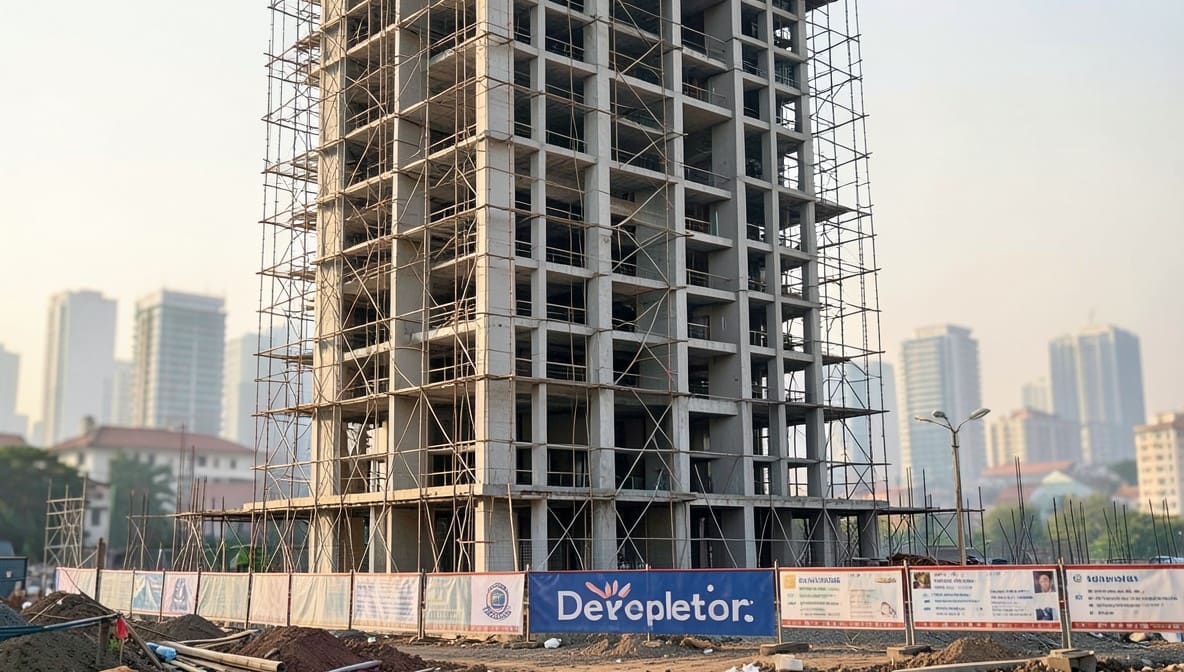
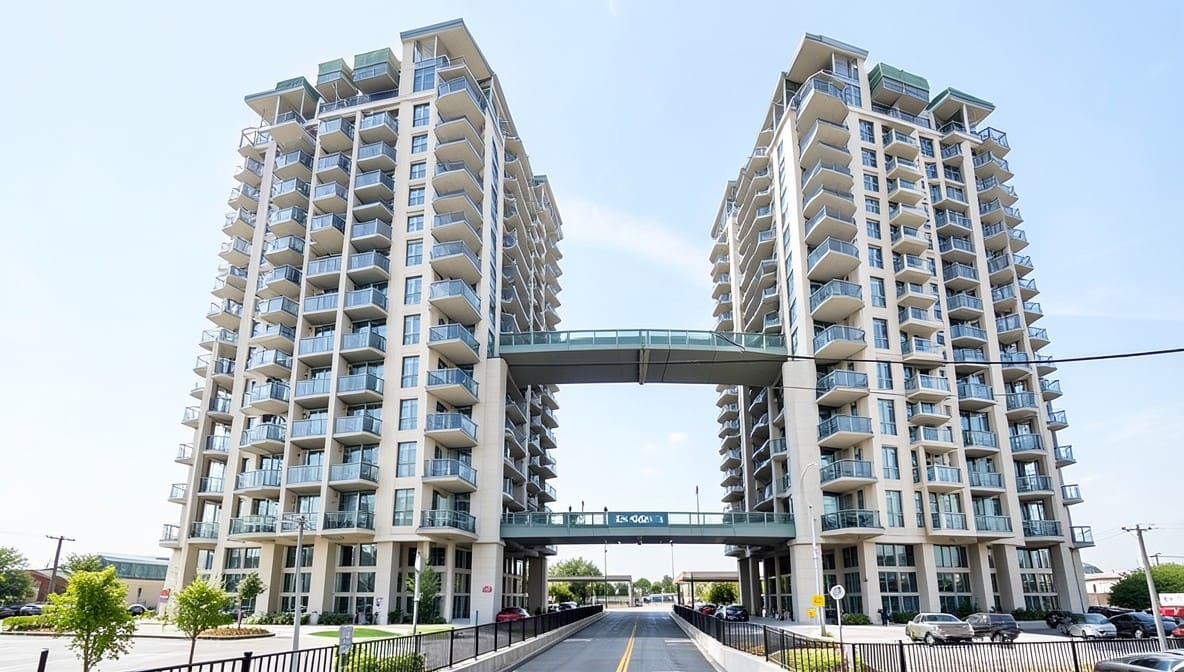
The appellant, Forum Projects Private Limited, is the developer of a residential complex known as "Atmosphere - The Luxurious Condominium" situated at Municipal Premises No. 1001/A, Eastern Metropolitan Bypass, adjacent to Science City, Kolkata - 700046. The complex comprises two towers (East and West) connected by a sky bridge. By a revised sanctioned plan dated 05.11.2018, the Kolkata Municipal Corporation permitted construction of two penthouses on the 36th and 37th floors of the East and West Towers respectively, and an additional apartment on the "E-Deck" level on the first floor between the two towers.
Key Facts
- The appellant obtained the premises on lease from the Kolkata Municipal Corporation under a registered Deed of Lease dated 17.04.2010.
- The building plan for the project was originally sanctioned on 06.06.2021, envisaging a B+G+35 structure.
- By a registered Indenture of Sub-Lease dated 23.09.2022, the appellant sub-let Apartment No. B-205 situated on the 5th and 6th floors of the East Tower to the respondents (Gaurav Karnani and others).
- The construction of the main building stood completed by December, 2018.
- Construction of the two penthouses commenced on or about 12.07.2021 and stood substantially complete by June, 2024.
- Construction of the E-Deck apartment (E-101) commenced on 07.11.2018 and was substantially completed on 11.12.2018, with a partial completion certificate issued by the Kolkata Municipal Corporation up to the 35th floor.
- The E-Deck apartment (E-101) has since been transferred to Ms. Ambica Beri by a registered Indenture of Sub-Lease dated 09.02.2024.
- The East Tower penthouse has been transferred to Mr. Rahul Saraf by a registered Indenture of Sub-Lease dated 10.09.2021 and to Anvay Warehousing LLP by a registered Deed of Assignment dated 27.05.2024.
- The West Tower penthouse has been agreed to be sub-let to Dalmia Family Holdings LLP under an agreement dated 16.02.2023.
Procedural History
- 21.12.2024: Respondents instituted Misc. Case (Arb.) No. 89 of 2024 before the Learned District Judge, South 24-Parganas, at Alipore, seeking injunctions under Section 9 of the Arbitration and Conciliation Act, 1996.
- 10.01.2025: Ad-interim order passed granting injunction as prayed for.
- 14.02.2025: Final order passed granting injunction as prayed for.
- 25.02.2025: Appeal (FMAT (ARBAWARD) No. 11 of 2025) allowed by a Division Bench of this Court, whereby Mr. Ajoy Krishna Chatterjee, Advocate, was appointed as the sole Arbitrator by consent of the parties.
- 22.04.2025: Respondents filed Statement of Claim before the Learned Arbitral Tribunal.
- 28.03.2025: Respondents filed a complaint before the West Bengal Real Estate Regulatory Authority (RERA) against Forum Projects Pvt. Ltd., Rahul Saraf, Vidyut Saraf, and Ajay Kumar Agarwal, inter alia praying for cancellation of the project's RERA registration, adjudication of fraud, restraint on the promoter, blacklisting, and payment of Rs. 15,14,22,306/- with applicable interest.
- 23.04.2025: RERA directed inspection of the E-Deck level and penthouses by the Kolkata Municipal Corporation.
- 02.01.2026: West Bengal Real Estate Appellate Tribunal affirmed the RERA order.
- 22.04.2025: Respondents filed an application under Section 17 of the Arbitration and Conciliation Act, 1996 before the Learned Arbitral Tribunal seeking appointment of a surveyor, restraint on handing over possession, and restraint on changing the nature and character of common areas.
- 05.02.2026: Learned Arbitral Tribunal passed the impugned order appointing an independent surveyor/chartered engineer to conduct a survey and inspection and restraining the appellant from making any change in the nature and character of the common areas.
- 05.02.2026: Appellant preferred the present appeal under Section 37 of the Arbitration and Conciliation Act, 1996.
The Parties' Positions
For the Appellant
The appellant contended that the subject matter of the dispute is not arbitrable as it is governed by special statutes (Real Estate (Regulation and Development) Act, 2016 and Kolkata Municipal Corporation Act, 1980), constituting exclusive fora (RERA, REAT, and Specialised Tribunal under Section 415 of KMC Act). Reliance was placed on Vidya Drolia & Ors. v. Durga Trading Corporation (2021) 2 SCC 1, Booz Allen and Hamilton Inc. v. SBI Home Finance Ltd. & Ors. (2011) 5 SCC 532, and others to argue that where a specific court or forum is vested with exclusive jurisdiction, the dispute is non-arbitrable. It was further submitted that the impugned order adversely affects third-party transferees (Rahul Saraf, Anvay Warehousing LLP, Dalmia Family Holdings LLP, Ambica Beri) without affording them a hearing, violating the principle that interim orders cannot bind non-parties. The appellant also argued that the arbitral tribunal ought to have decided the preliminary objection under Section 16(5) before granting any interim relief, citing T.K. Lathika v. Seth Karsandas Jamnadas (1999) 6 SCC 632 and Sathyanath & Anr. v. Sarojamani (2022) 7 SCC 644.
For the Respondent
The respondents contended that RERA does not oust arbitration, as Sections 88 and 89 of RERA operate only where there is inconsistency with another statute, and no such inconsistency exists with the Arbitration and Conciliation Act, 1996. Reliance was placed on Priyanka Taksh Sood v. Sunworld Residency (P) Ltd. (2022) SCC OnLine Del 4717 and Pallab Ghosh v. Simplex Infrastructures Ltd. (2024) SCC OnLine Gau 751. It was submitted that the dispute concerns the respondents' specific, contractual entitlement under a registered Sub-Lease Deed dated 23.09.2022 to demarcated common areas, a private right inter partes, not a matter RERA was constituted to adjudicate in rem. The respondents argued that the jurisdictional objection is for the arbitrator to decide under Section 16(1), and Section 16(5) obliges the tribunal to continue with proceedings upon rejecting such a plea, not requiring a standalone order before granting interim measures. They further submitted that there is no forum shopping, as WBRERA/REAT proceedings address regulatory compliance (in rem), while arbitration addresses private contractual rights (inter se), and the non-joinder plea is misconceived as KMC is a statutory regulator with no rights under the Sub-Lease Deed.
Relief Sought
The appellant sought to set aside the impugned order dated 05.02.2026, declare it unsustainable in law and on facts, and allow the present appeal.
The Legal Issue
The central question was whether the Learned Arbitral Tribunal committed any illegality or exercised its discretion perversely in passing the impugned order dated 05.02.2026, whereby, pending decision on the preliminary objection raised by the appellant under Section 16 of the Arbitration and Conciliation Act, 1996, the tribunal appointed a surveyor/chartered engineer to conduct a survey and inspection and restrained the appellant from changing the nature and character of the common areas of the residential complex "Atmosphere."
Arguments Presented
For the Appellant
The appellant relied on Vidya Drolia & Ors. v. Durga Trading Corporation (2021) 2 SCC 1 to argue that where a specific forum (RERA) is vested with exclusive jurisdiction under a mandatory statute, the dispute is non-arbitrable. It further contended that the impugned order violates the principle that interim orders cannot affect the rights of non-parties (third-party transferees of penthouses and E-Deck apartment) without affording them a hearing, citing State Bank of India v. Ericsson India Pvt. Ltd. & Ors. (2018) 16 SCC 617. The appellant also submitted that the arbitral tribunal ought to have decided the preliminary objection under Section 16(5) as a threshold issue before granting any interim relief, relying on T.K. Lathika v. Seth Karsandas Jamnadas (1999) 6 SCC 632.
For the Respondent
The respondents relied on Priyanka Taksh Sood v. Sunworld Residency (P) Ltd. (2022) SCC OnLine Del 4717 to argue that RERA does not oust arbitration as Sections 88 and 89 operate only where there is inconsistency with another statute, and no such inconsistency exists here. They submitted that the dispute concerns private contractual rights under the Sub-Lease Deed, making it arbitrable inter se. The respondents further contended that the jurisdictional objection is for the arbitrator to decide under Section 16(1), and Section 16(5) requires the tribunal to continue with proceedings upon rejecting such a plea, not mandating a prior decision on the objection before granting interim measures under Section 17.
The Court's Analysis
The Court first noted that the impugned order is an interim measure passed under Section 17 of the Arbitration and Conciliation Act, 1996, which does not decide the preliminary objection as to maintainability and arbitrability, leaving it open for determination under Section 16. It emphasized that the question of jurisdiction and arbitrability is a matter squarely within the domain of the arbitral tribunal under Section 16, and this Court, in an appeal confined to an interim order under Section 37, refrains from expressing any view on the merits of rival propositions on arbitrability.
Turning to the impugned order, the Court observed that the Learned Arbitrator granted two limited interim measures: (1) appointment of an independent surveyor/chartered engineer to conduct a survey and inspection of the construction in the Schedule B area, and (2) a restraint on the appellant from making any change in the nature and character of the common areas, pending disposal of the arbitration. The Court held that the direction for a survey is a neutral, fact-finding exercise intended to place an objective factual record before the tribunal, assisting in the just adjudication of rival claims. Likewise, the restraint against altering the nature and character of the common areas is protective and status-quo in character, merely preserving the subject matter from further alteration until the rival contentions are finally determined.
The Court rejected the submission that the arbitral tribunal ought to have decided the objection under Section 16 before passing any order under Section 17, noting that the decision in T.K. Lathika (supra) arose from a different statutory context and does not lay down an inflexible universal rule. It emphasized that the Arbitration and Conciliation Act, 1996, being a self-contained code, provides its own answer: Section 16(5) obliges the tribunal, upon rejecting a plea under sub-sections (2) or (3), to continue with the arbitral proceedings and make an arbitral award; it does not require the tribunal to first record a decision on such a plea before exercising its power to grant interim measures under Section 17. The two provisions operate in different fields - Section 16 concerns the continuance and jurisdiction of the reference, while Section 17 is concerned with preserving the subject matter and preventing the proceedings from being rendered infructuous by an intervening change in the status quo.
The Court further held that the scope of interference under Section 37 is confined to cases where the order under challenge is patently illegal, perverse, or passed in violation of the fundamental policy of Indian law. It found that the arbitral tribunal's course of noting the objection, leaving it open for decision under Section 16, and granting limited protective interim measures in the meantime is a plausible and permissible course, consistent with the scheme of Sections 16 and 17 of the Act, and does not suffer from any perversity or illegality warranting interference.
The Verdict
The appeal was dismissed. The impugned order dated 05.02.2026, appointing a surveyor to inspect the penthouses and E-Deck area and restraining the appellant from altering the nature and character of the common areas of the "Atmosphere" residential complex, was upheld. The question of maintainability and arbitrability of the dispute remains open for the Learned Arbitral Tribunal to decide under Section 16 of the Arbitration and Conciliation Act, 1996, along with the final award. No costs were awarded.
What This Means For Similar Cases
Interim Measures Preserve Status Quo Without Prejudicing Jurisdictional Objections
Practitioners must understand that arbitral tribunals can appoint experts and issue protective orders under Section 17 to maintain the status quo without first resolving jurisdictional challenges under Section 16. Such measures are permissible as they are neutral, fact-finding, and do not finally adjudicate any rights or pre-empt the tribunal's eventual decision on arbitrability. This prevents the subject matter of arbitration from being altered during the pendency of jurisdictional objections, ensuring the efficacy of the final award.
Jurisdictional Objections Remain for the Arbitral Tribunal's Final Determination
The judgment clarifies that objections to arbitrability raised under Section 16 are to be decided by the arbitral tribunal as a preliminary issue or along with the final award, not by courts entertaining appeals against interim orders under Section 37. Lawyers should focus on developing a robust record before the tribunal regarding jurisdictional objections, as the tribunal's decision on such objections will be integral to its final award, reducing unnecessary court intervention in arbitral proceedings.
Concurrent Remedies Under RERA and Arbitration Do Not Oust Each Other
The judgment reinforces that proceedings before RERA or the Real Estate Appellate Tribunal addressing regulatory compliance (in rem) run concurrently with arbitration addressing private contractual rights (inter se). Practitioners should advise clients that seeking relief under RERA for regulatory violations does not preclude pursuing arbitration for breach of contractual obligations under a sub-lease deed, and vice versa, as the remedies are complementary and not mutually exclusive.