The Karnataka High Court has set aside a significant portion of an arbitral award for patent illegality, holding that the Arbitral Tribunal ignored critical evidence demonstrating that the value of non-tendered works included GST. This ruling reinforces the principle that arbitral awards cannot stand when they disregard material documents on record, particularly in complex tax disputes under the GST regime.
Background & Facts
The Dispute
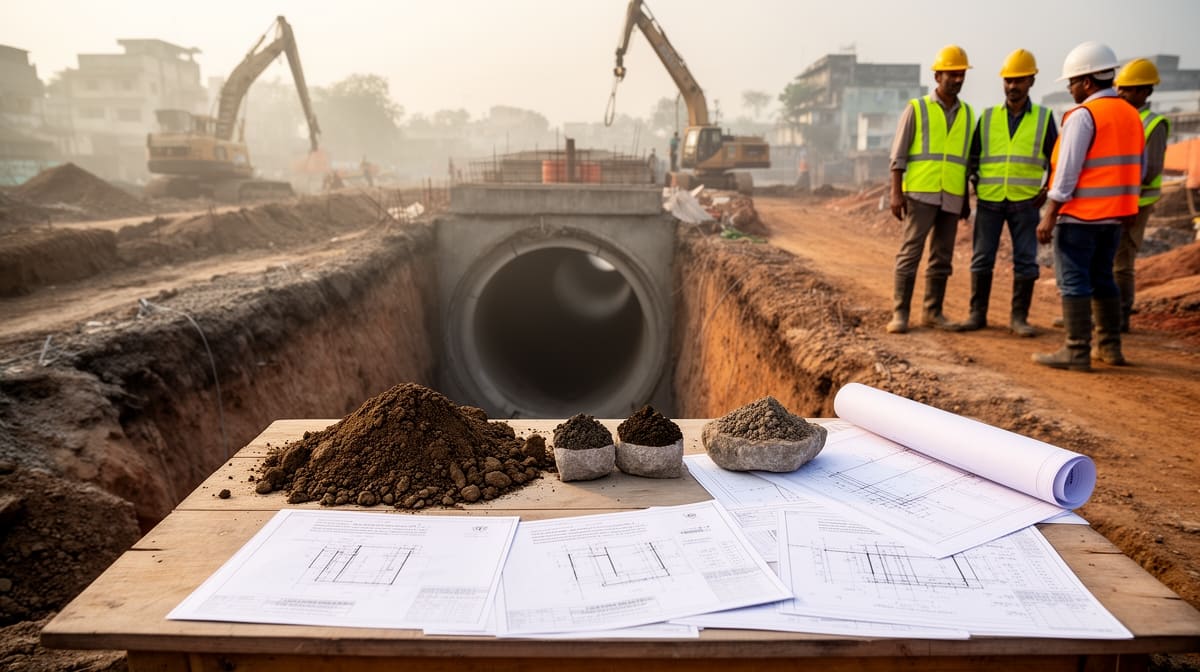
The dispute arose between the National Centre for Biological Sciences (NCBS), a government-funded research institute, and M/s URC Constructions Private Limited (URC), the contractor, over the computation of GST on non-tendered works executed under a construction contract for the Institute for Stem Cell Biology and Regenerative Medicine (InStem). The core issue was whether the value of non-tendered items (NT items) amounting to Rs. 9,65,91,596/- included 18% GST or not.
Key Facts
- The contract was awarded on 19.06.2017 for a base value of Rs. 43,57,00,753/-, inclusive of pre-GST taxes (WCT at 4% and Labour Cess at 1%)
- GST regime came into effect on 01.07.2017, replacing existing indirect taxes
- URC claimed that GST at 18% was applicable on all works, including NT items, and sought reimbursement of differential GST
- NCBS contended that the concessional rate of 12% applied, as it was a government research entity
- The Authority for Advance Ruling (AAR), Karnataka, ruled on 23.09.2019 that NCBS did not qualify for the 12% concessional rate; hence, 18% GST applied
- URC completed the works on 20.03.2019, 11 months beyond the stipulated deadline of 15.04.2018
- NCBS levied a penalty of Rs. 1,00,000/- for delay and withheld Rs. 17,21,310/- for defective fire curtains
- The final bill (Ex.R7(p)) certified by NCBS engineers showed the value of NT items as Rs. 9,65,91,596/- with the notation "full and final"
- RA Bills Nos. 6, 8, 9, 10, and 14, submitted during execution, separately itemized GST at 18% on NT items
- URC’s own memo dated 03.03.2026 acknowledged that the aggregate GST on NT items was Rs. 10,35,32,563/-, indicating partial inclusion of GST
- NCBS had paid Rs. 39,86,71,646/- to URC prior to arbitration
Procedural History
- 19.06.2017: Formal Agreement executed between NCBS and URC
- 01.07.2017: GST regime implemented
- 23.09.2019: AAR, Karnataka, ruled that 18% GST applies to NCBS
- 25.08.2020: URC issued notice under Section 21 of the A&C Act invoking arbitration
- 30.06.2022: Karnataka High Court appointed sole arbitrator (Justice P.D. Waingankar)
- 31.08.2024: Arbitral Tribunal awarded URC Rs. 3,52,50,404/- plus 9% interest and allowed counter-claim of Rs. 18,21,310/-
- 28.04.2025: Commercial Court dismissed NCBS’s Section 34 petition to set aside the award
- 16.04.2026: Commercial Appeal No. 383 of 2025 heard and reserved
- 18.06.2026: Judgment pronounced by Karnataka High Court
The Parties' Positions
NCBS: Argued that the final bill value of Rs. 9,65,91,596/- for NT items was inclusive of 18% GST, and that the Arbitral Tribunal erred in treating it as exclusive of GST. Relied on RA Bills 6, 8, 9, 10, and 14 showing separate GST components. Contended that computing 18% GST again on this amount constituted double taxation.
URC: Contended that the Rs. 9,65,91,596/- figure was exclusive of GST, and that the differential GST claim of Rs. 69,36,113/- (not 18% of Rs. 9.65 crores) was the only amount sought. Cited cross-examination of RW1, NCBS’s witness, who admitted the amount included only 12% GST.
Relief Sought
NCBS sought setting aside of the arbitral award to the extent it awarded Rs. 1,47,34,311/- as differential GST on NT items, arguing that this amount was already included in the certified value. URC sought confirmation of the award and recovery of Rs. 3,52,50,404/- with interest.
The Legal Issue
The central question was whether the Arbitral Tribunal committed patent illegality by ignoring vital evidence - specifically, RA Bills 6, 8, 9, and 10 - which clearly showed that the value of non-tendered items included 18% GST, thereby rendering the computation of additional GST on the same amount erroneous.
Arguments Presented
For the Appellant (NCBS)
The Additional Solicitor General contended that the Arbitral Tribunal erred in accepting URC’s claim that Rs. 9,65,91,596/- was exclusive of GST. He pointed to RA Bills 6, 8, 9, and 10, which itemized GST at 18% on NT items. For instance, RA Bill No. 6 showed a taxable value of Rs. 5,62,970/- with CGST and SGST of Rs. 50,667/- each, totaling Rs. 6,64,304/-. These invoices were on record and certified by NCBS. The Tribunal’s reliance solely on the final bill’s "full and final" notation ignored this contemporaneous evidence. He cited Ssangyong Engineering v. NHAI and Delhi Airport Metro v. DMRC to argue that ignoring material evidence renders an award patently illegal.
For the Respondent (URC)
Senior Advocate T. Suryanarayana argued that the final bill’s "full and final" certification, coupled with the cross-examination of RW1 (NCBS’s witness), established that the Rs. 9,65,91,596/- included only 12% GST. He emphasized that URC’s claim was only for the differential 6% GST (Rs. 69,36,113/-), not 18% on the entire amount. He relied on Bombay Slum Redevelopment Corp. v. Samir Bhojwani and Punjab State Civil Supplies v. Sanman Rice Mills to argue that courts cannot reappreciate evidence in Section 37 appeals. He maintained that the Arbitral Tribunal’s factual finding was entitled to deference.
The Court's Analysis
The Court emphasized that under Section 34 of the Arbitration and Conciliation Act, 1996, an arbitral award may be set aside only on limited grounds, including patent illegality. The Court held that an award is patently illegal if it is based on no evidence or ignores vital evidence on record.
"The conclusions of the arbitrator which are based on no evidence or have been arrived at by ignoring vital evidence are perverse and can be set aside on the ground of patent illegality."
The Arbitral Tribunal relied exclusively on the final bill (Ex.R7(p)) and the phrase "full and final" to conclude that Rs. 9,65,91,596/- was exclusive of GST. However, the Court noted that this bill was an aggregate of multiple RA Bills, several of which were explicitly on record and demonstrated the inclusion of 18% GST.
For example, RA Bill No. 6 (dated 18.01.2018) showed a taxable value of Rs. 5,62,970/- with CGST and SGST of Rs. 50,667/- each, totaling Rs. 6,64,304/-. Similarly, RA Bill No. 8 showed GST of Rs. 6,11,018/-, RA Bill No. 9 showed Rs. 1,06,050/-, and RA Bill No. 10 showed Rs. 13,118/-. These invoices were not merely referenced - they were formally submitted, admitted, and part of the arbitral record.
The Tribunal’s failure to consider these documents - which directly contradicted its factual premise - amounted to ignoring vital evidence. The Court observed:
"Failure to consider such relevant and vital evidence renders the impugned award vulnerable on the grounds of patent illegality."
The Court also noted that URC’s own memo dated 03.03.2026 acknowledged a total GST of Rs. 10,35,32,563/- on NT items, further indicating that the Rs. 9,65,91,596/- figure was not GST-exclusive. The Tribunal’s conclusion that NCBS failed to prove GST inclusion was factually incorrect, as the evidence was on record and clearly demonstrated the opposite.
The Court declined to determine the exact quantum of GST included in the Rs. 9,65,91,596/- figure, as that was a factual determination for the Arbitral Tribunal. However, it held that the Tribunal’s methodology - applying 18% GST on an amount that already contained GST - was legally unsustainable.
The Verdict
The Karnataka High Court set aside the arbitral award to the extent it awarded Rs. 1,47,34,311/- as differential GST on non-tendered items. The award is partially set aside, and the matter is remanded to the Arbitral Tribunal for recomputation of the GST liability on non-tendered works, taking into account the RA Bills and other evidence showing partial inclusion of GST. The Tribunal shall determine the correct taxable base, excluding any GST already embedded in the Rs. 9,65,91,596/- figure, and recalculate the differential GST claim accordingly. All other aspects of the award, including the counter-claim of Rs. 18,21,310/- and costs of Rs. 5,00,000/-, remain unaffected. The Tribunal shall complete the recomputation within 12 weeks.
What This Means For Similar Cases
Arbitral Tribunals Cannot Ignore Documentary Evidence
- Practitioners must ensure all invoices, bills, and tax returns are formally marked as exhibits in arbitration proceedings
- Tribunals that rely solely on final certifications while ignoring contemporaneous invoices risk having awards set aside for patent illegality
- The "full and final" notation on a bill does not override specific, documented tax components in underlying invoices
GST Disputes in Construction Contracts Require Granular Analysis
- Contractors must maintain separate, itemized GST invoices for tendered and non-tendered works
- Government entities must document their tax position clearly at each billing stage to avoid claims of double taxation
- The burden shifts to the party claiming GST inclusion to produce the actual invoices - mere assertions are insufficient
Judicial Deference Has Limits in Arbitration Appeals
- Courts will not reappreciate evidence, but they will intervene where arbitral findings are based on omission of material documents
- The Ssangyong doctrine on patent illegality is now firmly applied in commercial arbitration disputes involving tax computation
- Parties must proactively highlight evidentiary gaps in their Section 34 petitions - silence on record evidence is fatal