The Madras High Court has clarified that the jurisdiction of Arbitral Tribunals constituted under the MSMED Act is strictly confined to contracts for the supply of goods or rendering of services, excluding composite works contracts involving erection and commissioning. This ruling invalidates awards rendered by such tribunals in disputes falling outside this narrow ambit, reinforcing statutory limits on arbitral authority.
Background & Facts
The Dispute
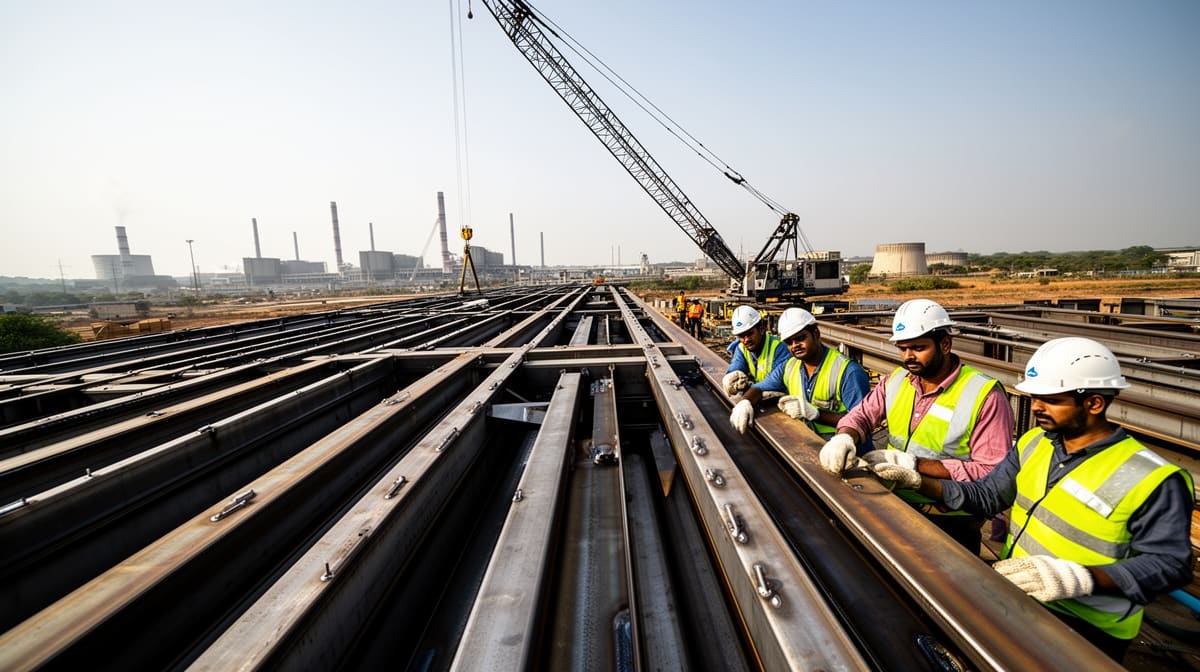
The dispute arose from a contract between M/s TGV SRAAC Ltd. (petitioner) and M/s Unicon Engineers (respondent) for the design, engineering, manufacture, supply, storage, erection, and commissioning of an Electro Static Precipitator (ESP) for a 25 MW captive power plant. The contract value evolved through multiple amendments, culminating in a total value of approximately Rs. 4.45 crore. The respondent, registered under the MSMED Act only in 2016, claimed unpaid dues of Rs. 1.66 crore after the petitioner allegedly defaulted on payments. The petitioner counterclaimed for delays and defects.
Procedural History
- 2009 - 2013: Contract executed through Letters of Intent, purchase orders, and amendments; ESP supplied and commissioned.
- 2020: Respondent initiated proceedings under Section 18(1) of the MSMED Act before a sole Arbitrator.
- 2021: Arbitrator awarded Rs. 1.66 crore to respondent and dismissed all counterclaims.
- 2022: Petitioner filed Section 34 petition before the Madras High Court to set aside the award.
- 2026: Preliminary objections on jurisdiction raised and heard; court reserved order.
Relief Sought
The petitioner sought to set aside the arbitral award on grounds that the Arbitrator lacked jurisdiction under the MSMED Act, as the contract constituted a works contract, not a simple supply of goods or services.
The Legal Issue
The central question was whether a composite contract involving the supply, erection, and commissioning of industrial equipment qualifies as a "supply of goods" or "rendering of services" under the MSMED Act, or whether it constitutes a works contract beyond the jurisdiction of Arbitral Tribunals constituted under Section 18 of the Act.
Arguments Presented
For the Petitioner
The petitioner contended that the contract was a works contract under the definition recognized by the Supreme Court in Kone Elevator India (P) Ltd. v. State of Tamil Nadu, as it involved substantial labor, skill, and installation resulting in a permanent fixture. Relying on Tata Power Co. Ltd. v. Genesis Engineering Co. and Shree Gee Enterprises v. Union of India, the petitioner argued that the MSMED Act explicitly excludes works contracts, as confirmed by the Ministry of MSME’s FAQ clarifications. The petitioner further asserted that jurisdiction under the MSMED Act cannot be conferred by consent and must be strictly construed.
For the Respondent
The respondent argued that the contract was primarily for supply of goods with incidental services, and that the Arbitrator had already rejected the jurisdictional objection in 2020. It relied on W.P. No. 17814 of 2022 to contend that jurisdictional issues cannot be re-litigated in Section 34 petitions. It also cited WPO No. 2896 of 2022 (Calcutta High Court) to argue that works contracts may still fall within MSMED jurisdiction, though this judgment was later stayed.
The Court's Analysis
The Court undertook a rigorous statutory and precedential analysis of the MSMED Act’s definitions and the Supreme Court’s evolving jurisprudence on works contracts. It emphasized that Section 2(d) of the MSMED Act defines "buyer" as one who purchases "goods" or procures "services," while Section 2(e) defines "enterprise" as engaged in "manufacture or production of goods" or "provision of services." The Court held that these definitions exclude composite contracts where the primary obligation is execution of work.
"The fundamental characteristics of works contract are satisfied when there is a composite contract for supply and installation, where labour and service element is not incidental but integral to the performance."
The Court explicitly overruled the reasoning in Kone Elevator that treated such contracts as sales, adopting instead the Delhi High Court’s interpretation in Tata Power that such contracts are works contracts. It further relied on the Ministry of MSME’s 2014 FAQ, which clarified that the Act applies only to procurement of goods produced or services rendered, not to works contracts simpliciter.
The Court rejected the respondent’s argument that the petitioner had waived jurisdictional objections, noting that jurisdictional defects go to the root of arbitral authority and cannot be waived. It held that an award rendered without jurisdiction is non est in law, regardless of whether the parties consented to the tribunal’s authority.
The Verdict
The petitioner succeeded. The Court held that the contract was a works contract falling outside the jurisdiction of Arbitral Tribunals under the MSMED Act. Consequently, the arbitral award dated 02.11.2021 was set aside as non est in law. The Court left open the possibility for the parties to refer the dispute to a new arbitrator under a valid jurisdictional framework.
What This Means For Similar Cases
Works Contracts Are Excluded from MSMED Arbitration
- Practitioners must now rigorously classify contracts before initiating proceedings under the MSMED Act
- Any contract involving installation, erection, commissioning, or integration into infrastructure is likely a works contract
- Claims under MSMED Act must be limited to pure supply of goods or standalone services
Jurisdictional Objections Are Not Waivable
- Even if a party participates in arbitration without raising jurisdiction, courts will examine it suo motu
- Section 16 objections must be addressed at the arbitral stage; failure to do so does not validate jurisdiction
- Section 34 petitions remain the proper forum to challenge awards based on jurisdictional defects
Precedent Now Favors Delhi High Court’s Interpretation
- Kone Elevator is effectively overruled in practice for MSMED purposes
- Tata Power and Shree Gee Enterprises now form the binding precedent in South India
- Legal opinions must cite these cases when advising clients on MSMED eligibility