The Competition Commission of India has delivered a landmark ruling affirming that coordinated bidding patterns, shared digital footprints, and sequential financial documentation constitute conclusive evidence of bid rigging under the Competition Act, 2002. This case underscores the Commission’s capacity to detect and penalize anti-competitive collusion even in the absence of direct communication evidence.
Background & Facts
The Dispute
The dispute arose from an audit by the Office of the Accountant General (Audit), Assam, which alleged systemic bid rigging in 73 tenders floated by the Assam Police Housing Corporation Limited (APHCL) for "Internal and External Electrification Works in Police Station Buildings" under the MOITRI Scheme. The tenders, issued between January and March 2018, involved electrical works across 345 police stations in Assam, with a total procurement value of Rs. 37.40 crore. The audit concluded that the 17 registered electrical contractors (Opposite Parties) had colluded to manipulate the bidding process, resulting in an inflated procurement cost of at least Rs. 7.56 crore.
Key Facts
- The MOITRI Scheme was launched by the Government of Assam in July 2016 to upgrade 345 police stations by 2022.
- APHCL floated 73 separate tenders for electrical works between January and March 2018.
- All 17 Opposite Parties were registered Class I contractors with APHCL.
- In 71 of the 73 tenders, exactly three bidders submitted bids; in the remaining two, four bidders participated.
- 16 out of 17 bidders won at least one tender, indicating a pattern of tender allocation.
- L-1 bids consistently matched the exact estimated rates prepared by APHCL’s consultants, despite these estimates being non-public.
- L-2 and L-3 bids consistently quoted prices higher than L-1 by multiples of Rs. 10, Rs. 100, or Rs. 1000.
- All bidders replicated identical errors from consultant estimates, including quoting rates for "Solar Power Plant" instead of "Solar Street Light" in 70 out of 73 tenders.
- The Diesel Generator rate was uniformly inflated across all bids to compensate for underestimation of other items.
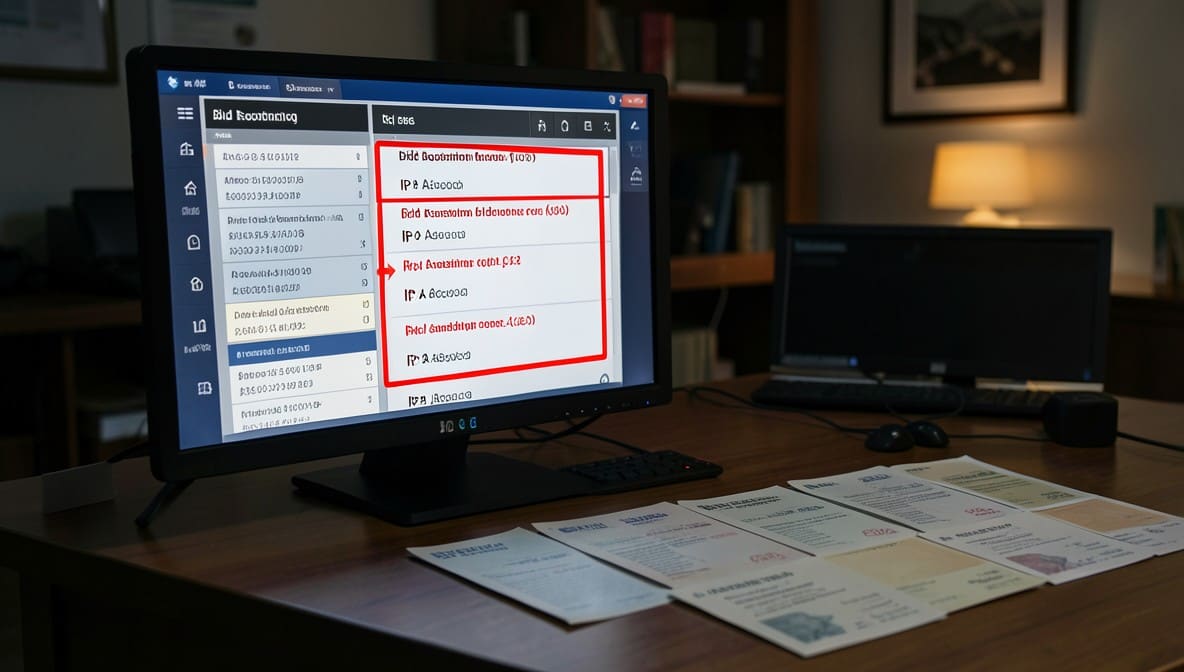
- Bids were submitted from the same IP address in multiple tenders, often within minutes of each other.
- Demand Drafts (DDs) for tender fees were issued from the same bank on the same date and bore sequentially numbered serials.
- Mr. Tapan Jyoti Borah, a cyber cafe operator in Sixmile, Guwahati, admitted to submitting bids on behalf of multiple bidders for Rs. 2,500 per tender.
- Call Data Records (CDR) showed communication between proprietors of competing bidders during the bid submission window.
- DDs for multiple bidders in a single tender were often tendered by one bidder or a third party.
Procedural History
- 10.08.2020: Complaint filed by Office of the Accountant General (Audit), Assam.
- 21.10.2021: CCI issued prima facie order under Section 26(1) directing Director General (DG) to investigate.
- 24.11.2023: DG submitted Investigation Report.
- 18.03.2024: CCI directed OPs to file objections and submit financial statements for FY 2014-15 to 2016-17.
- 20.11.2024 & 29.01.2025: CCI granted two extensions for submission of financials.
- 06.08.2025: CCI fixed hearing date for 08.10.2025.
- 08.10.2025: Hearing held; OPs directed to file written submissions within 14 days.
- 29.10.2025: Final hearing held; remaining OPs directed to file submissions within 7 days.
- 07.04.2026: CCI passed final order.
The Parties' Positions
For the Opposite Parties (OPs):
- Argued that identical bids resulted from reliance on APWD Schedule of Rates (2013-14), which was publicly available.
- Claimed common IP addresses were due to limited cyber infrastructure in Guwahati.
- Contended sequential DDs were coincidental and standard practice for cyber cafes.
- Asserted replication of consultant errors was unintentional and not indicative of collusion.
- Some OPs claimed ignorance of participation in certain tenders (e.g., OP-15 in Sonari P.S.).
- OP-6 argued Section 48 does not apply to sole proprietorships.
For the Commission:
- Presented overwhelming circumstantial evidence: identical pricing patterns, shared digital infrastructure, sequential DDs, CDR logs, and replication of non-public consultant errors.
- Demonstrated that the pattern was consistent across all 73 tenders.
- Established that the only plausible explanation for such uniformity was pre-arranged collusion.
Relief Sought
The Commission sought to determine whether the OPs violated Section 3(3)(d) read with Section 3(1) of the Competition Act, 2002, and whether the proprietors were liable under Section 48. No monetary penalty was sought; the Commission sought a cease and desist order.
The Legal Issue
The central question was whether the conduct of the 17 electrical contractors - characterized by identical bid rates, replication of non-public consultant errors, use of common IP addresses, sequentially numbered Demand Drafts, and coordinated submission through a single cyber cafe - constitutes bid rigging under Section 3(3)(d) of the Competition Act, 2002, even in the absence of direct evidence of communication.
Arguments Presented
For the Appellant/Petitioner
The Commission, acting suo motu, argued that the conduct of the OPs satisfied the presumption of Appreciable Adverse Effect on Competition (AAEC) under Section 3(3) of the Act. The DG’s investigation established a clear pattern of collusive behavior: (1) L-1 bids mirrored non-public consultant estimates; (2) L-2 and L-3 bids followed fixed numerical increments; (3) identical errors were replicated across bids; (4) bids were submitted from the same IP addresses within minutes; (5) DDs were sequentially numbered and tendered by one party on behalf of others; and (6) CDR logs showed communication between proprietors. The Commission relied on CCI v. SBI and CCI v. Hyundai to affirm that circumstantial evidence suffices to establish collusion. The Commission emphasized that bid rigging undermines fair competition and distorts public procurement outcomes.
For the Respondent/State
The OPs collectively contended that their conduct was lawful and coincidental. They argued that: (1) APWD SOR rates were publicly accessible and widely used; (2) common use of cyber cafes in Guwahati explained shared IP addresses; (3) sequential DDs were a result of bank issuance practices, not collusion; (4) errors in tender submissions were unintentional and attributable to consultant mistakes; and (5) Section 48 does not apply to sole proprietorships. OP-6 further argued that its turnover was minimal and imposition of penalty would render it economically unviable. None of the OPs provided any evidence of independent bid preparation or pricing rationale.
The Court's Analysis
The Commission conducted a meticulous review of the DG’s investigation report and the submissions of the OPs. It rejected all explanations offered by the OPs as implausible and inconsistent with the scale and uniformity of the observed patterns.
"The bidding pattern adopted by the OPs show that the difference in price quoted was not due to factors like cost of transportation, tax etc., but only under a scheme of collusive bidding."
The Commission noted that the replication of non-public consultant errors - such as quoting "Solar Power Plant" instead of "Solar Street Light" - could not be explained by coincidence. Only those bidders who participated in tenders with the erroneous estimate replicated the mistake. In the three tenders where the consultant had correctly estimated "Solar Street Light," all bidders correctly quoted it. This demonstrated awareness of the consultant’s figures and deliberate alignment.
The Commission further held that the use of sequentially numbered DDs, issued from the same bank on the same date and tendered by one bidder on behalf of others, was not merely procedural but indicative of pre-arranged allocation of tenders. The fact that DDs for multiple bidders were tendered by a single entity, often the L-1 bidder, confirmed a system of bid rotation.
"The same public IP address was used to submit bids by various bidders, indicating use of the same computer system."
The Commission emphasized that the timing of bid submissions - often within minutes of each other from the same cyber cafe - was incompatible with independent bidding. The admission by Mr. Tapan Jyoti Borah that he submitted bids for multiple parties for a fixed fee further corroborated the existence of a centralized bidding mechanism.
The Commission also rejected the argument that Section 48 does not apply to sole proprietorships. It held that the term "company" under Section 48 includes any legal entity engaged in business, and sole proprietorships fall squarely within its ambit. The proprietors were found to be directly involved in the conduct, had knowledge of the bidding process, and personally authorized the submission of bids.
The Commission concluded that the cumulative weight of evidence - bidding patterns, digital footprints, financial documentation, and testimonial evidence - established a prima facie case of bid rigging under Section 3(3)(d). The presumption of AAEC under Section 3(3) was not rebutted.
The Verdict
The Competition Commission of India held all 17 Opposite Parties and their respective proprietors liable for contravention of Section 3(3)(d) read with Section 3(1) of the Competition Act, 2002. The Commission found that the conduct constituted bid rigging through bid rotation and cover bidding. No monetary penalty was imposed. Instead, the Commission issued a cease and desist order under Section 27(a), directing all OPs and their proprietors to immediately discontinue all practices found to be anti-competitive. The order emphasized that any recurrence would be treated as recidivism with aggravated consequences. The Commission clarified that the findings are not confidential and may be disclosed under Section 57 of the Act.
What This Means For Similar Cases
Collusion Can Be Proven Without Direct Communication
- Practitioners must now assume that identical pricing patterns, shared digital infrastructure, and sequential financial documentation are sufficient to establish collusion under Section 3(3)(d).
- The burden shifts to respondents to prove independent pricing behavior, not just absence of direct contact.
- In public procurement cases, any uniformity in bids against non-public estimates is a red flag.
Digital Footprints Are Critical Evidence
- Use of common IP addresses, submission timestamps, and cyber cafe usage are now admissible and decisive evidence of collusion.
- Law firms handling tender disputes must advise clients to avoid shared digital environments for bid submission.
- Forensic IT audits of bid submission logs should be routinely requested in competition investigations.
Section 48 Applies to Sole Proprietors
- Proprietors of sole proprietorships are personally liable under Section 48 if they are involved in anti-competitive conduct.
- Legal counsel must now advise individual business owners that their personal conduct in bidding processes carries direct legal risk.
- Corporate governance protocols must extend to sole proprietorships participating in public tenders.
Mitigating Factors May Spare Penalties But Not Liability
- While the Commission chose not to impose a penalty due to the OPs’ small size and first-time violation, liability was not avoided.
- Cease and desist orders carry reputational and operational consequences.
- Future violations will attract penalties under Section 27(1), with personal liability under Section 48.