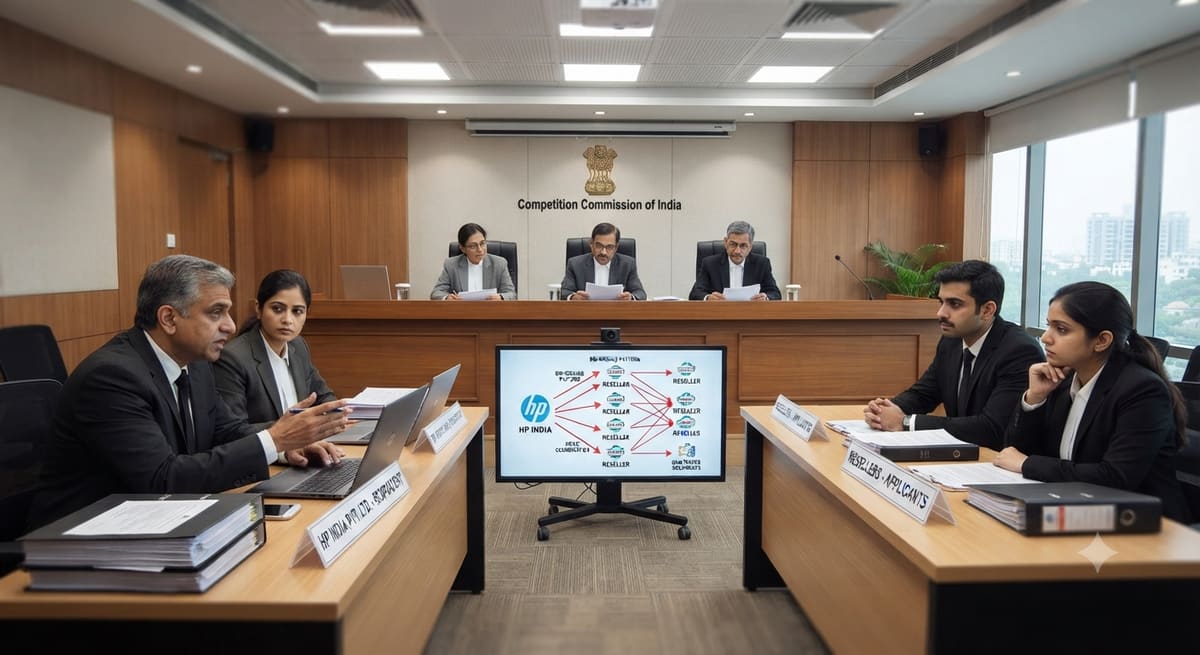
The Competition Commission of India (CCI) concluded that the Trustees' Association of India (TAI) and its member debenture trustees engaged in anti-competitive price fixing of trusteeship fees, affirming CCI's jurisdiction even where sectoral regulator SEBI is involved.
Background & Facts
The Dispute
The Informant, Muthoot Finance Limited, a listed company headquartered in Ernakulam, Kerala, raised an information under Section 19(1)(a) of the Competition Act, 2002 alleging that the Trustees' Association of India (OP-1) and its member debenture trustees - IDBI Trusteeship Services Ltd. (OP-2), Axis Trustee Services Ltd. (OP-3) and SBI CAP Trustee Company Ltd. (OP-4) - colluded to fix a benchmark fee structure for debenture trusteeship services. The Informant claimed the fee increase was unilateral, excessive and without prior consultation, causing it to miss the deadline for filing a NCD offer document.
Key Facts
- Muthoot Finance regularly raises working capital through Non-Convertible Debentures (NCDs); as of 30-06-2021 its NCD book stood at ₹13,478 crore.
- Under the Companies Act, 2013 and SEBI regulations, a debenture trustee (DT) must be appointed for each public issue of NCDs.
- OP-2 acted as DT for Muthoot Finance’s NCD issuances for the past ten years.
- In August 2021, Muthoot Finance sought a fee quotation from OP-2 for a proposed secured NCD issue of ₹982 crore.
- OP-2 quoted an Initial Fee of ₹9,82,000 and an Annual Fee of ₹14,73,000, both markedly higher than its previous pricing.
- OP-2 informed Muthoot Finance that the revised fee structure was decided by OP-1 and that any deviation would attract “adverse repercussions”.
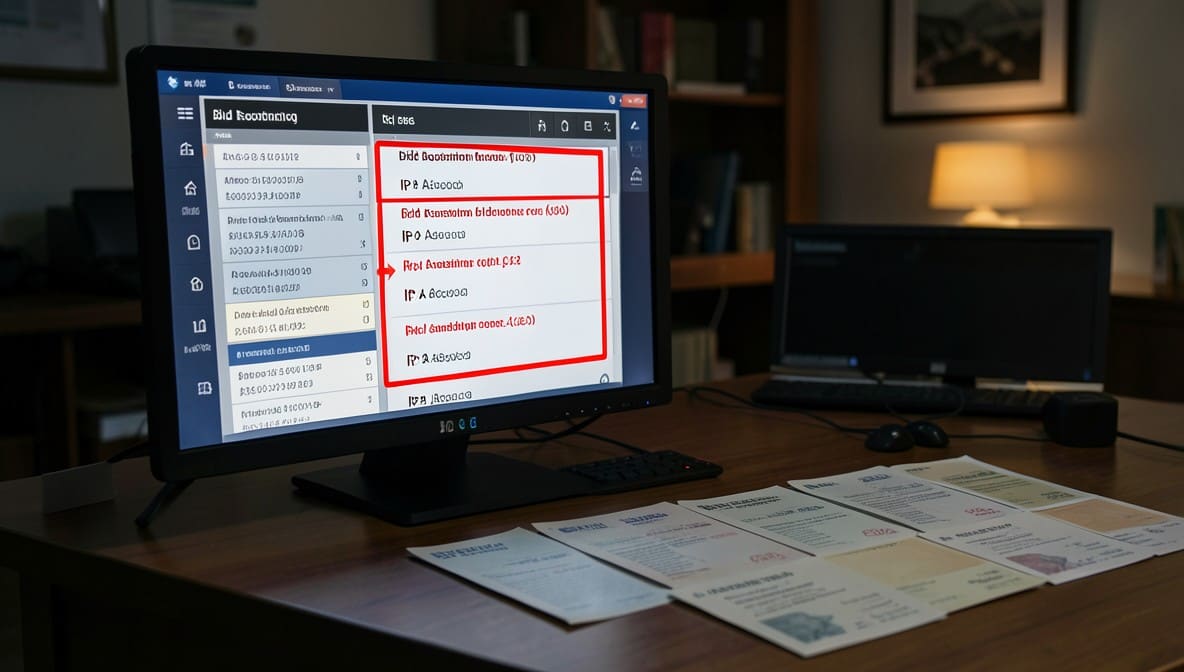
- OP-1’s internal minutes (MoM) dated 23-03-2021 recorded that members would follow a “Benchmark Pricing” effective 01-04-2021, with a floor price for non-PSU issuers and a discretionary allowance not to fall more than 20 % below the published fee.
- Earlier MoMs dated 24-01-2018 and 06-06-2019 show that the idea of a minimum pricing standard was discussed and agreed upon well before the SEBI May 2019 Circular.
- Emails exchanged in 2021 reveal OP-1 pressuring non-member DTs (e.g., MITCON) to join the association and adhere to the benchmark fee, even directing them to withdraw lower bids.
- The Informant alleged that the fee hike prevented it from filing its NCD offer on time and that the benchmark pricing lacked any statutory basis.
Procedural History
- 12-06-2021: Informant files information before CCI under Section 19(1)(a).
- 06-10-2021: CCI orders OPs to respond; Informant allowed to file rejoinder.
- 30-11-2021: OP-1 files response, citing increased DT responsibilities and SEBI regulatory changes.
- 08-04-2022: Bombay High Court allows SEBI a reasonable time (till 30-06-2022) to complete its enquiry.
- 11-04-2022: Bombay High Court directs CCI to proceed with its jurisdiction while SEBI’s findings are pending.
- 23-12-2021: CCI issues Prima Facie Order under Section 26(1), referring matter to Director General (DG) for investigation.
- 19-07-2022: SEBI submits its examination report to DG.
- 10-10-2024: DG submits Investigation Report identifying three issues and concluding that OP-1 fixed benchmark fees, limiting supply, in violation of Sections 3(3)(a) and 3(3)(b).
- 14-03-2024: CCI re-affirms its jurisdiction, citing Bharti Airtel precedent.
- 31-01-2025: CCI directs parties to file objections/suggestions to the Investigation Report within eight weeks.
- 02-09-2026: CCI delivers its final order (the judgment analyzed here).
Parties' Positions
- Informant (Muthoot Finance): Argues that OP-1’s benchmark pricing constitutes a cartel, lacks SEBI authority, and caused material loss.
- OP-1 and OP-2/OP-3/OP-4: Claim the fee structure was a response to increased DT responsibilities, was discussed with SEBI, and that SEBI had not objected; they also contend that CCI lacks jurisdiction where SEBI is the sectoral regulator.
Relief Sought
The Informant sought:
- A declaration that OP-1 and its members violated Sections 3(3)(a) and 3(3)(b) of the Competition Act.
- An order directing the OPs to discontinue the benchmark pricing and revert to pre-2021 fee structures for the next 24 months, with a 5 % annual increase thereafter.
- Monetary penalties against the OPs and individual officers under Section 48.
- Interim relief under Section 33 of the Act (later denied).
The Legal Issue
The central question was whether the conduct of OP-1 and its member debenture trustees - fixing a uniform benchmark fee for trusteeship services and threatening punitive action for deviation - amounted to an anti-competitive agreement under Section 3(3)(a) and Section 3(3)(b) of the Competition Act, 2002, and whether the CCI possessed jurisdiction to adjudicate the matter despite parallel proceedings before SEBI.
Arguments Presented
For the Informant
- The benchmark fee was decided collectively by OP-1 members, amounting to price fixing and market allocation, prohibited by Section 3.
- No SEBI regulation empowered OP-1 to prescribe fees; the SEBI May 2019 Circular only required disclosure, not a minimum fee.
- Emails and MoMs demonstrate coercive tactics (e.g., forcing MITCON to withdraw a lower bid), evidencing an agreement to control prices and supply.
- CCI’s jurisdiction is not ousted by SEBI’s involvement, as per Bharti Airtel where the competition regulator may act unless the sectoral regulator’s finding conclusively establishes non-violation.
For the Respondents (OP-1, OP-2, OP-3, OP-4)
- The fee revision was a legitimate response to heightened DT responsibilities arising from SEBI-mandated regulatory amendments.
- SEBI had been consulted and had not objected; therefore, the conduct fell within the regulatory framework, not the ambit of the Competition Act.
- The High Court’s direction to await SEBI’s prima-facie view indicated that CCI should defer until SEBI concluded its investigation.
- No concrete penalty mechanism existed; any “adverse repercussions” were merely threats, not enforceable sanctions.
The Court's Analysis
The CCI examined the statutory framework, the evidentiary record, and precedent.
-
Jurisdiction - The Commission reiterated that Bharti Airtel does not automatically strip CCI of jurisdiction merely because a sectoral regulator is involved. The CCI held that SEBI’s lack of a definitive finding of non-violation meant the condition for deferring to the sectoral regulator was unmet, and therefore CCI could proceed.
-
Interpretation of Section 3 - The Commission applied the definition of an “agreement” under Section 2(b). The MoMs, emails, and statements of senior officials demonstrated a concerted decision to fix a floor price and to monitor compliance, satisfying the “meeting of minds” requirement. The presence of a discretionary clause (20 % deviation) did not negate the anti-competitive effect because the deviation was tightly capped and effectively unenforced.
-
Role of SEBI - While SEBI’s May 2019 Circular mandated fee disclosure, it did not authorize any association to set a minimum fee. The CCI noted that SEBI’s communications merely sought transparency, not price control, and that SEBI’s later letters expressly refrained from endorsing the benchmark pricing.
-
Evidence of Coercion - The DG’s report highlighted specific instances where OP-1 directed non-member DTs to join the association and to adhere to the benchmark fee, even instructing MITCON to withdraw a lower bid. These actions amounted to “adverse repercussions” and demonstrated the existence of a punitive threat, satisfying the requirement for an “anti-competitive agreement”.
-
Liability of Individuals - Under Section 48(1) and 48(3), the Commission identified officers who participated in the decision-making and enforcement as “persons responsible”. The individuals named were Sanjay Sinha, Rajasekhar Raghavan, Padma Vinod Betai and Bharat Kumar Mishra.
"OP-1 and its members were found in contravention of Section 3(3)(a) and 3(3)(b) read with Section 3(1) of the Act by indulging in fixing the benchmark price of providing debenture trusteeship services during the period of FY 2020-21 and 2021-22."
- Penalty Considerations - The Commission applied the Penalty Guidelines, noting mitigating factors: OP-1’s defunct status, lack of income during the contravention period, and the fact that OP-2, OP-3 and OP-4 had, in many instances, charged below the benchmark after March 2022. Consequently, no monetary penalty was imposed, but a strict cease-and-desist order was issued.
The Verdict
The CCI held that OP-1 (now succeeded by new TAI) and its member trustees OP-2, OP-3 and OP-4 contravened Section 3(3)(a) and Section 3(3)(b) of the Competition Act, 2002 by fixing a benchmark fee for debenture trusteeship services and limiting supply. The Commission ordered the parties to cease and desist from such conduct, directed compliance within eight weeks, and identified individuals Sanjay Sinha, Rajasekhar Raghavan, Padma Vinod Betai and Bharat Kumar Mishra as liable under Section 48. No monetary penalty was imposed due to mitigating circumstances.
What This Means For Similar Cases
Jurisdiction Co-exists with Sectoral Regulators
Practitioners must recognise that the Competition Commission can adjudicate anti-competitive conduct even when a sectoral regulator (e.g., SEBI) is involved, unless the regulator issues a definitive prima-facie finding of non-violation. The Bharti Airtel test requires both conditions; absence of the second condition preserves CCI’s jurisdiction.
Price-Fixing Requires Concrete Agreement Evidence
A mere discussion of price standards is insufficient. Courts will look for documented minutes, coordinated communications, and enforcement mechanisms (e.g., threats of penalties) to establish the “meeting of minds”. Emails directing non-members to conform to a benchmark fee are strong indicia of an illegal agreement.
Individual Liability Under Section 48
Officers who actively participate in formulating or enforcing anti-competitive agreements can be held personally liable. Firms should ensure that senior management refrains from attending meetings where price-fixing decisions are made, and maintain clear records to demonstrate lack of participation.
Mitigating Factors Influence Penalties
Even when liability is established, the Commission may waive monetary penalties if the entity is defunct, has negligible turnover during the contravention period, or cooperates fully. However, a cease-and-desist order remains mandatory, and repeat violations will attract harsher sanctions.