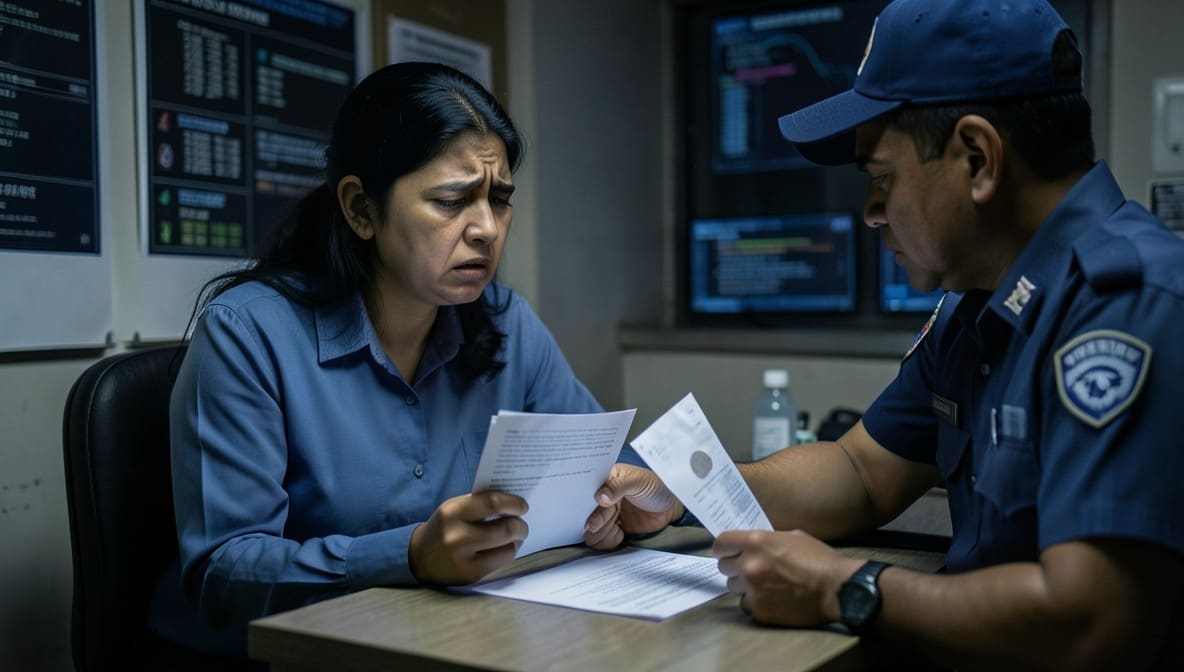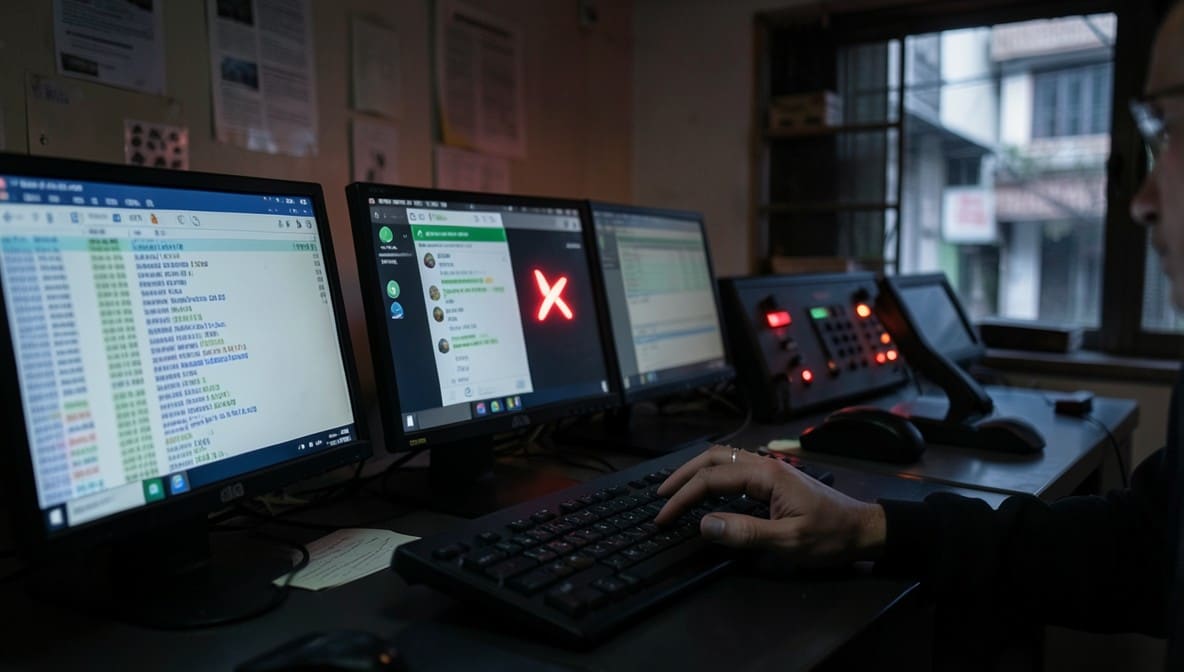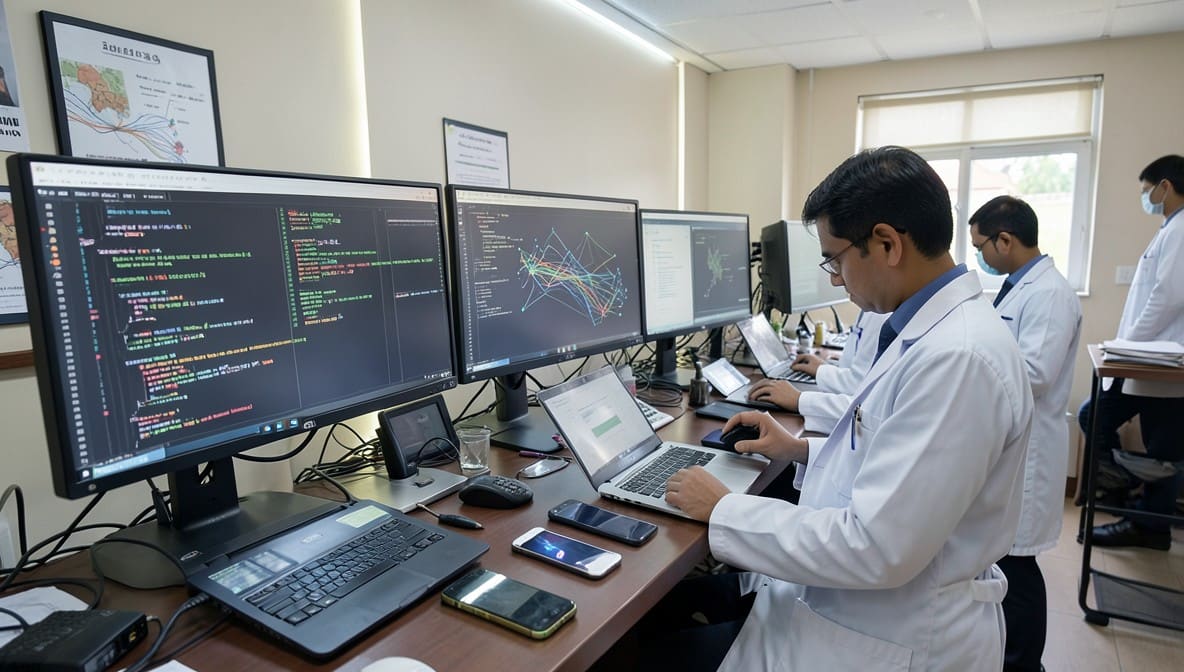
The Punjab & Haryana High Court has clarified that mere employment in a suspected cyber fraud operation, without evidence linking individuals to proceeds or specific criminal intent, does not justify continued pre-charge custody. In a batch of petitions involving alleged digital extortion targeting foreign nationals, the Court granted regular bail to all petitioners, emphasizing the absence of prima facie evidence of individual culpability.
Background & Facts
The Dispute
The present petitions arise from FIR No. 32 dated 17.06.2025, registered at Police Station Cyber Crime Phase-7, SAS Nagar (Mohali), under Section 318(4) and Section 61(2) of the Bharatiya Nyaya Sanhita, 2023, and Section 66-D of the Information Technology Act, 2000. The FIR was triggered by secret intelligence alleging a sophisticated call centre operation operating from Flat No. 501, Tower No. 3 and Flat No. 1101, Tower No. 2, Acme Eden Court, Sector-91, SAS Nagar (Mohali). The operation allegedly used false mobile applications, digital games, and computer platforms to defraud foreign nationals through a modus operandi termed "digital arrest."
Key Facts
- The call centre allegedly impersonated law enforcement agencies to falsely inform victims of involvement in illegal currency transactions and narcotics trafficking
- Victims were coerced into transferring substantial sums under threat of legal action
- During a raid on 17.06.2025, 13 laptops, 14 mobile phones, and one Scorpio vehicle were seized
- The State’s status report estimates total fraud amount at approximately Rs. 50 crores
- The petitioners include Abhishek Pandey, Arpita Sarbabidya, Arfin Siddiqui, Shadan Shakil, Amit Tiwari, Mukul Singh, Pardeep Dass, and Akshay Kumar
- All petitioners were apprehended during the raid on 17.06.2025 and have remained in custody since that date
- The petitioners claim they were only employees receiving salary and had no ownership, control, or financial benefit from the alleged transactions
- No bank accounts of the petitioners have been linked to the proceeds of fraud
- The Forensic Science Laboratory (FSL) report on seized digital devices remains pending
Procedural History
- 17.06.2025: FIR registered; all petitioners arrested during raid
- 17.06.2025 to 30.03.2026: Continuous custody of petitioners without charges being framed
- Various dates between 17.06.2025 and 28.03.2026: Multiple bail applications filed before trial court, all rejected
- 01.01.2026 to 20.03.2026: Separate writ petitions filed in the High Court under Articles 226 and 227 of the Constitution
- 30.03.2026: Hearing concluded before Justice Vinod S. Bhardwaj; order passed on same day
The Parties' Positions
The petitioners assert they are low-level employees with no knowledge of the fraudulent scheme, no access to financial accounts, and no receipt of any portion of the proceeds. They argue that their detention is disproportionate and violates the presumption of innocence.
The State concedes that the call centre was operated by a non-petitioner accused and that the petitioners were not shareholders or owners. However, it opposes bail on grounds that the FSL report is pending and the full extent of each petitioner’s involvement cannot be assessed until digital evidence is analyzed.
Relief Sought
The petitioners seek regular bail, arguing that: (1) the offences are non-bailable but triable by a Magistrate; (2) charges have not been framed; (3) they have been in custody for over nine months; (4) no material links them to the proceeds; and (5) their antecedents are clean.
The Legal Issue
The central question was whether an accused person, who has been in custody for over nine months without charges being framed and with no evidence linking them to the proceeds or specific role in the alleged offence, is entitled to regular bail under the principles of proportionality and presumption of innocence.
Arguments Presented
For the Petitioner
Learned counsel argued that the petitioners are not accused of being masterminds or beneficiaries but merely employees. They cited Arnesh Kumar v. State of Bihar to emphasize that arrest cannot be automatic in non-bailable offences without considering the necessity. They highlighted that the prosecution has not produced any evidence of financial gain, communication with victims, or direction of funds to the petitioners. The delay in framing charges, coupled with the prolonged custody, renders continued detention unjustified.
For the Respondent
The State did not dispute the petitioners’ employment status but contended that the FSL report, pending since the raid, may reveal incriminating data. It argued that the magnitude of the fraud (Rs. 50 crores) and the transnational nature of the crime warranted continued custody to prevent tampering with evidence and to allow full forensic analysis.
The Court's Analysis
The Court examined the stage of proceedings, the nature of custody, and the absence of any specific allegations against the petitioners. It noted that the prosecution had not identified any particular role attributable to any petitioner, nor had it established that any proceeds were routed to their accounts. The Court emphasized that the mere fact of employment in a suspected fraudulent enterprise does not equate to criminal liability.
"The prosecution has not been able to point to any specific act, communication, or financial transaction attributable to any of the petitioners. The fact that they were present at the location does not, by itself, establish participation in the commission of the offence."
The Court further observed that the offences under the Bharatiya Nyaya Sanhita and IT Act are triable by a Magistrate and that the trial has not progressed beyond the stage of investigation. Charges have not been framed even after nine months of custody. The Court held that the prolonged detention without formal charges, in the absence of any material linking the petitioners to the proceeds or specific criminal conduct, violates the principle of proportionality under Article 21 of the Constitution.
The Court also rejected the State’s reliance on the pending FSL report as a ground for continued custody, noting that forensic analysis is a procedural step and cannot justify indefinite pre-charge detention. The Court underscored that bail is not a determination of guilt but a safeguard against arbitrary detention.
The Verdict
The petitions are allowed. The petitioners are granted regular bail subject to furnishing bail bonds and sureties to the satisfaction of the trial court, Duty Magistrate, or Illaqa Magistrate. The petitioners shall not influence any prosecution witness directly or indirectly. The observation made herein shall not be construed as an expression on the merits of the case. The trial court shall decide the matter on the basis of evidence adduced at trial.
What This Means For Similar Cases
Custody Cannot Be Indefinite Without Charges
- Practitioners must challenge prolonged pre-charge custody in non-bailable cases where no specific role or financial benefit is established
- Delay beyond six months without framing charges, especially in cases triable by Magistrates, raises a strong presumption against continued detention
- The burden shifts to the prosecution to demonstrate why custody remains necessary beyond the initial investigation phase
Employment Alone Is Not Criminal Participation
- Merely working in a suspected fraudulent operation does not constitute participation unless there is evidence of intent, knowledge, or financial gain
- Absence of bank linkages, communication with victims, or control over operations must be highlighted in bail applications
- Courts are increasingly recognizing the distinction between employees and orchestrators in cyber fraud cases
FSL Reports Do Not Justify Pre-Charge Detention
- Pending forensic reports cannot be used as a blanket justification for denying bail
- The Court must assess whether the delay in analysis is due to systemic backlog or legitimate investigative necessity
- Petitioners should request timelines for FSL reporting and use delays as grounds for bail under Article 21