The Rajasthan High Court has clarified that mere provision of bank account or ATM for commission in a cyber fraud scheme, without active participation in the offence, does not warrant denial of bail. This ruling reinforces the principle that pre-trial detention must be justified by the nature of involvement, not mere association with the crime.
Background & Facts
The Dispute
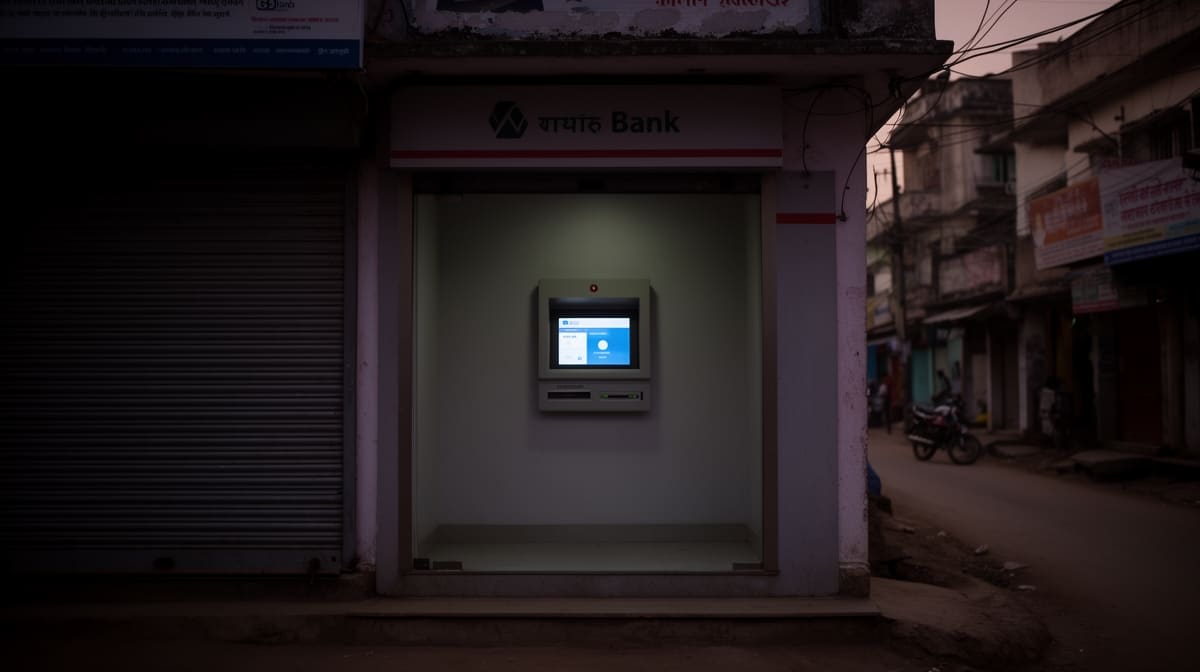
The petitioner-applicants, Aadesh S/o Parshu Ram and Mohammed Yasin S/o Ahmed Hussain, were arrested in connection with FIR No. 115/2026 registered at Dhariyawad Police Station, District Pratapgarh. The case involves alleged cyber fraud under Section 318(4), Section 316(2) of the Bharatiya Nagarik Suraksha Sanhita (BNSS), and Section 66D of the Information Technology Act, 2000. The applicants are accused of providing their bank accounts and ATM details to unknown co-accused, who used them to receive illicit funds from victims of online fraud. In return, Aadesh received Rs. 10,000 and Yasin received larger sums as commission.
Key Facts
- FIR No. 115/2026 was registered on 02.06.2026 at Dhariyawad Police Station
- The applicants were arrested on 30.05.2026
- No allegation exists that either applicant initiated, planned, or executed any fraudulent transaction
- The FIR alleges that the applicants' accounts were used as "mule accounts" to launder proceeds of cyber fraud
- Aadesh received Rs. 10,000 as commission for providing his ATM
- Mohammed Yasin received larger amounts through multiple transactions
- Both applicants have no prior criminal record
- The offences alleged are non-bailable but triable by a Magistrate
Procedural History
- 02.06.2026: FIR registered at Dhariyawad Police Station
- 30.05.2026: Both applicants arrested and lodged in District Jail, Pratapgarh
- 11.05.2026: Bail application filed before the trial court and rejected
- 02.06.2026: Bail applications filed before the High Court under Section 483 BNSS
Relief Sought
The applicants sought bail on the grounds that they were not active participants in the fraud, had no criminal antecedents, and their continued detention would serve no useful purpose given the lengthy trial process.
The Legal Issue
The central question was whether an accused person, who merely provided bank account or ATM details for commission in a cyber fraud scheme without active involvement in the commission of the offence, is entitled to bail under Section 483 BNSS, particularly when the offence is triable by a Magistrate and the trial is likely to be protracted.
Arguments Presented
For the Appellant/Petitioner
Learned counsel argued that the applicants were not active perpetrators but passive beneficiaries. They submitted that the FIR does not allege any role in phishing, hacking, or manipulation of digital systems. The applicants’ involvement was limited to providing account details in exchange for commission, akin to a financial intermediary with no knowledge of the fraudulent intent behind the transactions. Counsel relied on the principle that bail should be the norm and jail the exception, especially where the accused has no criminal history and the offence is not of a violent or heinous nature. They emphasized that continued incarceration for a Magistrate-triable offence, pending a lengthy trial, would violate the right to liberty under Article 21.
For the Respondent/State
The Public Prosecutor opposed bail, contending that cyber fraud is a serious economic offence with wide societal impact. He argued that providing bank accounts for laundering proceeds of fraud constitutes active participation in the criminal enterprise, regardless of whether the accused initiated the fraud. He cited the growing trend of using innocent individuals as "mules" in cybercrime and urged the Court to deny bail to deter such practices.
The Court's Analysis
The Court examined the nature of the allegations and found no evidence of active participation by the applicants in the commission of the cyber fraud. The Court noted that the FIR does not impute any role in creating fake profiles, phishing, hacking, or directing transactions. The applicants’ role, as per the material on record, was confined to receiving funds into their accounts and withdrawing or transferring them upon instruction, in return for a commission.
"There is no allegation of active involvement of the applicants in commission of the offences and they are simply beneficiary in the form of commission in consideration of providing their account number and ATM to the co-accused."
The Court emphasized that while providing accounts for illicit purposes is not lawful, it does not automatically equate to being a principal offender. The Court distinguished between active conspirators and those who, knowingly or unknowingly, facilitate transactions for financial gain. It further noted that the offences are triable by a Magistrate, indicating legislative intent that they are not among the most grave categories of crime. The Court also considered the duration of custody - over 15 days at the time of hearing - and the likely prolonged nature of trial proceedings.
The Court held that the continued incarceration of the applicants served no useful purpose, particularly in the absence of any risk of flight, tampering, or threat to public order. The Court declined to express any opinion on the merits of the case, clarifying that its observations were prima facie and subject to the trial court’s final determination.
The Verdict
The bail applications were allowed. The applicants, Aadesh and Mohammed Yasin, shall be released on bail upon furnishing a personal bond of Rs. 50,000 each and two sureties of Rs. 25,000 each to the satisfaction of the trial court. They must appear before the trial court on all hearing dates, not tamper with evidence or influence witnesses, not leave the country without permission, attend the concerned police station on the 25th of every month, and cooperate fully in the trial. Any violation of these conditions shall result in automatic cancellation of bail. The trial court retains full authority to reassess the case on merits based on evidence.
What This Means For Similar Cases
Passive Participation Does Not Automatically Deny Bail
- Practitioners may now argue that mere provision of bank accounts or ATM details for commission, without evidence of active planning or execution of fraud, warrants bail under Section 483 BNSS
- Courts must distinguish between facilitators and perpetrators in cyber fraud cases
- The absence of prior criminal record and non-violent nature of the offence are critical factors
Trial Duration and Magistrate-Triable Offences Favor Bail
- Cases involving offences triable by Magistrate should be treated with greater leniency in bail considerations
- Prolonged pre-trial detention for non-heinous, non-bailable offences must be justified by concrete risk factors, not general deterrence
- Courts should not deny bail merely because the offence is "cyber" or "economic" - the nature of involvement is decisive
Conditions Must Be Specific and Enforceable
- Regular police attendance conditions (e.g., 25th of every month) are now a recognized condition in bail orders for financial crimes
- Automatic cancellation clauses for repeat offences are enforceable and should be included in similar orders
- Conditions must be clear, measurable, and not overly burdensome to ensure compliance