The Patna High Court has reaffirmed that writ jurisdiction under Article 226 of the Constitution cannot be invoked to challenge statutory environmental consents when a specific statutory appeal mechanism exists. The dismissal of this Public Interest Litigation underscores the principle that courts must defer to legislatively created remedies before entertaining broad constitutional challenges.
Background & Facts
The Dispute
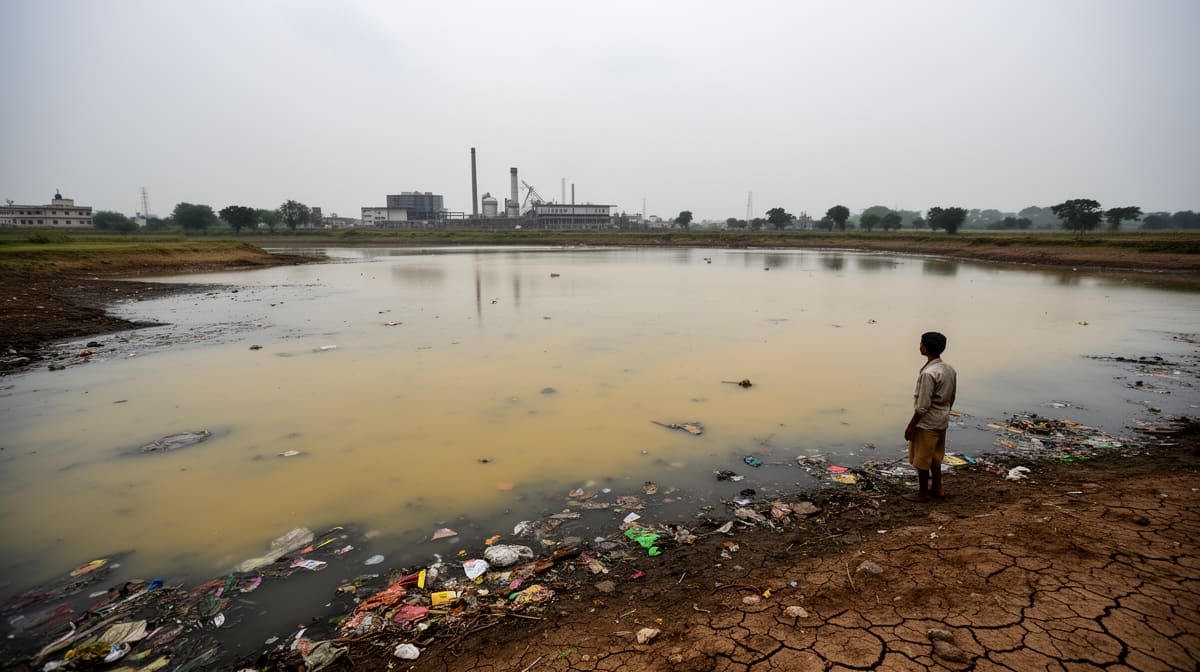
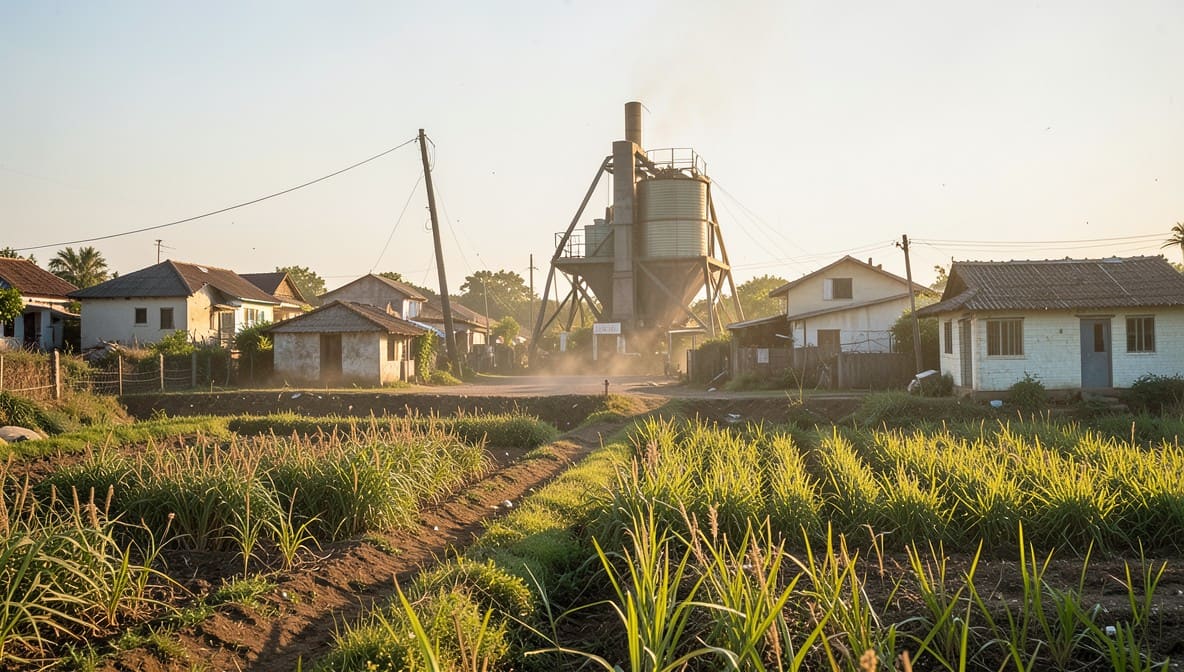
The petitioners, 30 residents of Rupsagar village and surrounding areas in Buxar and Rohtas districts, filed a Public Interest Litigation alleging that four rice mills - Aaradhyabhog Fresh Product Pvt. Ltd. (Respondent No. 6), Santoshi Rice Mill (Respondent No. 7), Amba Rice Mill (Respondent No. 8), and Gurudev Rice Mill (Respondent No. 9) - were operating without environmental clearances, pollution control devices, or compliance with emission norms. They claimed these operations were causing hazardous air pollution through the release of husk and dust particles into residential areas, violating the Air (Prevention and Control of Pollution) Act, 1981, and endangering public health.
Key Facts
- The rice mills are located within or adjacent to residential zones in Rupsagar village, Buxar, and nearby villages in Rohtas and Patna districts.
- The petitioners alleged continuous emission of dust and husk without any mitigation infrastructure.
- No expert environmental report, air quality data, or medical evidence was submitted by the petitioners to substantiate the alleged harm.
- The petitioners did not file any prior complaint with the Bihar State Pollution Control Board (BSPCB) before initiating litigation.
- The respondents submitted documentary evidence of statutory consents issued by the BSPCB.
Procedural History
- 2025: Writ Petition (CWJC No. 14299 of 2025) filed before the Patna High Court.
- 25.03.2026: Oral judgment delivered by the Division Bench of the Chief Justice and Justice Harish Kumar.
- The petition was listed for hearing on multiple dates between 2025 and early 2026.
- Counter affidavits were filed by Respondents 6 to 9 on or before 15.03.2026.
- Annexures R/1 to R/4 were submitted with the counter affidavit, containing the consent orders.
The Parties' Positions
For the Petitioners
- Argued that the rice mills were operating illegally without environmental clearance.
- Claimed the State Authorities (Respondents 1 - 5) had abdicated their duty by failing to inspect or enforce compliance.
- Invoked Article 226 as the only efficacious remedy for enforcement of fundamental rights under Article 21 (right to life with dignity).
- Relied on Paryavaran Suraksha Samiti v. Union of India to assert the state’s non-delegable duty to prevent environmental degradation.
For the Respondents (Rice Mills)
- Denied all allegations of illegal operation.
- Submitted valid Consent to Operate (CTO) and Consent to Establish (CTE) issued by the BSPCB.
- Provided documentary proof:
- Aaradhyabhog: CTO dated 26.07.2024 (Letter No. 1840), Discharge Consent dated 26.07.2024 (Letter No. 1841)
- Santoshi Rice Mill: CTO dated 12.05.2023 (Letter No. 963)
- Amba Rice Mill: CTO dated 14.11.2022 (Letter No. 2325)
- Gurudev Rice Mill: CTO dated 18.08.2025 (Memo No. 1409)
- Asserted that husk storage facilities were installed and operational.
- Contended that the petition was based on vague, unsubstantiated allegations and amounted to misuse of PIL jurisdiction.
Relief Sought
The petitioners sought:
- Immediate suspension or closure of the rice mills until compliance with environmental norms.
- Directions to the State and BSPCB to enforce pollution control laws.
- A declaration that the state’s inaction violated constitutional and statutory obligations.
The Legal Issue
The central question was whether a writ petition under Article 226 of the Constitution is maintainable to challenge the validity of statutory environmental consents issued by the Bihar State Pollution Control Board, when a specific statutory appeal mechanism under Section 31 of the Air (Prevention and Control of Pollution) Act, 1981, is available.
Arguments Presented
For the Petitioner
The petitioners contended that the right to a clean environment under Article 21 is a fundamental right, and the failure of the State to act against polluting industries justified direct judicial intervention. They argued that the existence of consents did not negate the fact of pollution, and that the Board’s grant of consent could be arbitrary or illegal. They relied on Paryavaran Suraksha Samiti v. Union of India to assert that courts must intervene when public health is at stake, even if statutory remedies exist.
For the Respondent
The respondents argued that the petitioners had deliberately suppressed material facts regarding the existence of valid consents. They emphasized that the Air Act, 1981, provides a comprehensive statutory framework with a dedicated appellate mechanism under Section 31. They cited S.P. Gupta v. Union of India and H. P. Sharma v. State of Haryana to argue that PIL cannot be used to circumvent statutory remedies or to challenge administrative decisions without evidence. They further contended that the petitioners had not exhausted alternative remedies and that the court should not entertain a challenge to consents without first allowing the Appellate Authority to review them.
The Court's Analysis
The Court examined the nature of the relief sought and the procedural posture of the case. It noted that the petitioners did not dispute the authenticity of the consent orders annexed to the counter affidavit. Instead, they challenged the legality of the consents themselves, alleging they were granted without due process or compliance with environmental norms.
"The petitioners have not challenged the grant of consent through the statutory appeal mechanism provided under Section 31 of the Air (Prevention and Control of Pollution) Act, 1981. They have instead chosen to invoke the extraordinary jurisdiction of this Court under Article 226."
The Court held that where a specific statutory remedy is available and efficacious, the writ jurisdiction under Article 226 is not the appropriate forum to challenge administrative orders. The Court emphasized that Section 31 of the 1981 Act provides for an appeal to an Appellate Authority constituted by the State Government, with provisions for hearing, procedure, and time limits - including a discretionary extension for sufficient cause.
The Court further observed that the petitioners had not adduced any expert evidence, pollution data, or medical reports to substantiate their claims of harm. The allegations were based on general apprehensions, which the Court held are insufficient to invoke PIL jurisdiction, particularly when statutory consents are on record.
The Court also noted that the respondents had demonstrated compliance with the statutory framework by obtaining both Consent to Establish and Consent to Operate, and had installed infrastructure for husk containment. The burden of proving illegality or arbitrariness in the grant of consent lay with the petitioners, who failed to discharge it.
The Verdict
The writ petition was dismissed. The Court held that the petitioners must approach the Appellate Authority under Section 31 of the Air (Prevention and Control of Pollution) Act, 1981, to challenge the validity of the consent orders. No directions were issued regarding the operation of the rice mills, and no interim relief was granted. The Court clarified that it expressed no opinion on the merits of the consents or the pollution allegations.
What This Means For Similar Cases
Statutory Remedies Prevail Over Writ Jurisdiction
- Practitioners must first exhaust remedies under environmental statutes before approaching High Courts under Article 226.
- Challenges to pollution consents under the Air Act, 1981, or Water Act, 1974, must be filed within 30 days before the Appellate Authority.
- Delay in filing an appeal under Section 31 may be condoned if sufficient cause is shown.
PIL Cannot Be Used to Circumvent Administrative Processes
- PILs cannot be filed on vague allegations without supporting evidence, especially when statutory consents exist.
- Courts will not entertain PILs that amount to collateral attacks on administrative decisions.
- The burden of proof lies on the petitioner to demonstrate arbitrariness, mala fide, or illegality in the grant of consent.
Environmental Compliance Is Presumed Valid Unless Challenged Properly
- Valid consents issued by SPCB are presumed lawful until set aside by the Appellate Authority.
- The existence of a CTO/CTE shifts the burden to the challenger to prove non-compliance.
- Courts will not substitute their opinion for that of the technical authority unless there is clear evidence of procedural violation.