The Punjab and Haryana High Court has reaffirmed that amendments to pleadings cannot circumvent the statutory limitation period. In a decisive ruling, the Court held that a six-and-a-half-year delay in seeking to add a claim for recovery of dues renders the amendment time-barred, regardless of the suit’s procedural stage. This judgment underscores the non-negotiable nature of limitation under the Limitation Act, 1963, and sets a clear boundary for judicial discretion in permitting amendments.
Background & Facts
The Dispute
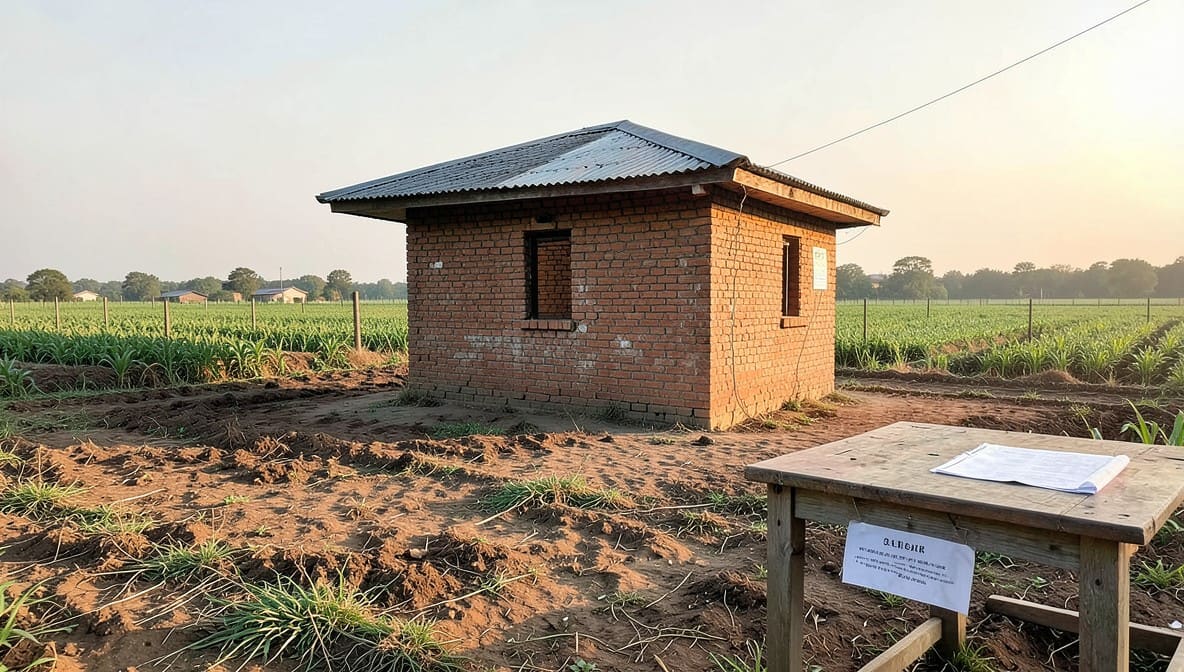
The petitioner, Manoj Chopra, filed a suit for permanent injunction against respondents Inderjeet Singh and another, seeking to restrain them from proceeding with construction work on a plot of land. The dispute arose from a Memorandum of Understanding (MOU) dated 17.06.2017, under which the petitioner agreed to construct a building on the respondents’ land. The petitioner claimed to have incurred total expenses of ₹45,05,800/- in completing the structural work, but received only ₹24,92,000/- from respondent No. 1, leaving an outstanding balance of ₹20,13,800/-. Despite legal notices dated 30.07.2018 and 04.08.2018, and repeated demands, the respondents failed to pay the balance.
Key Facts
- The MOU was executed on 17.06.2017
- Construction work was completed by early 2018
- Legal notices demanding payment were issued on 30.07.2018 and 04.08.2018
- The suit for permanent injunction was filed on an unspecified date, but prior to 03.02.2025
- The original plaint contained no prayer for recovery of the outstanding amount
- The petitioner became aware of the unpaid balance at the time of issuing legal notices in July-August 2018
Procedural History
- 17.06.2017: Execution of MOU between petitioner and respondent No. 1
- 30.07.2018: First legal notice demanding payment of ₹20,13,800/-
- 04.08.2018: Second legal notice reiterating demand
- Cause of action for recovery accrued on 04.08.2018
- 03.02.2025: Petitioner filed application to amend plaint to include claim for recovery of ₹20,13,800/- with 24% pendente lite interest
- 09.03.2023: Civil Judge (Junior Division), Faridabad, dismissed the amendment application on grounds of limitation
- 08.04.2026: Petitioner filed revision petition before Punjab and Haryana High Court under Article 227
The Parties' Positions
The petitioner contended that the omission of the recovery claim in the original plaint was due to inadvertence and unavoidable circumstances, and that the suit was still at an early stage, justifying the amendment. The respondents argued that the claim for recovery was time-barred, having accrued more than six years before the amendment was sought, and that the petitioner had deliberately withheld the claim to gain tactical advantage.
Relief Sought
The petitioner sought permission to amend the plaint to include a prayer for recovery of ₹20,13,800/- with interest at 24% per annum from the date of default, and to allow the suit to proceed on the amended pleadings.
The Legal Issue
The central question was whether an application to amend a plaint to add a claim for recovery of money, which had accrued more than six years prior, could be permitted under the Code of Civil Procedure when the claim is clearly time-barred under Section 3 of the Limitation Act, 1963.
Arguments Presented
For the Petitioner
The petitioner relied on the principle that amendments are to be freely allowed to ensure justice, particularly when the suit is in its early stages. He argued that the claim for recovery was intrinsically linked to the injunction suit and that the delay was not intentional but due to oversight. He cited Salem Advocate Bar Association v. Union of India to support the liberal approach to amendments under Order VI Rule 17 CPC.
For the Respondent
The respondents contended that the cause of action for recovery arose on 04.08.2018, when the last legal notice was issued, and that the amendment application filed on 03.02.2025 was filed beyond the three-year limitation period prescribed under Article 113 of the Limitation Act. They emphasized that the petitioner had full knowledge of the debt at the time of filing the original suit and deliberately chose not to include the claim. They relied on Sardar Singh v. Sardar Hukum Singh to argue that delay cannot be condoned when there is no explanation or bona fide reason.
The Court's Analysis
The Court examined the timeline meticulously and found that the petitioner was aware of the outstanding debt as early as August 2018, when legal notices were issued. The original suit, though filed for injunction, was clearly rooted in the same factual matrix as the recovery claim. The Court held that the petitioner’s failure to include the recovery prayer in the original plaint was not due to any legal or factual impediment, but a deliberate omission.
"The plaintiff had explicitly pleaded in the original plaint that a legal notice for recovery was served as early as August 2018, thereby establishing that the cause of action for recovery accrued at that time."
The Court noted that the amendment application was filed on 03.02.2025 - over six years and six months after the cause of action arose. The limitation period for a suit for recovery of money is three years under Article 113 of the Limitation Act, 1963. Even if the Court were to exercise its discretion under Order VI Rule 17 CPC to permit amendments, such discretion cannot override the mandatory bar of limitation under Section 3 of the Limitation Act.
The Court further held that the trial court’s refusal to allow the amendment was neither illegal nor perverse. The petitioner’s failure to demonstrate any sufficient cause for the delay, coupled with the absence of any prejudice to the respondents, rendered the amendment legally untenable. The Court emphasized that limitation is a substantive bar, not merely a procedural technicality, and cannot be circumvented by seeking amendment at a belated stage.
The Verdict
The revision petition was dismissed. The High Court upheld the order dated 09.03.2023 of the Civil Judge (Junior Division), Faridabad, rejecting the amendment application. The Court held that the claim for recovery of ₹20,13,800/- with interest is time-barred and cannot be introduced through amendment after a delay of over six years. All pending applications were disposed of. No costs were awarded.
What This Means For Similar Cases
Amendment Cannot Revive a Time-Barred Claim
- Practitioners must ensure that all claims arising from the same transaction are pleaded at the outset or within the limitation period
- An application under Order VI Rule 17 CPC cannot be used as a backdoor to revive a claim that has become time-barred
- Courts will not permit amendments that effectively circumvent the Limitation Act, even if the suit is in its early stages
Delay Without Explanation Is Fatal
- A mere assertion of inadvertence or oversight is insufficient to condone delay exceeding double the limitation period
- Courts require a plausible, documented reason for delay - not just a statement of oversight
- The burden lies on the applicant to show that the delay was due to circumstances beyond their control
Procedural Flexibility Has Limits
- While courts encourage liberal amendment policies, this flexibility is bounded by statutory limitation
- The principle of nemo auditur propriam turpitudinem allegans applies - a party cannot benefit from its own delay
- Legal teams must conduct thorough pre-filing analysis to avoid piecemeal litigation