The Andhra Pradesh High Court has clarified that a plaintiff may amend a plaint to seek recovery of possession, even after a significant delay, provided the claim for possession was available at the time of filing and the limitation period has not expired. This ruling reinforces the principle that procedural amendments should facilitate substantial justice rather than defeat it.
Background & Facts
The Dispute
The plaintiffs filed Original Suit No. 314 of 2014 before the Additional Senior Civil Judge, Fast Track Court, Bapatla, seeking a declaration that the 1st plaintiff is the absolute owner of the plaint schedule property under a Registered Gift Deed dated 17.04.2006. They further sought mandatory injunctions directing the defendants to remove a temporary superstructure erected on the property and directing the Andhra Pradesh State Power Distribution Company Limited (APSPDCL) to disconnect the electricity supply to that structure. The suit was based on the assertion that the defendants had illegally taken possession of the vacant site approximately one week prior to the filing of the suit.
Key Facts
- The Registered Gift Deed dated 17.04.2006 was the basis of the plaintiffs’ title claim
- The defendants allegedly took illegal possession of the property about one week before the suit was filed on 20.04.2014
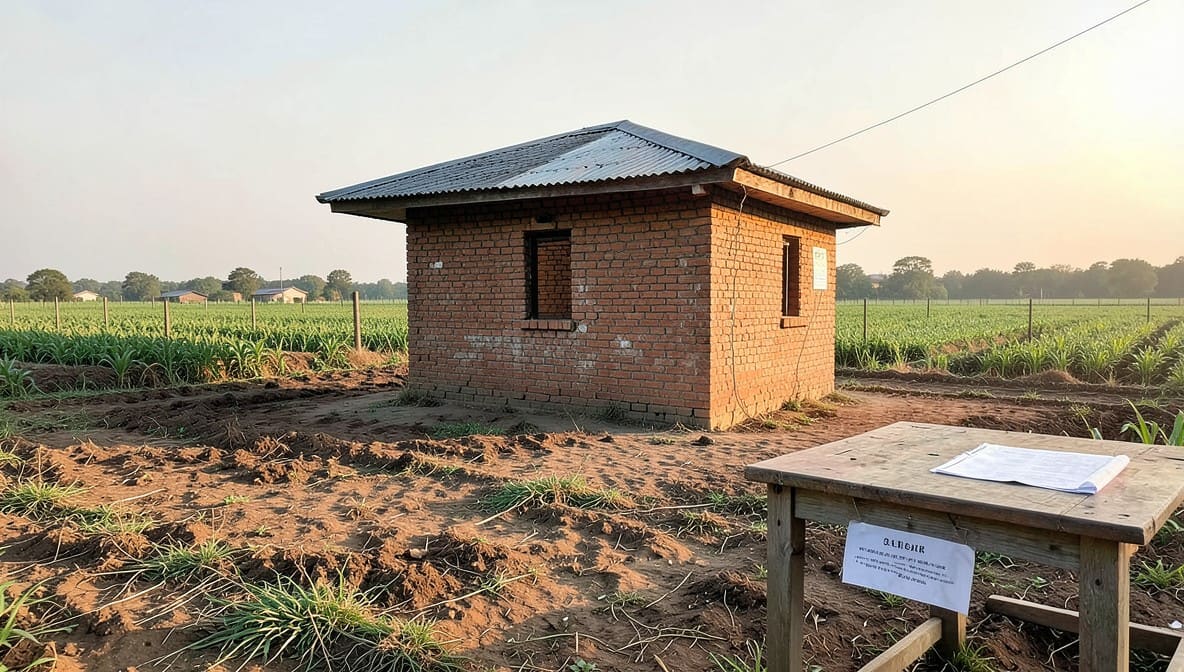
- A temporary superstructure was constructed using hallow bricks and ACC sheets
- Electricity connection was obtained for the structure without authorization
- No claim for recovery of possession was included in the original plaint
- The plaintiffs filed I.A. No. 190 of 2023 on 15.09.2023 seeking amendment to add a claim for consequential recovery of possession
- The trial court allowed the amendment by order dated 03.10.2023
- The defendants challenged this order through Civil Revision Petition No. 3308 of 2023
Procedural History
- 17.04.2006: Registered Gift Deed executed in favor of 1st plaintiff
- 20.04.2014: Original suit (O.S. No. 314 of 2014) filed seeking declaration and mandatory injunction
- 15.09.2023: I.A. No. 190 of 2023 filed seeking amendment to include claim for recovery of possession
- 03.10.2023: Trial Court allowed the amendment application
- 15.10.2023: Civil Revision Petition No. 3308 of 2023 filed before the High Court
- 18.03.2026: Case reserved for judgment
- 29.04.2026: Judgment pronounced and uploaded
The Parties' Positions
Petitioners (Defendants in the suit): Argued that the proposed amendment was belated, would change the nature of the suit, introduced a new cause of action, and was barred by limitation. They contended that claiming title through gift deed and adverse possession simultaneously was inconsistent and impermissible.
Respondents (Plaintiffs in the suit): Maintained that the amendment merely added a consequential relief of possession to an existing suit for declaration and injunction, and did not alter the fundamental nature of the suit. They emphasized that the claim for possession was available since the date of filing and remained within the 12-year limitation period.
Relief Sought
The petitioners sought setting aside of the trial court’s order dated 03.10.2023 allowing the amendment and dismissal of I.A. No. 190 of 2023. They also sought closure of all interim applications filed in the suit.
The Legal Issue
Can a plaintiff amend a plaint under Order VI Rule 17 of the Code of Civil Procedure to seek recovery of possession, where the original suit sought only declaration and mandatory injunction, and the amendment is filed nine years after the suit was instituted?
Arguments Presented
For the Petitioner
The learned counsel for the petitioners relied on M/s. Modi Spinning & Weaving Mills Co. Ltd. v. M/s. Ladha Ram & Company and Narasamma v. A. Krishnappa to argue that amendments which introduce a new cause of action or substitute the original case are impermissible. He contended that the claim for possession was available since the date of filing the suit in 2014, and since the amendment was sought in 2023, it was time-barred. He further argued that the plaintiffs were asserting inconsistent titles - through gift deed and adverse possession - which violated settled legal principles.
For the Respondent
The respondents did not appear despite service of notice. However, the court considered the substance of the amendment application and the original pleadings to determine whether the amendment was legally permissible.
The Court's Analysis
The Court examined the nature of the proposed amendment and its impact on the suit’s character. It held that the addition of a claim for recovery of possession did not introduce a new cause of action but merely sought a consequential relief arising from the same factual matrix. The original plaint already alleged illegal possession and construction of a superstructure, making the claim for possession a natural and necessary extension.
"The proposed amendment would not change either the nature of the suit or the basic structure of the pleadings as sought to be contended by the learned counsel for the petitioners."
The Court emphasized that Section 34 of the Specific Relief Act, 1963 mandates that a court cannot grant a mere declaration of title if the plaintiff is able to seek further relief such as possession. Where a defendant is in hostile possession and has erected a structure, the proper remedy is a suit for declaration and recovery of possession. The absence of the possession claim in the original plaint was therefore a procedural omission, not a substantive defect.
Regarding limitation, the Court noted that the suit was filed in 2014, and the defendants took possession approximately one week prior to that. The amendment was filed in 2023 - nine years later - but within the 12-year limitation period under Article 65 of the Limitation Act for recovery of possession based on title. Since the right to possession existed from the date of filing, and the amendment was sought within the limitation period, it was not time-barred.
The Court distinguished the cited precedents, observing that they dealt with attempts to substitute an entirely new case or assert mutually exclusive claims of title from the same date. In this case, the plaintiffs were not asserting adverse possession; they were seeking to enforce their title through possession, which was consistent with their original claim.
"The contention regarding inconsistent and destructive pleas is in relation to the pleadings of the plaint originally filed before the Court but not in the instant amendment petition. The defendant can as well raise the said contentions in the suit during trial."
The Court concluded that the trial judge correctly applied the principles of liberal amendment under Order VI Rule 17 CPC to ensure substantial justice and avoid multiplicity of proceedings.
The Verdict
The Civil Revision Petition was dismissed. The order dated 03.10.2023 of the Additional Senior Civil Judge, Bapatla, allowing the amendment to include the claim for recovery of possession, was upheld. There shall be no order as to costs. All pending miscellaneous petitions in O.S. No. 314 of 2014 are closed.
What This Means For Similar Cases
Amendments to Add Possession Are Permissible Within Limitation
- Practitioners may seek to amend plaints to include recovery of possession even after several years, provided the right to possession existed at the time of filing and the 12-year limitation under Article 65 has not expired
- Delay alone is not fatal if the amendment does not alter the suit’s fundamental character
- Courts must prioritize substantial justice over technical objections to amendments
Inconsistent Pleadings Are Not a Ground to Reject Amendment
- Allegations of inconsistent pleas (e.g., gift deed vs. adverse possession) must be raised as defenses during trial, not as grounds to reject amendment
- The court’s role at the amendment stage is not to adjudicate merits but to assess whether the amendment changes the suit’s nature
- Defendants retain full right to contest the validity of title and possession during evidence recording
Section 34 Specific Relief Act Mandates Comprehensive Relief
- A suit for declaration of title without seeking possession is legally defective if possession is in dispute
- Courts should encourage inclusion of possession claims at the earliest opportunity, even through amendment
- Failure to seek possession may render a declaration ineffective or unenforceable