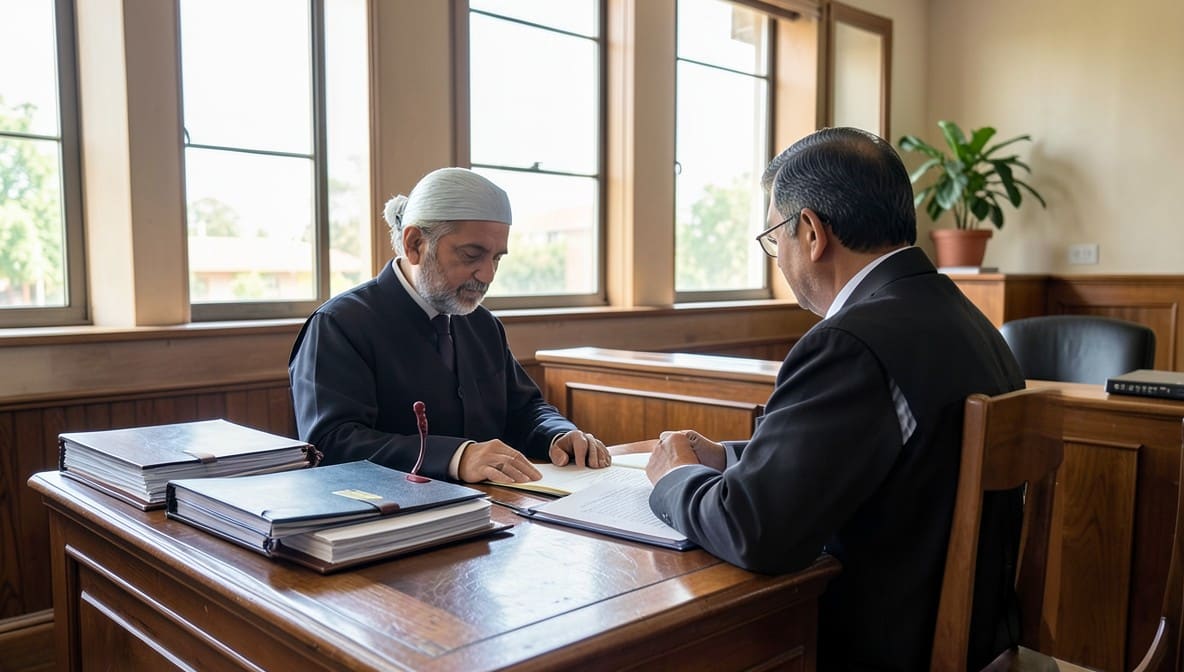
The Punjab & Haryana High Court has reaffirmed that amendments to pleadings under Order 6 Rule 17 CPC cannot be permitted at an advanced stage of trial if they fundamentally alter the nature of the suit or circumvent the law of limitation. The judgment underscores the necessity of due diligence by plaintiffs and the limits of judicial discretion in allowing belated changes to pleadings.
Background & Facts
The Dispute
The petitioner, defendant in a civil suit, challenged two orders passed by the Additional Civil Judge (Senior Division), Ganaur, dated 14.01.2025, which allowed the plaintiff’s applications under Order 6 Rule 17 and Order 1 Rule 10 CPC for amendment of the plaint and impleadment of parties. The original suit, filed on 06.09.2017, sought specific performance of an alleged Agreement to Sell dated 19.05.2017 concerning immovable property. The petitioner denied executing any such agreement and asserted in his Written Statement filed on 10.10.2018 that the property had already been transferred to his brother, Pawan Kumar, via a Family Settlement and Relinquishment Deed dated 11.07.2017.
Key Facts
- The suit property was purchased by the petitioner’s family in 2013 via Sale Deed No. 4412 dated 25.11.2013 for Rs. 25,80,000
- The petitioner claimed the property was transferred to his brother Pawan Kumar via Relinquishment Deed dated 11.07.2017, prior to the filing of the suit
- The plaintiff filed the suit for specific performance on 06.09.2017, alleging an oral agreement and a forged Agreement to Sell dated 19.05.2017
- The petitioner’s Written Statement dated 10.10.2018 explicitly denied execution of the agreement and disclosed the transfer to Pawan Kumar
- No replication was filed by the plaintiff to the Written Statement
- Issues were framed on 08.01.2020
- Plaintiff’s evidence was closed on 22.11.2022
- On 07.10.2023, nearly six years after filing the suit and five years after the Written Statement, the plaintiff filed applications seeking:
- Amendment of plaint to declare the Relinquishment Deed No. 1350 dated 11.07.2017 and Sale Deed No. 3604 dated 25.01.2018 as null and void
- Impleadment of Pawan Kumar and his wife Suman as defendants
- The plaintiff did not challenge the authenticity of the Relinquishment Deed until trial was nearly complete
- The petitioner filed replies to both applications on 11.03.2024
Procedural History
- 06.09.2017: Civil suit filed by plaintiff for specific performance of Agreement to Sell dated 19.05.2017
- 10.10.2018: Petitioner filed Written Statement disclosing transfer of property to Pawan Kumar via Relinquishment Deed dated 11.07.2017
- 08.01.2020: Issues framed by the Trial Court
- 22.11.2022: Plaintiff’s evidence closed
- 07.10.2023: Plaintiff filed applications under Order 6 Rule 17 CPC and Order 1 Rule 10 CPC
- 11.03.2024: Petitioner filed replies to both applications
- 14.01.2025: Trial Court allowed both applications, holding they were necessary for proper adjudication
- 19.03.2026: High Court allowed Civil Revision Petition and set aside the impugned orders
The Parties' Positions
For the Petitioner
- Argued that the applications were filed at an inordinately belated stage, after evidence was closed
- Contended that the amendment sought to introduce a new cause of action against third parties not originally impleaded
- Highlighted that the transfer to Pawan Kumar was disclosed in the Written Statement in 2018, yet the plaintiff took no action for over five years
- Asserted that the amendment would change the nature of the suit from specific performance to a declaration of title and invalidity of transfers
- Emphasized that the plaintiff had failed to exercise due diligence
For the Respondent
- Argued that the amendment was necessary to reflect subsequent developments and ensure complete adjudication
- Claimed the amendment was merely explanatory and did not alter the nature of the suit
- Relied on the principle of liberal interpretation under Order 6 Rule 17 CPC
- Submitted that impleadment of Pawan and Suman was essential to avoid multiplicity of litigation
Relief Sought
The petitioner sought setting aside of the orders dated 14.01.2025 allowing amendment and impleadment, and restoration of the original pleadings. No monetary relief was claimed.
The Legal Issue
The central question was whether Order 6 Rule 17 CPC permits amendment of a plaint to introduce a new cause of action against third parties at a stage when trial is nearly concluded, where the facts underlying the amendment were known to the plaintiff since the filing of the suit and explicitly disclosed in the Written Statement more than five years earlier.
Arguments Presented
For the Appellant/Petitioner
The petitioner relied on the principle that amendments under Order 6 Rule 17 CPC must not alter the nature of the suit or introduce a new cause of action. He cited S. R. Sukumar v. S. R. Sridhar to argue that where a plaintiff is aware of facts giving rise to a new claim, delay in seeking amendment defeats the right of limitation and prejudices the defendant. He emphasized that the plaintiff had ample opportunity to raise the issue of invalidity of transfers at the time of filing the suit or during the pleadings stage, yet chose silence. The petitioner also invoked K. S. Srinivasan v. K. S. Srinivasan to assert that impleadment under Order 1 Rule 10 CPC cannot be used to introduce entirely new parties against whom no claim was originally made.
For the Respondent/State
The respondent contended that the amendment was merely clarificatory and aimed at ensuring justice by bringing all relevant parties before the court. He relied on S. S. S. R. Ramaswamy v. S. S. S. R. Krishnamurthy to argue that courts should adopt a liberal approach to amendments to avoid multiplicity of proceedings. He submitted that the transfer of property to Pawan and Suman was a subsequent development, despite the Written Statement disclosing the Relinquishment Deed, and that the amendment was necessary to adjudicate the true title.
The Court's Analysis
The Court conducted a meticulous review of the pleadings and procedural timeline. It observed that the plaintiff was aware of the transfer to Pawan Kumar as early as 10.10.2018, when the Written Statement was filed and the Relinquishment Deed was annexed. The plaintiff’s failure to act for over five years constituted gross laches. The Court held that the amendment sought was not merely explanatory but fundamentally altered the nature of the suit.
"By permitting the present amendment application as well as impleadment application, the entire nature of the suit will be changed as plaintiff will now have cause of action against Pawan and Suman and not against the present petitioner."
The Court distinguished between amendments that clarify existing claims and those that introduce new causes of action. It held that seeking a declaration of invalidity of transfers executed by third parties, who were not parties to the original agreement, constituted a new cause of action. The Court further noted that the plaintiff’s claim for specific performance against the petitioner was inherently inconsistent with a claim that the property was no longer owned by the petitioner. The Trial Court’s reasoning that the amendment would avoid multiplicity of litigation was rejected as speculative, since the plaintiff could have filed a separate suit for declaration at any time after 11.07.2017.
The Court also emphasized that Order 1 Rule 10 CPC cannot be used as a tool to circumvent the law of limitation or to introduce parties against whom no claim was originally pleaded. The impleadment of Pawan and Suman was not incidental but central to the new claim, rendering it impermissible under the circumstances.
The Verdict
The Civil Revision Petition was allowed. The impugned orders dated 14.01.2025 allowing amendment of the plaint under Order 6 Rule 17 CPC and impleadment of parties under Order 1 Rule 10 CPC were set aside. The Trial Court is directed to proceed with the suit on the original pleadings, without the proposed amendments or impleadments. All pending applications are disposed of.
What This Means For Similar Cases
Amendments Cannot Redefine the Suit’s Core Claim
- Practitioners must file amendments at the earliest opportunity; delay beyond the pleadings stage, especially after evidence is closed, will be viewed with hostility
- Amendments seeking to convert a specific performance suit into a title dispute are impermissible under Order 6 Rule 17 CPC
- Courts will not permit amendments that effectively substitute one defendant for another or introduce new causes of action against third parties
Impleadment Is Not a Substitute for Proper Pleading
- Order 1 Rule 10 CPC cannot be invoked to add parties against whom no original claim exists
- If a plaintiff suspects third-party interference, they must name such parties as defendants in the original plaint
- Impleadment for the purpose of litigating a new claim against a stranger to the original contract is procedurally invalid
Due Diligence Is Non-Negotiable
- Knowledge of facts disclosed in the Written Statement binds the plaintiff
- Failure to act on disclosed facts for years constitutes laches and defeats equitable relief
- Courts will not reward negligence under the guise of procedural flexibility