The Himachal Pradesh High Court has reinforced the statutory imperative for arbitral tribunals to conclude proceedings within the prescribed time limits under the Arbitration and Conciliation Act, 1996. In a decisive order, the Court directed the Arbitrator-cum-Divisional Commissioner to deliver the award in a long-pending land acquisition dispute by a fixed deadline, underscoring that delays without bona fide justification violate the legislative intent behind time-bound arbitration.
Background & Facts
The Dispute
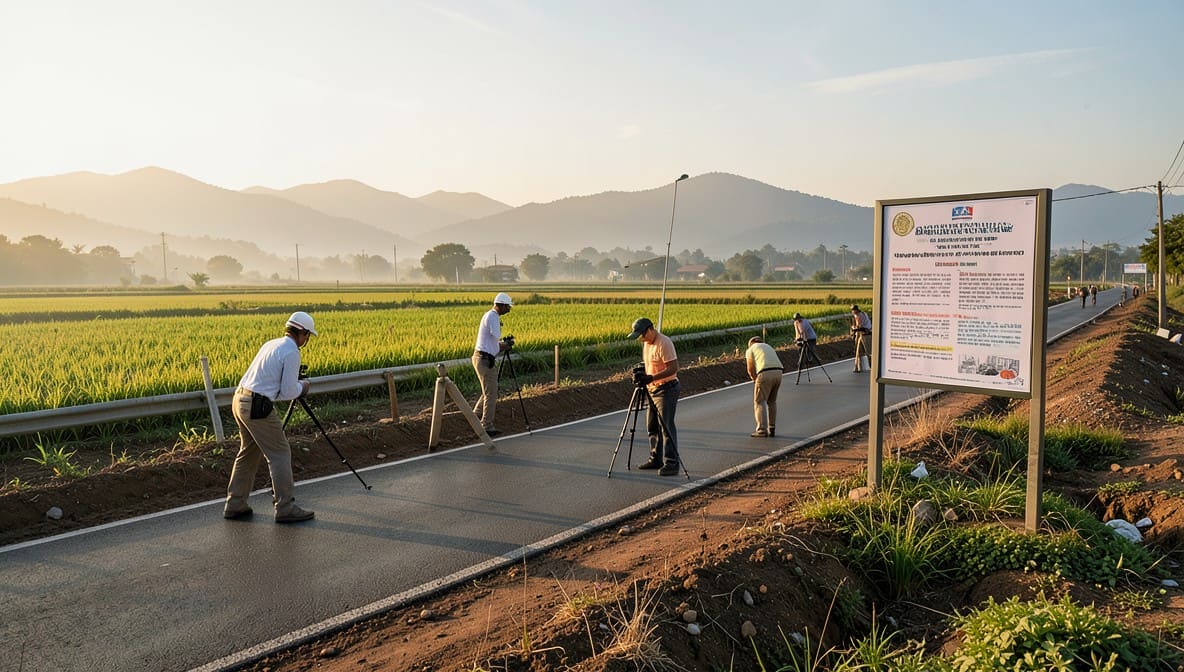
The arbitration dispute arose from the acquisition of land in District Solan, Himachal Pradesh, for the construction of a National Highway under the National Highways Act, 1956. The landowner, Preet Mohinder Singh, challenged the compensation award passed by the competent authority under Section 3 of the National Highways Act, 1956, and initiated Arbitration Case No. 115/2023 before the Divisional Commissioner, Shimla, who was exercising arbitral powers under the said Act.
Key Facts
- The land acquisition was carried out under the National Highways Act, 1956, which empowers the Divisional Commissioner to act as Arbitrator in compensation disputes.
- The Reference Petition against the compensation award was filed in 2023.
- The arbitral proceedings were initiated but remained inconclusive beyond the statutory period.
- The petitioner alleged that the Arbitrator had closed proceedings without delivering an award, despite completion of pleadings and evidence.
- No formal extension of time was sought or granted under Section 29A(5) of the Arbitration and Conciliation Act, 1996.
- The Arbitrator failed to provide any explanation for the delay beyond the 12-month statutory period under Section 29A(1).
Procedural History
- 2023: Arbitration Case No. 115/2023 filed before the Divisional Commissioner, Shimla, as Arbitrator.
- Within 12 months of commencement: Statutory deadline under Section 29A(1) of the Arbitration Act expired without an award.
- No application under Section 29A(5): Neither the Arbitrator nor any party sought an extension of time with reasons.
- March 2026: Petitioner filed the present petition under Section 29A(4)(5) of the Arbitration Act seeking extension of time for completion of proceedings.
- 12.03.2026: Hearing before the High Court of Himachal Pradesh.
Relief Sought
The petitioner sought an extension of time for the Arbitrator to conclude proceedings and pass a final award, in accordance with Section 29A(5) of the Arbitration and Conciliation Act, 1996.
The Legal Issue
The central question was whether an Arbitrator, having failed to deliver an award within the statutory period under Section 29A(1) of the Arbitration and Conciliation Act, 1996, and without seeking a statutory extension, may be directed by the High Court to complete the proceedings and pass an award.
Arguments Presented
For the Petitioner
Mr. Kuldeep Singh Chandel argued that the Arbitrator had closed proceedings prematurely without delivering an award, despite completion of evidence and pleadings. He relied on Ssangyong Engineering & Construction Co. Ltd. v. National Highways Authority of India to assert that the statutory timeline under Section 29A is mandatory and non-negotiable. He contended that the Arbitrator’s inaction amounted to a failure of duty, and the Court must intervene under Section 29A(5) to prevent injustice.
For the Respondents
Ms. Shreya Chauhan and Mr. Bharat Bhushan acknowledged the delay but argued that the complexity of land valuation and administrative coordination had caused unforeseen delays. They submitted that the Arbitrator was still in the process of deliberation and that the matter was not ripe for judicial intervention. However, they did not produce any record of an application for extension under Section 29A(5) or any explanation for the lapse of time.
The Court's Analysis
The Court examined the mandatory nature of timelines under Section 29A of the Arbitration and Conciliation Act, 1996, and held that the statutory framework is designed to ensure expeditious resolution of disputes. The Court observed that the Arbitrator, being a statutory functionary, bears the burden of ensuring compliance with the prescribed time limits.
"When a statute envisages an authority, be it an Arbitrator, to do a particular act in a particular manner and in a prescribed time schedule, then the onus is upon the said authority/Arbitrator to perform the task entrusted to it within the time schedule prescribed in the statute. The delay, if any, has to be bonafide and explainable."
The Court noted that no application for extension had been filed under Section 29A(5), nor was there any record of reasons for the delay. The Arbitrator had not only failed to deliver the award but had also closed proceedings without finality, leaving the parties in legal limbo. The Court emphasized that the purpose of arbitration - speed and finality - would be defeated if arbitral tribunals could operate without accountability to statutory deadlines.
The Court further held that the High Court’s power under Section 29A(5) is not merely permissive but remedial, and must be exercised to uphold the integrity of the arbitral process.
The Verdict
The petition was allowed. The Court directed the Arbitrator-cum-Divisional Commissioner, Shimla, exercising powers under Section 3 of the National Highways Act, 1956, to conclude the arbitral proceedings in Arbitration Case No. 115/2023 and pass a final award on or before 12th September, 2026. The petition stands disposed of with this direction.
What This Means For Similar Cases
Statutory Deadlines Are Mandatory, Not Directory
- Practitioners must treat Section 29A timelines as non-negotiable; failure to meet them without an application under Section 29A(5) renders the award vulnerable to challenge.
- Arbitrators cannot rely on administrative delays or case complexity as excuses without formal documentation and court approval.
- Parties must proactively file applications for extension before the deadline lapses, even if the Arbitrator is inactive.
Courts Will Intervene to Prevent Arbitral Inaction
- The High Court has affirmed its power to compel Arbitrators to act when they abdicate their statutory duty.
- Merely stating that deliberations are ongoing is insufficient; there must be a record of progress and a formal request for extension.
- This judgment sets a precedent for similar cases under Section 29A across India, particularly in infrastructure and land acquisition arbitrations.
Arbitrators Are Not Above the Law
- Arbitrators, even when appointed under special statutes like the National Highways Act, are bound by the procedural framework of the Arbitration Act.
- The dual role of Divisional Commissioners as both administrative officers and Arbitrators does not exempt them from compliance with Section 29A.
- Future arbitral proceedings must include clear timelines, progress reports, and formal applications for extension to avoid judicial intervention.