The Calcutta High Court has affirmed that a Minimum Guaranteed Offtake (MGO) clause in a long-term gas supply contract is enforceable even in the absence of proof of actual financial loss, provided it functions as a legitimate mechanism to recover infrastructure costs. This ruling reinforces the principle that contractual stipulations designed to safeguard capital investment in energy infrastructure are not penal in nature and do not require the claimant to demonstrate quantified damages.
Background & Facts
The Dispute
SRMB Srijan Limited (Appellant) and Great Eastern Energy Corporation Limited (Respondent) entered into a Gas Sale and Purchase Agreement (GSPA) on May 11, 2011, for the long-term supply of coal bed methane (CBM gas) over a 25-year term. The agreement included a Minimum Guaranteed Offtake (MGO) clause, requiring SRMB to pay for 80% of the contracted quarterly quantity of CBM gas, regardless of actual consumption, subject to adjustments for supply interruptions by GEECL.
Key Facts
- The MGO clause stipulated that if SRMB purchased less than 80% of the contracted quantity, it would still be liable to pay for that minimum volume.
- The clause was designed to ensure GEECL recovered costs associated with infrastructure investment in CBM extraction and pipeline networks.
- SRMB requested waiver of the MGO clause on April 22, 2014. GEECL responded on April 24, 2014, proposing a price increase of Rs.5 per SCM as a condition for waiver. SRMB rejected this and pressed for unconditional waiver.
- On May 23, 2014, GEECL offered to reduce the MGO from 80% to 75%, but SRMB did not accept.
- SRMB ceased renewing its revolving bank guarantee, leading GEECL to suspend gas supply on June 2014.
- SRMB terminated the GSPA on July 7, 2014.
- GEECL invoked arbitration under the GSPA’s dispute resolution clause.
- During the arbitration, SRMB contended that the MGO clause was waived, that GEECL suffered no loss, and that the clause was unenforceable as a penalty.
- SRMB submitted evidence including CARE Report (October 2014) and CRISIL Report (February 2014), showing GEECL had earned profits during FY 2013 - 14 and Q1 FY 2015.
- SRMB also submitted returns filed with the Directorate General of Hydrocarbons (Exhibit E-YYYY), indicating reduced gas flaring after termination of the GSPA.
Procedural History
- May 11, 2011: GSPA executed between SRMB and GEECL.
- April 22, 2014: SRMB requested waiver of MGO clause.
- April 24, 2014: GEECL responded with conditional waiver proposal.
- May 23, 2014: GEECL offered reduced MGO (80% to 75%).
- June 2014: GEECL suspended supply due to non-renewal of bank guarantee.
- July 7, 2014: SRMB terminated GSPA.
- 2015 - 2021: Arbitration proceedings conducted before a three-member tribunal.
- June 21, 2022: Arbitral Tribunal awarded GEECL Rs.58,50,45,169 as MGO compensation, with 7% interest from February 2015, and additional 9% on default.
- September 5, 2024: Single Judge of Calcutta High Court dismissed SRMB’s Section 34 challenge to the award.
- March 2024: SRMB filed appeal under Section 37 of the Arbitration and Conciliation Act, 1996.
- January 15, 2026: Hearing concluded.
- April 13, 2026: Judgment delivered by Division Bench.
The Parties' Positions
For SRMB (Appellant):
- Argued that the MGO clause was waived by conduct and correspondence.
- Contended that GEECL suffered no actual loss, as evidenced by profits reported in CARE and CRISIL reports.
- Asserted that flaring data showed no increase in gas wastage post-termination, negating damage.
- Claimed the Tribunal ignored vital evidence and misapplied the principle of mitigation of damages under Section 73 of the Indian Contract Act, 1872.
- Argued that the Tribunal improperly relied on submissions recorded by the Competition Commission as findings.
For GEECL (Respondent):
- Maintained that the MGO clause was never waived and remained binding.
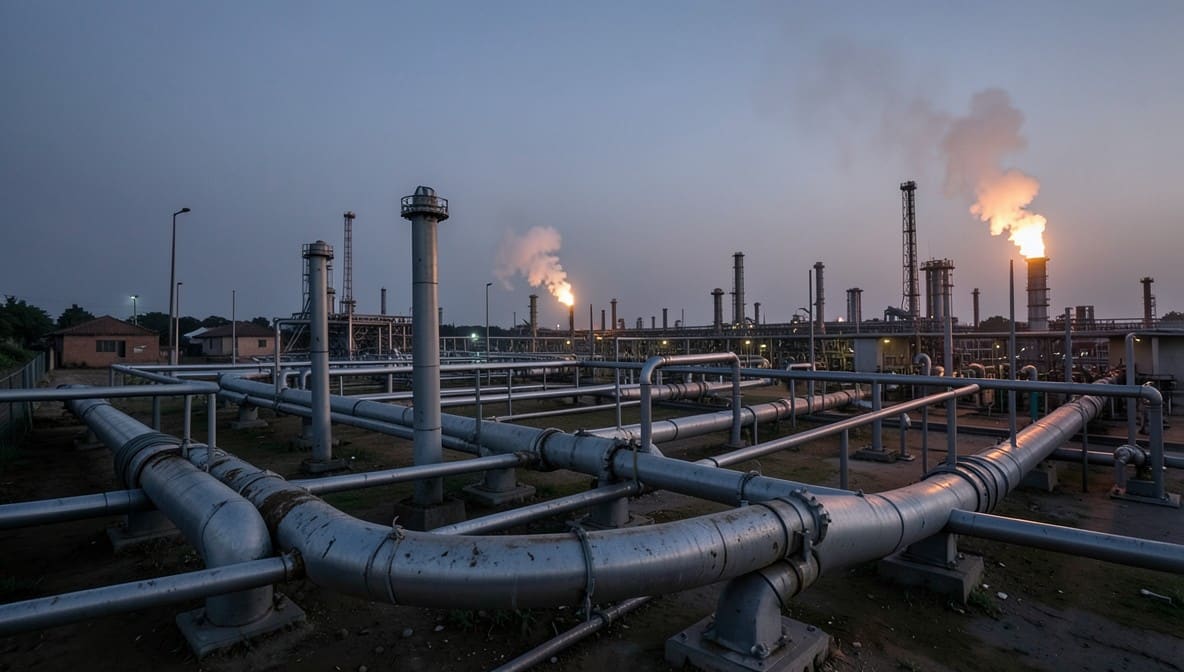
- Argued that CBM gas cannot be stored; any unoff-taken gas must be flared, constituting economic loss.
- Emphasized that the MGO clause is not liquidated damages but a mechanism to recover fixed infrastructure costs.
- Cited Bihar State Electricity Board v. Green Rubber Industries and Shaila Bala Ray to support the legal validity of minimum charge clauses.
- Stated that profitability does not negate loss of contractual opportunity.
- Contended that the Tribunal properly considered all evidence and that Section 34 challenges cannot re-appreciate facts.
Relief Sought
SRMB sought:
- Setting aside of the arbitral award dated June 21, 2022.
- Setting aside of the Single Judge’s order dated September 5, 2024.
- Dismissal of GEECL’s claim for MGO compensation.
- Costs.
The Legal Issue
The central question was whether an arbitral tribunal may enforce a Minimum Guaranteed Offtake clause under a long-term energy supply contract without requiring the claimant to prove actual financial loss, where the clause is structured as a mechanism to recover capital expenditure on infrastructure, and whether the tribunal’s failure to discuss profit reports constitutes patent illegality under Section 34 of the Arbitration and Conciliation Act, 1996.
Arguments Presented
For the Appellant
SRMB contended that the MGO clause was unenforceable because:
- GEECL had earned substantial profits during FY 2013 - 14 and Q1 FY 2015, as shown in the CARE and CRISIL reports, negating any claim of loss.
- Flaring data (Exhibit E-YYYY) showed no increase in gas wastage after termination, indicating no economic harm.
- The principle of mitigation under Section 73 of the Indian Contract Act, 1872 required GEECL to take reasonable steps to minimize loss, which it failed to do.
- The Arbitral Tribunal ignored vital evidence, rendering the award perverse under Associate Builders v. DDA and Delhi Metro Rail Corp. v. DAMEPL.
- The Tribunal improperly treated submissions made before the Competition Commission as findings of fact, violating Section 23 of the Arbitration Act and the jurisdictional boundaries under the Competition Act, 2002.
- The award violated the fundamental policy of Indian law by ignoring statutory principles of damages under Sections 73 and 74 of the Contract Act.
For the Respondent
GEECL argued that:
- The MGO clause was a legitimate contractual term, not a penalty, designed to ensure recovery of fixed infrastructure costs.
- CBM gas cannot be stored; flaring is inevitable when off-take falls short, constituting economic loss.
- Profitability from other customers or increased production does not negate the loss of guaranteed revenue under the terminated contract.
- The Competition Commission’s observations on flaring were not treated as findings but as corroborative context.
- The Arbitral Tribunal properly weighed all evidence and applied the correct legal test under Oil & Natural Gas Corp. v. Saw Pipes.
- Section 34 challenges cannot re-appreciate evidence; the tribunal’s view was plausible and supported by record.
- The principle from Bihar State Electricity Board and Shaila Bala Ray confirms that minimum charges are not damages but reimbursement for capital outlay.
The Court's Analysis
The Division Bench of the Calcutta High Court undertook a rigorous analysis of the legal framework governing arbitral awards under Sections 34 and 37 of the Arbitration and Conciliation Act, 1996. It emphasized that judicial interference is permissible only where an award is perverse, irrational, or violates fundamental policy of Indian law.
The Court first addressed the issue of mitigation of damages. It held that the appellant had not raised this argument before the Arbitral Tribunal, and therefore could not raise it for the first time on appeal. Citing Prafulla Ranjan Sarkar v. Hindusthan Building Society, the Court reaffirmed that the burden of proving failure to mitigate lies on the defendant, which SRMB had not discharged.
On the question of actual loss, the Court rejected SRMB’s reliance on profit reports. It held that profitability in the broader business context does not negate the loss of a specific contractual entitlement. The Court relied on the Competition Commission’s factual finding - quoted in paragraph 67 - that CBM gas cannot be stored and must be flared if not off-taken, and that there is no spot market for such gas. This rendered the MGO clause a necessary risk-allocation mechanism.
"Flaring up of CBM gas is restricted to gas that was produced but could not be sold due to lack of buyers. There is nothing on record to suggest that there was lack of producing capability or capacity by reason whereof no further CBM gas could have been produced by the respondent."
The Court further held that the MGO clause was not a penalty but a genuine pre-estimate of loss, consistent with Oil & Natural Gas Corp. v. Saw Pipes. It cited Bihar State Electricity Board v. Green Rubber Industries and Shaila Bala Ray v. Chairman, Darjeeling Municipality to establish that such clauses are standard in long-term energy contracts to ensure recovery of capital expenditure on infrastructure.
"The premise of the MGO Clause is not an actual occasion of loss suffered by the supplier. It is a prevalent practice in such long-term contracts for supply of energy... to introduce a minimum consumption clause, which is in the nature of an assurance to the supplier that the huge investment in grid and other infrastructure... is justified by long-term supply."
Regarding the CARE and CRISIL reports, the Court acknowledged their non-consideration but held they were not vital to the core issue. The reports showed overall profitability, but did not address whether GEECL lost the guaranteed revenue stream under the terminated contract. The Tribunal’s conclusion - that flaring equated to loss - was supported by witness testimony and the Competition Commission’s findings.
The Court also dismissed the argument that the Tribunal improperly relied on the Competition Commission’s submissions. It noted that the Commission’s observations were used only to corroborate the physical reality of CBM gas production and flaring, not as binding findings on liability.
Finally, the Court applied the test for perversity from Batliboi Environmental Engineers v. HPCL: an award is not perverse merely because evidence was not discussed, unless the ignored evidence goes to the root of the matter. Here, the Tribunal’s reasoning was plausible, internally consistent, and grounded in contractual terms and industry practice.
The Verdict
The appeal was dismissed. The Court upheld the arbitral award dated June 21, 2022, which directed SRMB to pay GEECL Rs.58,50,45,169 as compensation under the MGO clause, with interest at 7% per annum from February 2015 until the date of the award, and an additional 9% per annum on the total principal and interest from the date of default, if unpaid within 12 weeks. The Court declined to award costs. The order of the Single Judge dated September 5, 2024, was affirmed.
What This Means For Similar Cases
Minimum Guaranteed Offtake Clauses Are Legally Enforceable Without Proof of Actual Loss
- Practitioners must now argue that MGO clauses in long-term energy contracts are not penalties but contractual mechanisms to recover fixed infrastructure costs.
- Evidence of overall profitability or reduced flaring post-termination does not automatically negate liability under such clauses.
- Courts will uphold these clauses if they are clearly drafted, commercially reasonable, and reflect industry norms.
Arbitral Tribunals May Disregard Profitability Evidence When Assessing Contractual Loss
- Parties cannot rely on general financial performance to rebut claims under minimum off-take obligations.
- The focus must be on the specific contractual entitlement lost, not overall business profitability.
- Evidence of flaring, production capacity, and market structure (e.g., absence of spot market) will carry greater weight than profit margins.
Judicial Review Under Section 37 Is Extremely Limited
-
Courts will not re-appreciate evidence or substitute their view for that of the arbitrator, even if the reasoning is sparse.
-
Failure to discuss specific exhibits (e.g., CARE/CRISIL reports) does not render an award perverse if the conclusion is supported by other record evidence.
-
Arguments not raised before the tribunal cannot be introduced for the first time on appeal under Section 37.
-
The burden of proving failure to mitigate lies squarely on the party alleging breach.
-
The Competition Commission’s submissions may be referenced for factual context but cannot substitute for arbitral findings.
-
Parties must ensure that contractual terms are clearly drafted to reflect their commercial intent, as courts will enforce them as written, absent fraud or illegality.