A botched investigation and procedural irregularities led the Supreme Court to overturn the conviction of a stepfather for the murder of his six-year-old stepdaughter, emphasizing that even compelling circumstantial evidence cannot substitute for lawful procedural compliance. The judgment redefines the boundaries of admissibility under Section 27 of the Indian Evidence Act and reinforces the necessity of a complete, unbroken chain of circumstances in capital cases.
Background & Facts
The Dispute
The accused, Rohit Jangde, was convicted for the murder of his six-year-old stepdaughter, whose charred remains were recovered from a field and a nearby canal. The prosecution built its case on three pillars: the "last seen together" theory, recovery of remains under Section 27 of the Evidence Act, and DNA matching of bone fragments with the biological parents. However, critical inconsistencies in the timeline, custody records, and evidence collection undermined the prosecution’s narrative.
Procedural History
- 05 October 2018: Quarrel between accused and wife (PW7); wife leaves home and is hospitalized.
- 05 October 2018: First wife informs PW2 (mother-in-law) that accused took the child.
- 06 October 2018: Accused arrested for assault on PW7; released on bail on 08 October 2018.
- 11 October 2018: FIR registered for missing child, filed by PW7 and accused together.
- 13 October 2018: Accused leads police to recovery sites; arrested later that night at 22:00 hrs.
- Trial Court: Convicted accused under Section 302 IPC; sentenced to life imprisonment.
- High Court: Affirmed conviction on circumstantial evidence.
- Supreme Court: Allowed appeal, acquitted accused.
Relief Sought
The appellant sought acquittal on grounds of flawed investigation, inadmissible Section 27 statement, and failure to establish guilt beyond reasonable doubt. He also challenged the admissibility of DNA evidence and the lack of proper Section 313 questioning.
The Legal Issue
The central question was whether Section 27 of the Indian Evidence Act permits the admission of a disclosure statement leading to recovery if the accused was not in police custody at the time of the statement, and whether the remaining circumstantial evidence - DNA match and last seen theory - collectively form a complete chain excluding all reasonable hypotheses of innocence.
Arguments Presented
For the Appellant
Senior Counsel Dr. Rajesh Pandey argued that the accused was not in police custody when he made the disclosure on 13.10.2018, as the arrest occurred only at 22:00 hrs that night, while the Section 27 memo was recorded at 10:30 hrs. He relied on Durlav Namasudra v. Emperor and Jaffar Hussain Dastagir v. State of Maharashtra to assert that Section 27 requires formal or de facto custody at the time of disclosure. He further contended that the DNA evidence was not properly put to the accused under Section 313, and the skull did not match the parents’ profile, undermining the corpus delicti.
For the Respondent
The State, represented by Ms. Ankita Sharma, argued that the accused’s conduct in leading police to the recovery sites constituted admissible evidence under Section 8 of the Evidence Act as conduct indicative of guilt. It relied on Dharam Deo Yadav v. State of Uttar Pradesh to contend that "custody" includes surveillance and restraint, even without formal arrest. The State also maintained that the DNA match of vertebrae and teeth, combined with the accused’s knowledge of the location, formed a complete chain of circumstances.
The Court's Analysis
The Court undertook a meticulous review of the procedural timeline and evidentiary chain. It held that Section 27 is strictly conditional: the information must be given by a person in police custody. The accused was not in custody at 10:30 a.m. on 13.10.2018, when the disclosure was recorded. His arrest occurred at 10 p.m. that same day. The Court affirmed Durlav Namasudra and rejected the State’s reliance on Dharam Deo Yadav, distinguishing it on facts: there, the accused was intercepted on a railway platform and immediately restrained, constituting de facto custody. Here, the accused had voluntarily accompanied his wife to file the missing complaint and was not under any restriction.
"Section 27... requires that the information must be given by a person who is in the custody of the police. If the information comes from a person who is not in custody, it cannot be brought under Section 27."
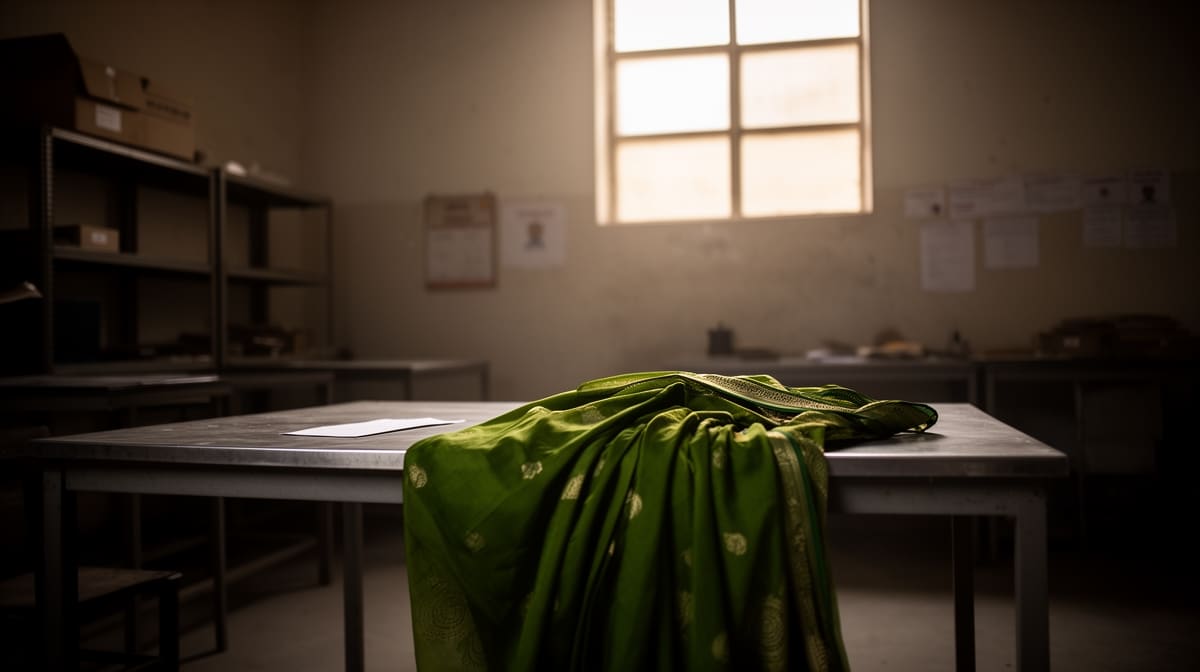
The Court further held that while the recovery could be admitted under Section 8 as conduct indicative of knowledge, such evidence is inherently weak and cannot by itself sustain a conviction. The DNA match was partial - only vertebrae and teeth matched; the skull did not. Crucially, the green saree in which the remains were wrapped was never confronted to PW7, the alleged owner, violating the principle of fair trial.
The Court also found that the "last seen together" theory collapsed due to the accused’s arrest on 06.10.2018, while the child was allegedly taken on 05.10.2018. The FIR was registered five days later, and no inquiry was made during the accused’s incarceration. The long delay, absence of a missing complaint until the accused himself filed it, and the lack of a confirmed time of death rendered the prosecution’s narrative speculative.
The Court concluded that the evidence, even taken together, failed to exclude every reasonable hypothesis of innocence. The burden under Section 106 of the Evidence Act could not be discharged where the prosecution’s own conduct created reasonable doubt.
The Verdict
The appellant won. The Supreme Court acquitted Rohit Jangde, setting aside both the Trial Court’s conviction and the High Court’s affirmation. The Court held that Section 27 requires police custody at the time of disclosure, and circumstantial evidence must form an unbroken chain excluding all reasonable hypotheses. The accused was ordered released forthwith, unless detained in any other case.
What This Means For Similar Cases
Section 27 Requires Actual Custody
- Practitioners must verify the exact timing of arrest versus disclosure in every Section 27 recovery.
- A statement made before formal arrest - even if the accused is at the police station - is inadmissible under Section 27 unless restraint or surveillance is proven.
- Relying on Dharam Deo Yadav to stretch "custody" to include voluntary appearances will not succeed unless the accused’s freedom of movement was demonstrably curtailed.
DNA Evidence Demands Full Disclosure and Corroboration
- Partial DNA matches (e.g., teeth but not skull) require clear explanation and cannot alone establish corpus delicti.
- All DNA reports must be put to the accused under Section 313; failure to do so renders the evidence inadmissible.
- Physical evidence (e.g., clothing) linked to victims must be confronted to witnesses; failure to do so invites acquittal.
Last Seen Theory Is Fragile Without Timeline Integrity
- If the accused is arrested before the alleged time of crime, the "last seen" theory collapses.
- Delay in registering FIR, especially when police were already aware of the child’s disappearance, creates fatal doubt.
- Courts will not infer guilt from silence or inaction where the prosecution’s own conduct caused the delay.