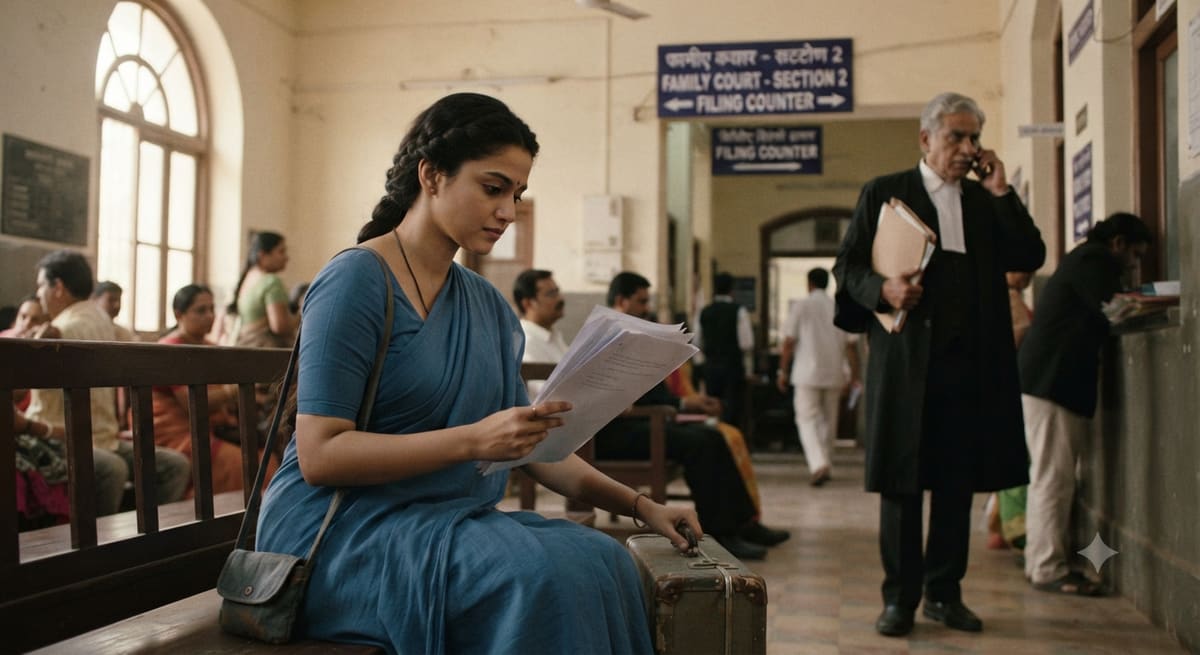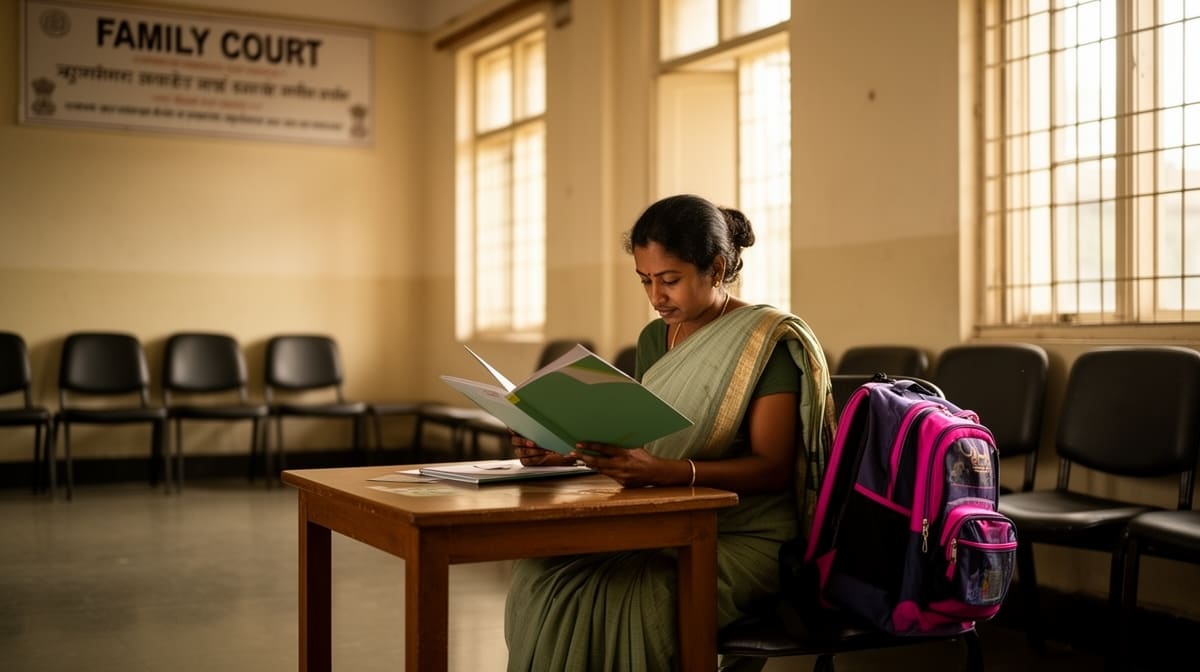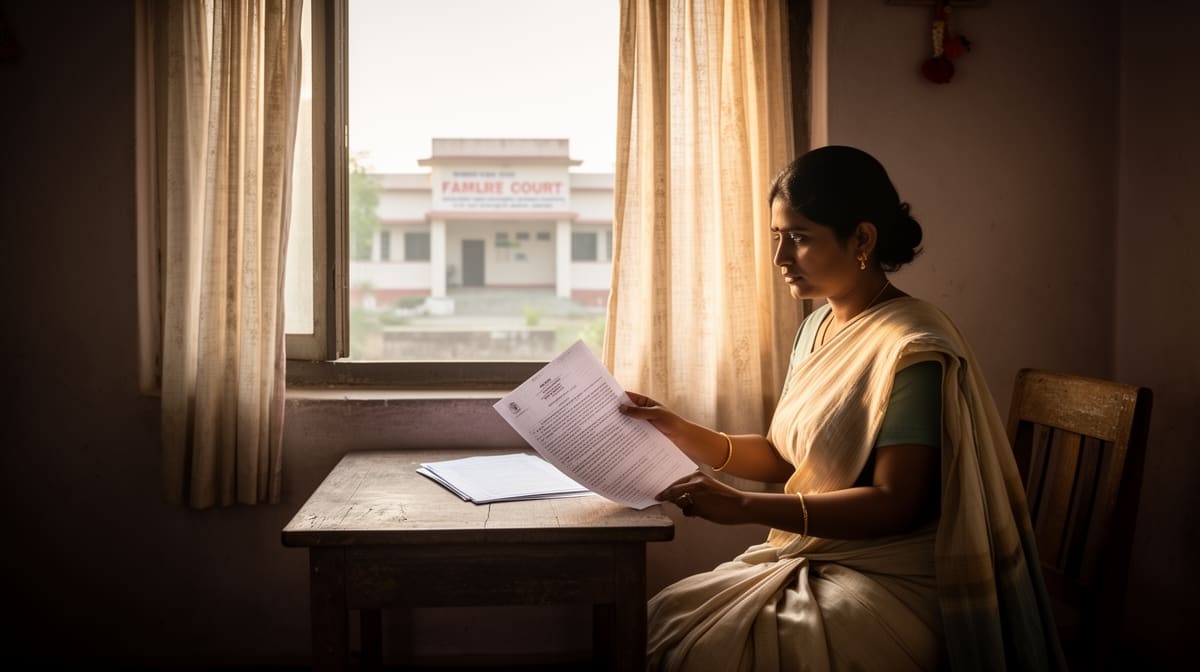
The Bombay High Court has affirmed that logistical hardship and the need to avoid multiplicity of proceedings are valid grounds for transferring matrimonial matters between jurisdictions. This ruling reinforces the principle that procedural convenience, particularly for economically vulnerable litigants, must inform judicial discretion under Section 25 of the Code of Civil Procedure.
Background & Facts
The Dispute
The Applicant, Shital Nishikant Gunjarge, seeks transfer of H.M.P. No. 64 of 2025, pending before the Chief Judicial Magistrate (Civil) and Sub-Divisional Judge (C.J.S.D.), Udgir, to the Family Court, Parbhani. The proceeding relates to a matrimonial dispute initiated by the Applicant against her husband, the Respondent Nishikant Avinash Gunjarge.
Key Facts
- The Applicant has no source of income and is financially dependent
- Udgir is approximately 150 kilometers away from her residence, making regular attendance at proceedings physically and economically burdensome
- The Applicant has filed two other proceedings against the Respondent and his relatives, both pending before courts in Parbhani
- The Respondent has not filed a written reply to the transfer application
- The Applicant’s presence is required in person for hearings in Udgir, creating a significant hardship
Procedural History
- H.M.P. No. 64 of 2025: Filed before C.J.S.D., Udgir, seeking interim reliefs in matrimonial matter
- 15.03.2025: Application for transfer filed before Bombay High Court, Aurangabad Bench
- 15.06.2026: Hearing concluded before Justice Abhay J. Mantri
The Parties' Positions
Applicant’s Position: Transfer is necessary due to financial incapacity, distance, and the existence of two pending proceedings in Parbhani. Consolidation would ensure efficiency and reduce harassment.
Respondent’s Position: Opposed transfer on grounds that no sufficient cause has been shown. However, no written reply or affidavit was filed to substantiate this objection.
Relief Sought
The Applicant sought transfer of H.M.P. No. 64 of 2025 from C.J.S.D., Udgir, to the Family Court, Parbhani, to avoid multiplicity of proceedings and undue hardship.
The Legal Issue
Can a matrimonial proceeding be transferred to a different jurisdiction where the applicant faces severe financial and logistical hardship and where related proceedings are already pending, even in the absence of a formal reply from the respondent?
Arguments Presented
For the Applicant
The Applicant’s counsel relied on the principle of judicial economy and the Supreme Court’s observation in N.C.V. Aishwarya v. A.S. Saravana Karthik Sha. that multiplicity of proceedings causes unnecessary harassment and delays justice. It was argued that the Applicant’s lack of income and the 150-kilometer distance render attendance at Udgir practically impossible. The absence of a reply from the Respondent rendered the Applicant’s claims uncontroverted and entitled to acceptance.
For the Respondent
The Respondent opposed the transfer but did not file any written reply, affidavit, or supporting documents. No specific prejudice or legal ground was articulated beyond a general objection. The Court noted this failure to contest the application substantively.
The Court's Analysis
The Court examined the application under the inherent powers of the High Court to transfer proceedings under Section 25 of the Code of Civil Procedure, read with the principles of natural justice and judicial efficiency. It emphasized that the object of transfer is not merely procedural convenience but the prevention of injustice arising from undue hardship.
"It would be appropriate to transfer the proceeding... which would not cause prejudice to the rights of the Respondent. On the contrary, it would avoid the multiplicity of proceedings at various courts."
The Court held that the Respondent’s failure to file a reply meant the Applicant’s factual assertions remained undisputed. The Court further noted that the existence of two other pending proceedings in Parbhani created a clear risk of inconsistent findings and unnecessary duplication of effort. The Supreme Court precedent in N.C.V. Aishwarya was applied to reinforce that consolidation of related matrimonial matters promotes justice and reduces trauma to litigants.
The Court rejected the notion that transfer requires proof of malice or deliberate forum shopping. Instead, it adopted a pragmatic approach: when hardship is real and multiplicity is evident, transfer is not only permissible but desirable.
The Verdict
The Miscellaneous Civil Application is allowed. H.M.P. No. 64 of 2025 pending before the C.J.S.D., Udgir, is transferred to the Family Court, Parbhani. The Respondent is at liberty to apply before the Family Court, Parbhani, for permission to appear through video conferencing, which the Court directed should be considered positively.
What This Means For Similar Cases
Financial Hardship Justifies Transfer
- Practitioners may now invoke financial incapacity and distance as decisive factors in transfer applications under Section 25 CPC
- Courts must treat lack of income as a material fact, not a mere assertion
- Affidavits of income or employment status should be filed as supporting evidence
Silence of Respondent Is Not Waiver, But Creates Presumption
- Failure to file a reply does not automatically grant relief, but leaves the applicant’s claims unchallenged
- Courts may treat uncontroverted factual claims as prima facie true for the purpose of transfer applications
- Advocates should always file replies to avoid adverse inferences
Multiplicity of Proceedings Is a Ground for Consolidation
- Where multiple proceedings involving the same parties and subject matter are pending in different jurisdictions, transfer should be considered as a matter of course
- Family Courts are the preferred forum for consolidation of matrimonial disputes
- Courts must proactively identify and prevent fragmentation of related cases