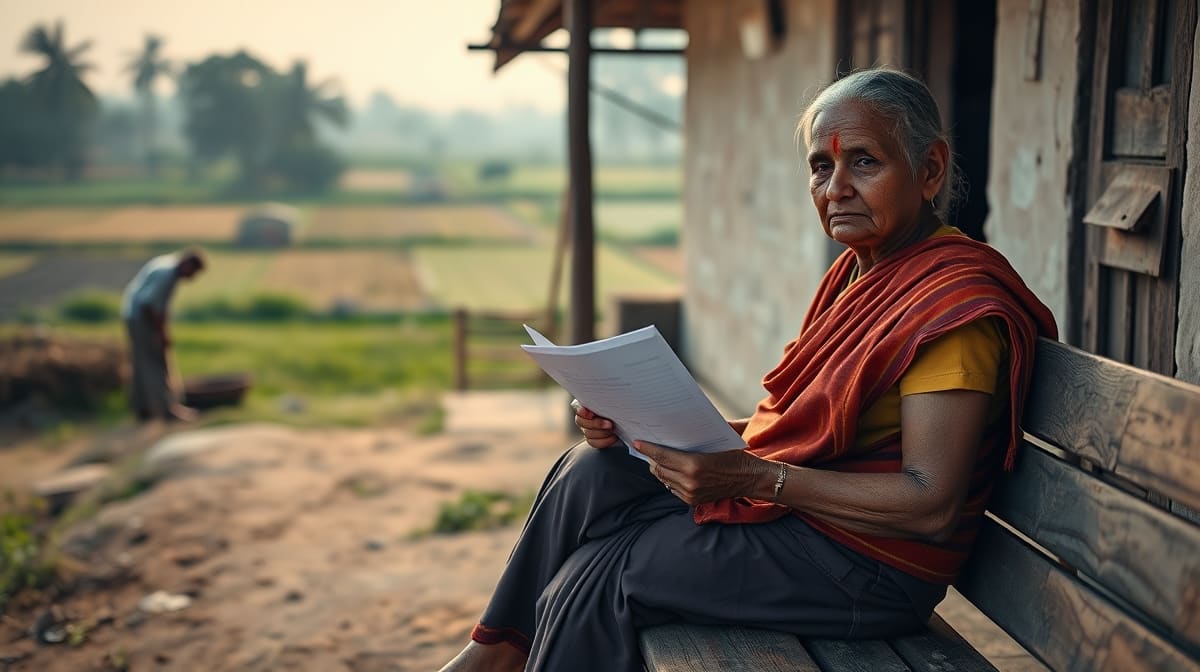
The Karnataka High Court has clarified that a wife residing with her husband in the same household, and receiving basic necessities such as food and shelter, cannot be awarded excessive interim maintenance merely on assertion of financial need. The judgment underscores the principle that maintenance must reflect actual need and economic reality, not speculative claims.
Background & Facts
The Dispute
The petitioner, Sri H.N. Naresha Kumar, filed a petition for dissolution of marriage against his wife, Smt. Jyothi Lakshmi M. The respondent-wife filed an interlocutory application (I.A. No. III) in the underlying matrimonial case (M.C. No. 4933/2021) seeking interim maintenance of Rs. 25,000 per month for herself and Rs. 1,00,000 as one-time litigation expenses. She also sought maintenance for their minor daughter.
Key Facts
- The petitioner and respondent are currently residing together in the same house at No. 2, Hanumanthegowda Palya, Yentaganahalli Post, Nelamangala Taluk, Bengaluru Rural District.
- The petitioner worked as a Senior Marketing Executive Officer at Raghavendra Hospital, Bengaluru from 2000 to 2007, then as Billing In-Charge at Suguna Hospital, and later at Harsha Hospital, Nelamangala.
- The petitioner alleges that the wife harassed him by calling hospital staff to verify his presence at work, leading to his eventual unemployment.
- The wife, in her affidavit, claimed that the husband provides only food and nothing else - no medical care, clothing, or personal expenses.
- The wife did not make any specific claim for maintenance of the daughter in her application.
- The petitioner asserts that he is personally providing for the daughter’s education and all basic needs.
- The petitioner currently has no regular employment.
Procedural History
- 21.07.2023: Family Court, Bengaluru, passed an order in I.A. No. III allowing maintenance of Rs. 15,000 per month to the wife, Rs. 5,000 per month to the daughter, and Rs. 25,000 as one-time litigation expenses.
- 28.11.2023: Writ Petition No. 25668 of 2023 filed under Article 227 of the Constitution of India before the Karnataka High Court seeking quashing of the Family Court’s order.
- 18.02.2026: Hearing conducted before the High Court.
- 08.04.2026: Judgment pronounced.
Relief Sought
The petitioner sought quashing of the Family Court’s order dated 21.07.2023, particularly the directions for:
- Rs. 15,000 per month interim maintenance to the wife
- Rs. 5,000 per month maintenance for the daughter
- Rs. 25,000 one-time litigation expenses
The Parties' Positions
For the Petitioner (Husband): Argued that the wife is residing with him and receiving food and shelter; no separate maintenance is warranted. He is unemployed and unable to bear the burden. The daughter’s needs are already being met. The Family Court erred in awarding maintenance for the daughter without any claim being made.
For the Respondent (Wife): Did not file any written submissions or appear before the High Court despite being granted sufficient opportunity.
The Legal Issue
The central question was whether a wife residing with her husband in the same household, and receiving food and shelter, is entitled to interim maintenance of Rs. 15,000 per month, and whether maintenance for a minor child can be awarded without any specific claim being made by the wife.
Arguments Presented
For the Appellant/Petitioner
The petitioner’s counsel contended that the Family Court failed to consider the actual living arrangement - cohabitation - and the absence of any claim for the daughter’s maintenance. He relied on the principle that maintenance under Section 24 of the Hindu Marriage Act, 1955 must be based on actual need and the respondent’s ability to pay. He cited Smt. Sunita Devi v. Smt. Renuka Devi to argue that maintenance cannot be awarded in the abstract without evidence of deprivation. He emphasized that the wife’s affidavit admitted she was residing with the husband and receiving food, yet still sought Rs. 15,000/month, which was disproportionate.
For the Respondent/State
The respondent-wife did not file any written arguments or appear before the High Court. No counter-submissions were made.
The Court's Analysis
The Court observed that the Family Court’s order was devoid of any analysis of the husband’s income, assets, or financial capacity. No evidence was recorded to substantiate the wife’s claim of deprivation beyond food. The Court noted that the wife herself admitted in her affidavit that she was residing with the husband and receiving food.
"The wife has not claimed any amount towards maintenance of the daughter, yet the Family Court directed payment of Rs. 5,000 per month for the child. This is impermissible in law."
The Court held that where a wife is residing with her husband and receiving basic necessities, the obligation to pay maintenance is not extinguished but must be proportionate to the actual deprivation. The Court distinguished between financial support for shelter and food, and additional monetary maintenance for personal expenses.
The Court further held that maintenance for a child cannot be awarded suo motu in a proceeding initiated by the mother for her own maintenance, absent a specific prayer. The Family Court had acted beyond the scope of the application.
The Court emphasized that while the wife retains the right to file a separate application for the child’s maintenance, such relief cannot be granted in the absence of a claim.
The Verdict
The writ petition was allowed in part. The Family Court’s order dated 21.07.2023 was modified as follows:
- The interim maintenance of Rs. 15,000 per month to the wife was reduced to Rs. 5,000 per month.
- The maintenance of Rs. 5,000 per month for the daughter was set aside, as no claim was made.
- The one-time litigation expenses of Rs. 25,000 were upheld.
- All arrears of maintenance shall be cleared within three months.
- The wife retains the right to file a separate application for maintenance of the daughter if necessary.
What This Means For Similar Cases
Cohabitation Limits Maintenance Entitlement
- Practitioners must now demonstrate actual deprivation beyond cohabitation to claim substantial interim maintenance.
- A wife residing with her husband and receiving food and shelter cannot claim maintenance amounts equivalent to independent living expenses.
- Courts must conduct a fact-specific inquiry into living arrangements before awarding maintenance.
No Sua Sponte Child Maintenance
- Maintenance for a minor child cannot be awarded in a proceeding initiated solely for spousal maintenance.
- A separate application under Section 26 of the Hindu Marriage Act, 1955 must be filed for child maintenance.
- Family Courts must not exceed the scope of the application before them.
Burden of Proof on Claimant
- The burden lies on the applicant to prove financial need and deprivation.
- Mere assertion without evidence, especially when cohabitation exists, will not sustain high maintenance awards.
- Courts must scrutinize affidavits for consistency and plausibility.