The Madras High Court has reaffirmed that interim maintenance in divorce proceedings must reflect a balanced assessment of the respondent’s net disposable income, tax obligations, and the petitioner’s actual standard of living - not a mechanical application of the one-third rule. This judgment provides critical guidance on how courts should evaluate financial capacity in cross-border maintenance claims.
Background & Facts
The Dispute
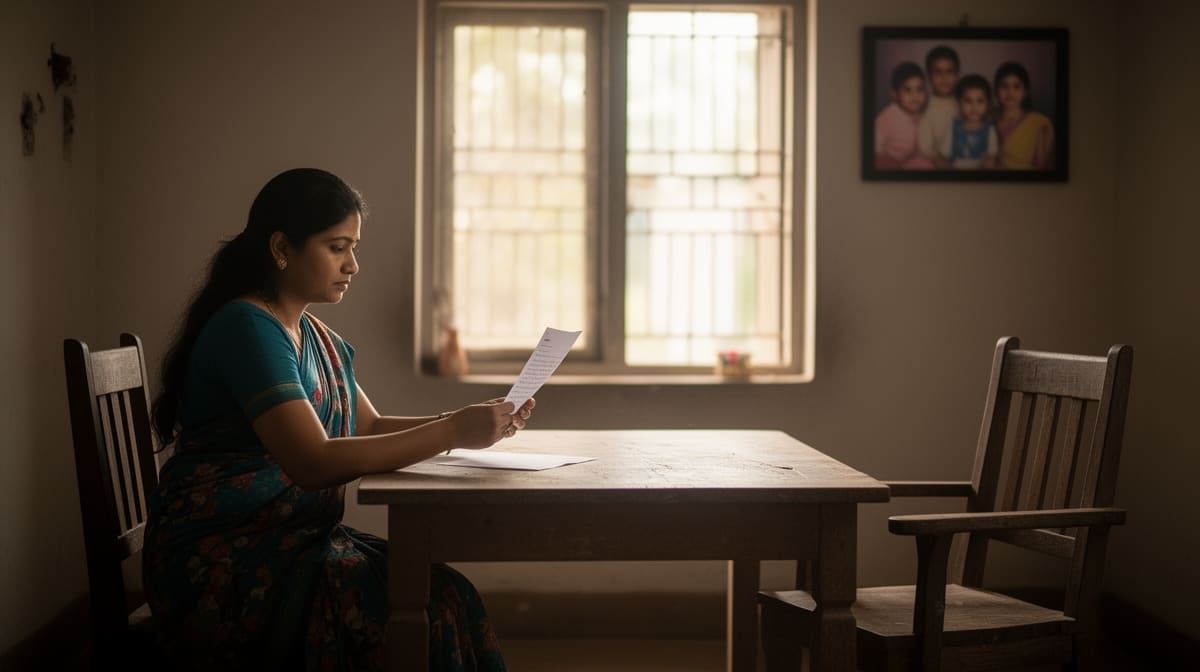
The petitioner, T. Renuka Devi, wife of A. Venkateswari, filed a divorce petition under Section 13 of the Hindu Marriage Act, 1955, in OP No. 5241 of 2022 before the VI Additional Principal Family Court, Chennai. During the pendency of the divorce, she filed I.A. No. 3 of 2023 seeking interim maintenance and litigation expenses. The Family Court granted Rs. 20,000 per month as interim maintenance, which the petitioner challenged as inadequate.
Key Facts
- The petitioner is a homemaker who ceased employment after marriage and has no independent source of income.
- The respondent is employed by Oracle Corporation in the United States of America with a monthly gross salary of Rs. 6,52,000.
- The respondent pays approximately Rs. 40,00,000 per year (Rs. 3,30,000 per month) in U.S. income taxes under W-2 employment.
- The petitioner claims she is entitled to one-third of the respondent’s gross income (Rs. 3,00,000 per month) to maintain her pre-divorce standard of living.
- The respondent contends that his net disposable income is significantly reduced due to high tax liability, cost of living in the U.S., and financial obligations toward his elderly parents.
- The petitioner also sought Rs. 1,00,000 as litigation expenses.
Procedural History
- 2022: Original divorce petition (OP No. 5241 of 2022) filed before the Family Court, Chennai.
- 2023: I.A. No. 3 of 2023 filed seeking interim maintenance and litigation expenses.
- 03.03.2025: Family Court ordered interim maintenance of Rs. 20,000 per month and rejected the claim for litigation expenses.
- 24.03.2025: Civil Revision Petition (CRP No. 2440 of 2025) filed before the Madras High Court under Article 227 of the Constitution.
- 24.03.2026: Judgment delivered by the Hon’ble Mrs. Justice T.V. Thamilselvi.
Relief Sought
The petitioner sought:
- Enhancement of interim maintenance to Rs. 3,00,000 per month (one-third of gross salary)
- Payment of Rs. 1,00,000 as litigation expenses
- Direction for payment of arrears from the date of filing I.A. No. 3 of 2023
The Parties' Positions
Petitioner: Relied on Dr. Rajiv Verghese v. Rose Chakkrammankkil Francis to argue that a wife is entitled to maintain the standard of living enjoyed during the marriage, and that one-third of gross income is a recognized benchmark.
Respondent: Argued that gross income figures are misleading; net disposable income after U.S. tax deductions and personal obligations is substantially lower, and Rs. 20,000 is reasonable given the petitioner’s actual needs and the respondent’s financial constraints.
The Legal Issue
The central question was whether interim maintenance under Section 24 of the Hindu Marriage Act, 1955, must be calculated as a fixed fraction of gross income, or whether the court must consider net disposable income, tax obligations, cost of living, and the respondent’s legitimate financial responsibilities.
Arguments Presented
For the Petitioner
Counsel relied on the Supreme Court’s observation in Dr. Rajiv Verghese v. Rose Chakkrammankkil Francis that a wife is entitled to the same standard of living as enjoyed during the marriage. She argued that the Family Court erred in ignoring the respondent’s high income and that Rs. 20,000 is grossly inadequate for a woman accustomed to a high-income household. The petitioner contended that one-third of gross income is a reasonable and widely accepted benchmark in similar cases.
For the Respondent
Counsel emphasized that the respondent’s gross salary of Rs. 6,52,000 is subject to U.S. federal and state income taxes amounting to Rs. 40,00,000 annually (Rs. 3,30,000 per month). He further stated that he supports his aging parents and bears the high cost of living in the U.S. The respondent argued that the Family Court’s order of Rs. 20,000 was fair, considering his net disposable income and the petitioner’s actual needs, which do not require luxury-level expenditure.
The Court's Analysis
The Court acknowledged the principle laid down in Dr. Rajiv Verghese v. Rose Chakkrammankkil Francis that a wife is entitled to maintain the standard of living she enjoyed during the marriage. However, the Court clarified that this does not translate into a mechanical entitlement to one-third of gross income.
"The fact that the respondent earns a substantial gross salary does not mean that the entire amount is available for maintenance. Tax obligations, cost of living in a foreign jurisdiction, and legitimate familial responsibilities must be factored into the calculation of net disposable income."
The Court noted that the Family Court had not erred in its initial assessment but had failed to adequately account for the petitioner’s actual needs in light of the respondent’s net financial position. The Court rejected the petitioner’s demand for Rs. 3,00,000 as disproportionate and not supported by evidence of actual expenditure patterns.
The Court also observed that the respondent’s tax burden was substantiated by his employment structure under W-2, which involves automatic withholding of federal and state taxes. The Court accepted the figure of Rs. 3,30,000 per month as a legitimate deduction from gross income.
After balancing the petitioner’s need for financial security with the respondent’s demonstrable obligations, the Court concluded that Rs. 50,000 per month represents a fair and equitable interim maintenance amount.
The Verdict
The petitioner succeeded in part. The Madras High Court set aside the Family Court’s order of Rs. 20,000 per month and enhanced interim maintenance to Rs. 50,000 per month. The respondent is directed to pay this amount from the date of filing I.A. No. 3 of 2023, with accrued arrears to be settled within four weeks of receiving a copy of this order. The Family Court is directed to dispose of the main divorce petition (OP No. 5241 of 2022) within four months. No litigation expenses were awarded. No costs were imposed.
What This Means For Similar Cases
Net Income, Not Gross, Is the Baseline
- Practitioners must now present evidence of the respondent’s net disposable income, including tax deductions, social security contributions, and mandatory withholdings.
- Claims based on one-third of gross salary will be rejected unless supported by proof of actual disposable income and absence of significant liabilities.
- Courts will no longer accept gross income figures as the sole basis for maintenance calculations in cross-border cases.
Tax Burden Is a Legitimate Consideration
- High tax obligations in foreign jurisdictions (e.g., U.S., U.K., Singapore) are now recognized as valid deductions in maintenance calculations.
- Respondents must produce tax returns, pay stubs, or employer certifications to substantiate tax liabilities.
- The burden shifts to the petitioner to prove that the respondent’s net income is sufficient to support a higher maintenance amount.
Standard of Living Must Be Contextual
- The "standard of living" principle does not entitle a spouse to luxury; it entitles them to reasonable continuity of lifestyle consistent with the household’s actual spending patterns.
- Courts will examine bank statements, expenditure records, and lifestyle indicators - not just income - to determine adequacy.
- Maintenance orders must be realistic, enforceable, and proportionate to the respondent’s actual financial capacity after obligations.