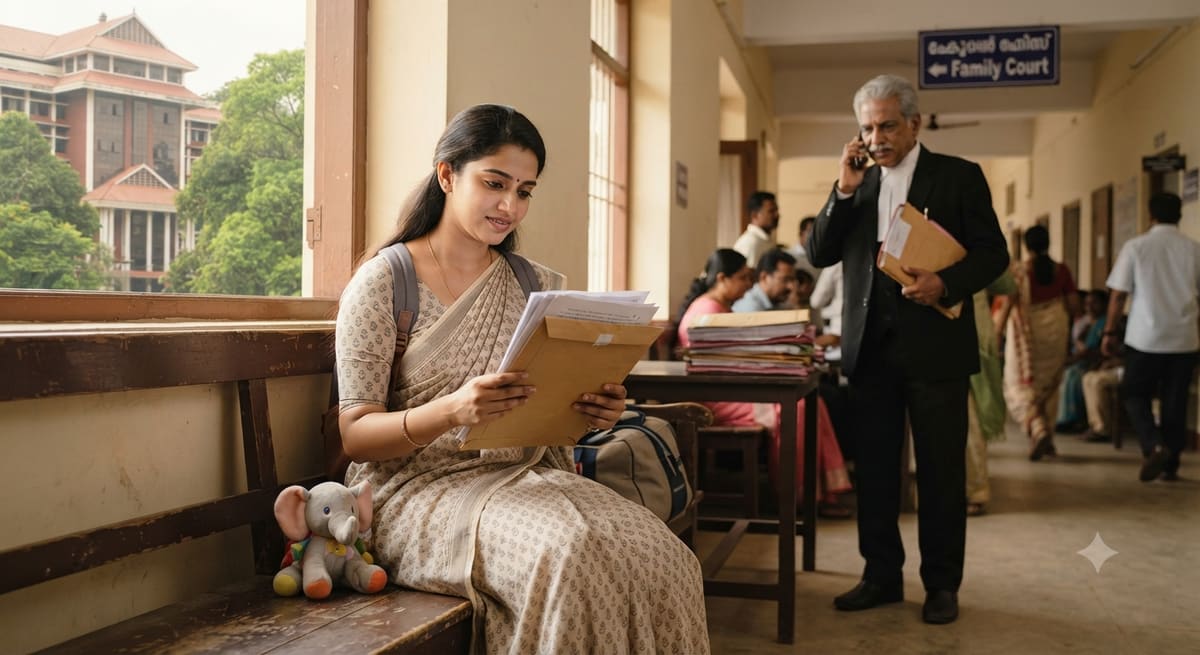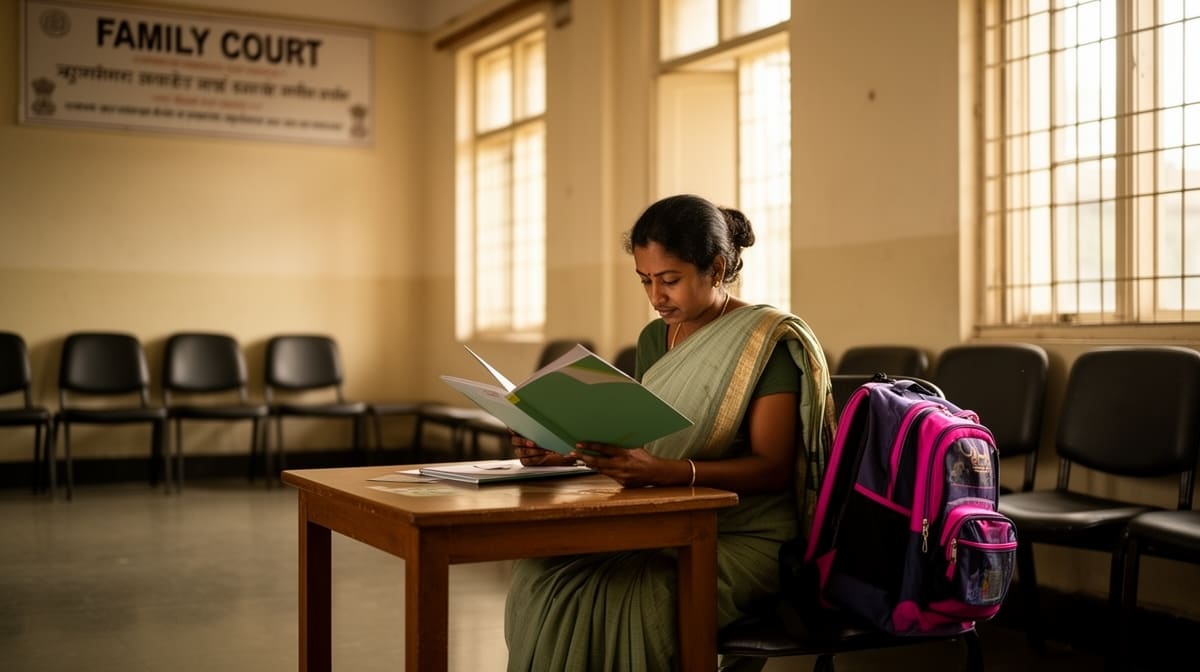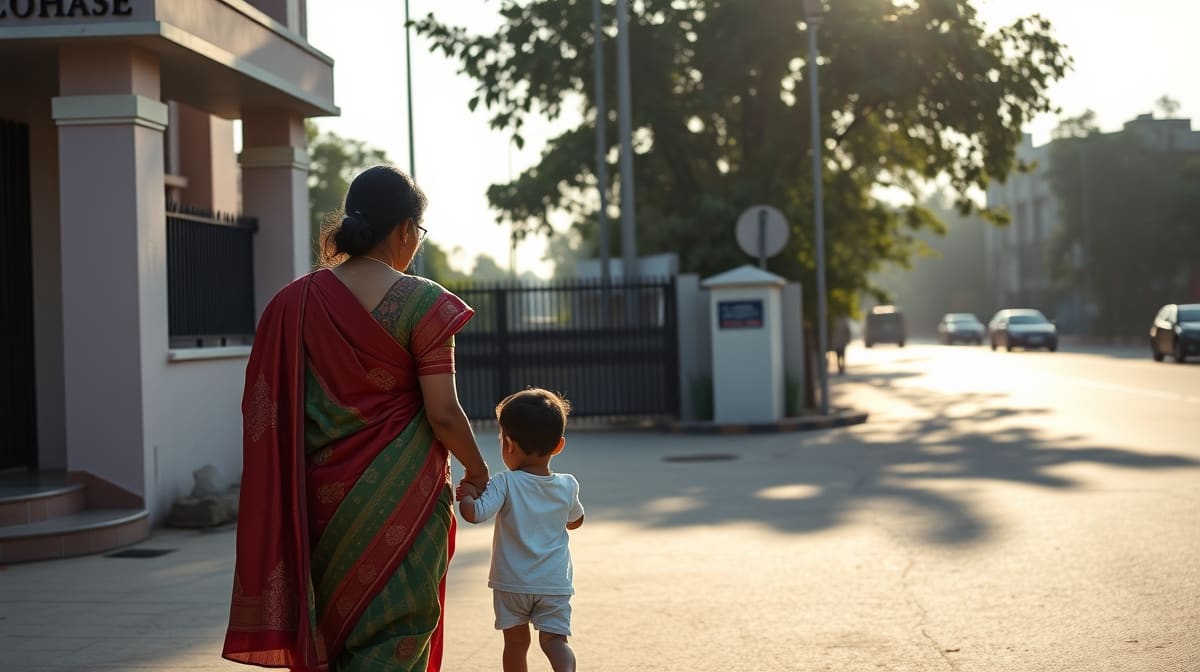
The Chhattisgarh High Court has reaffirmed that in matrimonial disputes, the wife’s convenience must be the primary consideration when deciding transfer petitions under Section 24 of the Code of Civil Procedure. This ruling clarifies that mere inconvenience to the husband cannot outweigh the practical and socio-economic realities faced by the wife, particularly when multiple proceedings are pending across jurisdictions.
Background & Facts
The Dispute
The petitioner, Smt. Anjali Agrawal, and the respondent, Rupesh Agrawal, were married on 06.07.2022. Shortly after the marriage, the respondent and his family allegedly began subjecting the petitioner to physical and mental cruelty, including repeated demands for dowry and household articles. Despite efforts by the petitioner’s father to mediate through social meetings, the respondent’s conduct remained unchanged. The petitioner eventually left the matrimonial home and returned to her parental residence at Village Reda, Tahsil Sarangarh, District Sarangarh-Bilaigarh, Chhattisgarh.
Key Facts
- The petitioner is currently residing with her parents at Village Reda, District Sarangarh-Bilaigarh
- The respondent resides at Behind Janki Dharamshala, Kharsia, District Raigarh, Chhattisgarh
- The petitioner filed Civil Suit No. A/55/2024 under Section 9 of the Hindu Marriage Act before the District & Additional Sessions Judge, Sarangarh
- The petitioner also filed Criminal Case No. 2402/2024 based on an FIR registered under Sections 85 and 3(5) of the Bharatiya Nyaya Sanhita, 2023
- Civil Suit No. A/211/2024, the subject of this transfer petition, was filed before the Family Court, Raigarh
- The petitioner is unable to attend hearings in Raigarh due to financial, logistical, and personal hardship
Procedural History
- 06.07.2022: Marriage solemnized between petitioner and respondent
- 2023: Alleged onset of cruelty and dowry demands
- 2024: Petitioner left matrimonial home and returned to parental residence
- 2024: Civil Suit No. A/55/2024 filed before District & Additional Sessions Judge, Sarangarh
- 2024: Criminal Case No. 2402/2024 initiated under BNS, 2023
- 2024: Civil Suit No. A/211/2024 filed before Family Court, Raigarh
- 06.04.2026: Transfer Petition No. 10 of 2026 filed before Chhattisgarh High Court
The Parties' Positions
For the Petitioner: The petitioner’s counsel argued that the petitioner, as a woman residing with her parents in Sarangarh, faces severe hardship in traveling to Raigarh for court appearances. She has no independent means of transport or financial support to commute between districts. The petitioner’s presence in Sarangarh is necessary for her safety and emotional stability. The transfer would also facilitate consolidation of related proceedings.
For the Respondent: The respondent’s counsel opposed the transfer, arguing that he too would suffer hardship by having to travel from Raigarh to Sarangarh. He contended that inconvenience alone is not a legally valid ground for transfer under Section 24 CPC.
Relief Sought
The petitioner sought transfer of Civil Suit No. A/211/2024 from the Family Court, Raigarh, to the Court of District & Additional Sessions Judge, Sarangarh, to ensure her access to justice and avoid undue hardship.
The Legal Issue
The central question was whether the convenience of the wife in a matrimonial dispute constitutes a sufficient ground for transfer of proceedings under Section 24 of the Code of Civil Procedure, even when the husband would also face inconvenience.
Arguments Presented
For the Petitioner
The petitioner’s counsel relied on N.C.V. Aishwarya v. A.S. Saravana Karthik (2022 SCC Online SC 1199), emphasizing that Indian courts, in light of prevailing socio-economic conditions, must prioritize the wife’s convenience in transfer petitions. Counsel argued that the petitioner’s residence with her parents, the existence of parallel proceedings in Sarangarh, and the vulnerability of women in matrimonial disputes collectively justify transfer. The petitioner’s inability to bear travel costs and the risk of further harassment were highlighted as critical factors.
For the Respondent
The respondent’s counsel contended that Section 24 CPC requires a showing of exceptional hardship, not mere inconvenience. He argued that both parties are residents of Chhattisgarh and that the Family Court at Raigarh has territorial jurisdiction. He further submitted that allowing transfer on grounds of convenience would set a precedent undermining the principle of forum convenience.
The Court's Analysis
The Court examined the judgment in N.C.V. Aishwarya v. A.S. Saravana Karthik, particularly paragraphs 9 and 10, which articulate the guiding principles for transfer in matrimonial matters. The Court noted that while both parties’ convenience must be considered, the prevailing socio-economic reality in India places women at a structural disadvantage in matrimonial disputes. The Supreme Court’s observation that "generally, it is the wife's convenience which must be looked at while considering transfer" was held to be binding.
"Given the prevailing socio-economic paradigm in the Indian society, generally, it is the wife's convenience which must be looked at while considering transfer."
The Court further observed that the petitioner had already initiated two other proceedings in Sarangarh - one civil and one criminal - making it both practical and judicially efficient to consolidate all matters before a single forum. The respondent’s claim of inconvenience was deemed insufficient to override the petitioner’s demonstrable hardship, especially in the absence of any allegation of mala fide intent or forum shopping.
The Court also noted that the respondent would not be deprived of his right to participate, as he remains free to appear via video conferencing unless otherwise directed.
The Verdict
The petitioner succeeded. The Court allowed the transfer petition and ordered that Civil Suit No. A/211/2024 pending before the Family Court, Raigarh, be transferred to the Court of District & Additional Sessions Judge, Sarangarh, Revenue District: Sarangarh-Bilaigarh, Chhattisgarh. The respondent is permitted to participate in proceedings through video conferencing. Both parties are directed to appear before the transferee court on 05.05.2026.
What This Means For Similar Cases
Wife's Convenience Is a Presumptive Ground for Transfer
- Practitioners must now treat the wife’s residence and logistical hardship as a primary, not secondary, factor in transfer petitions under Section 24 CPC
- Courts are expected to presume that transfer to the wife’s place of residence serves the ends of justice unless rebutted by compelling countervailing factors
- Mere assertion of inconvenience by the husband is insufficient to deny transfer
Consolidation of Proceedings Is Judicially Favored
- When multiple proceedings (civil, criminal, or both) involving the same parties and facts are pending in different jurisdictions, courts must consider consolidation
- Filing of a criminal case under BNS, 2023, alongside a civil suit under the Hindu Marriage Act, strengthens the case for transfer to a single forum
- Lawyers should proactively plead parallel proceedings when seeking transfer to avoid multiplicity and conflicting outcomes
Virtual Participation Is Now a Recognized Alternative
- Courts may permit respondents to appear via video conferencing to mitigate hardship without compromising access to justice
- This directive reduces the burden on parties while preserving procedural fairness
- Advocates should request virtual participation as a standard condition in transfer petitions, especially in inter-district matrimonial disputes