The Andhra Pradesh High Court has reaffirmed that in matrimonial disputes, the convenience of the wife must prevail over the logistical inconvenience to the husband when considering transfer of proceedings under Section 24 of the Code of Civil Procedure. This ruling underscores the judiciary’s evolving recognition of gendered realities in family litigation.
Background & Facts
The Dispute
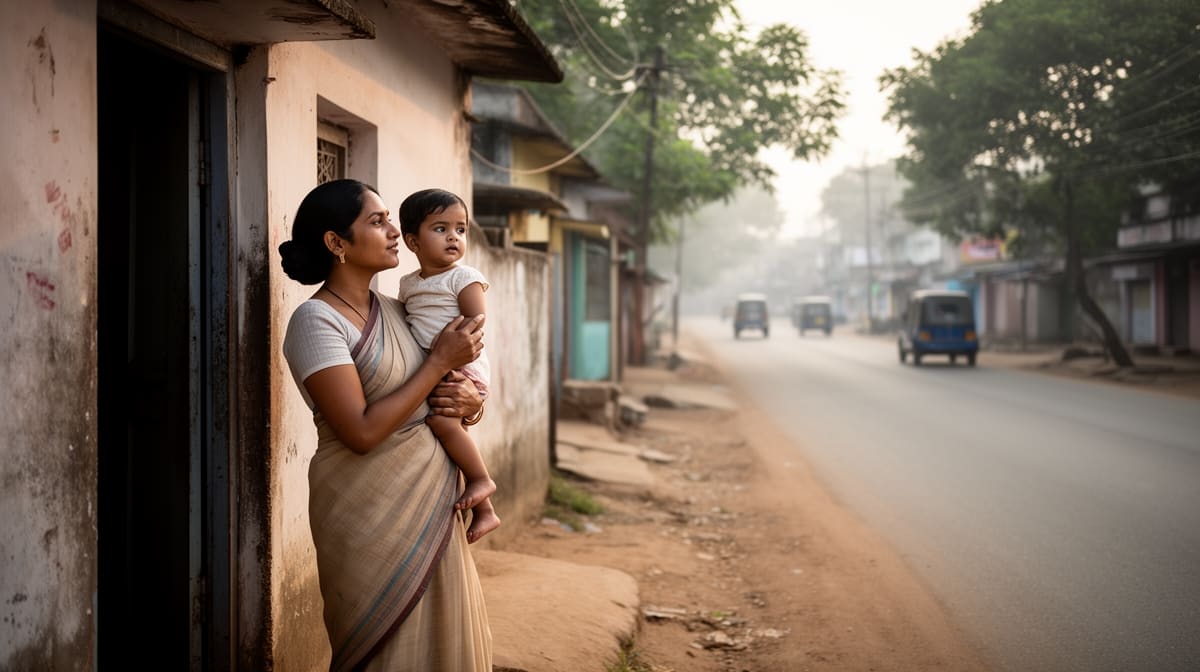
The petitioner, Pedapudi Sri Venkata Lakshmi, a 22-year-old woman, seeks transfer of H.M.O.P. No. 83 of 2025 filed by her husband, Pedapudi Srinivasa Rao, under Section 9 of the Hindu Marriage Act, 1955, seeking restitution of conjugal rights. The petition was filed in the Senior Civil Judge Court, Bhimavaram, West Godavari District, approximately 150 kilometers from where the petitioner currently resides with her two-year-old child.
Key Facts
- The petitioner and respondent were married on 25.02.2023 at Sri Kanakadurgamma Temple, Vijayawada, in accordance with Hindu rites.
- A child was born to the couple on 10.12.2023.
- Following marital discord, the petitioner left the matrimonial home and has been residing with her parents in Vijayawada since early 2024.
- On 26.05.2023, the petitioner filed a complaint against the respondent and his family, which led to Crime No. 61 of 2023 being registered at Disha Police Station, Vijayawada.
- A charge sheet was filed on 15.11.2023, resulting in C.C. No. 4821 of 2023 pending before the II Additional Chief Metropolitan Magistrate, Vijayawada.
- The respondent filed H.M.O.P. No. 83 of 2025 on 12.04.2025 before the Senior Civil Judge Court, Bhimavaram, seeking restitution of conjugal rights.
- The petitioner, unable to travel 150 km alone with a toddler and without male accompaniment, filed the present petition under Section 24 CPC on 05.02.2026.
- The petitioner’s notice was served on the respondent via registered post on 09.03.2026, with proof submitted via U.S.R. No. 33340 of 2026 and postal track details.
Procedural History
- 25.02.2023: Marriage solemnized at Vijayawada.
- 10.12.2023: Birth of child.
- 26.05.2023: Complaint filed by petitioner at Disha Police Station, Vijayawada.
- 15.11.2023: Charge sheet filed as C.C. No. 4821 of 2023.
- 12.04.2025: Respondent files H.M.O.P. No. 83 of 2025 at Bhimavaram.
- 05.02.2026: Petitioner files Transfer Petition under Section 24 CPC before Andhra Pradesh High Court.
- 16.03.2026: Proof of service filed with Registry (U.S.R. No. 33340 of 2026).
- 09.03.2026: Notice duly served on respondent via registered post.
- 23.03.2026: Hearing held; respondent failed to appear or file any response.
The Parties' Positions
Petitioner’s Position: The petitioner, a young mother with a toddler, is financially and physically dependent on her parents in Vijayawada. Traveling 150 km to Bhimavaram for court proceedings is impractical, unsafe, and economically burdensome. The respondent, residing in West Godavari, has no such hardship. The pending criminal case in Vijayawada further necessitates proximity to the same forum.
Respondent’s Position: No representation was filed by the respondent despite service of notice. The court treated this as non-appearance and waived the need for counter-submissions.
Relief Sought
The petitioner sought transfer of H.M.O.P. No. 83 of 2025 from the Senior Civil Judge Court, Bhimavaram, to the Additional Family Court, Vijayawada, for efficient and convenient adjudication, and stay of all proceedings pending transfer.
The Legal Issue
The central question was whether Section 24 of the Code of Civil Procedure permits transfer of a matrimonial proceeding from a distant forum to a location more convenient for the wife, particularly when she is residing with a young child and is financially dependent, and whether the convenience of the husband may be disregarded in such circumstances.
Arguments Presented
For the Petitioner
Learned counsel relied on the Supreme Court’s ruling in N.C.V. Aishwarya v. A.S. Saravana Karthik to argue that in matrimonial matters, the wife’s convenience must be the primary consideration under Section 24 CPC. He emphasized the petitioner’s vulnerability as a young mother with no independent means, the 150 km distance, and the existence of a parallel criminal case in Vijayawada. He contended that requiring her to travel to Bhimavaram would amount to procedural oppression and violate the spirit of equitable access to justice.
For the Respondent
No appearance or written submissions were filed by the respondent despite service of notice. The court noted the absence of any counter-argument or justification for maintaining the case in Bhimavaram.
The Court's Analysis
The Court examined the scope of Section 24 CPC, which empowers the High Court to transfer any proceeding if the ends of justice so require. It emphasized that in matrimonial disputes, the principle of justice must be interpreted through the lens of gender equity and socio-economic reality.
"The cardinal principle for exercise of power under Section 24 of the Code of Civil Procedure is that the ends of justice should demand the transfer of the suit, appeal or other proceeding. In matrimonial matters, wherever Courts are called upon to consider the plea of transfer, the Courts have to take into consideration the economic soundness of both the parties, the social strata of the spouses and their behavioural pattern, their standard of life prior to the marriage and subsequent thereto and the circumstances of both the parties in eking out their livelihood and under whose protective umbrella they are seeking their sustenance to life. Given the prevailing socio-economic paradigm in the Indian society, generally, it is the wife’s convenience which must be looked at while considering transfer."
The Court observed that the petitioner is not merely seeking procedural convenience but protection from undue hardship. The respondent, who initiated the restitution petition, has not demonstrated any legitimate reason for choosing Bhimavaram over Vijayawada. The existence of a pending criminal case in Vijayawada further strengthens the case for consolidation of proceedings in a single forum.
The Court also noted that the respondent’s failure to appear or contest the petition, despite proper service, reinforced the petitioner’s claim of abandonment and lack of genuine intent to resolve the matter equitably.
The Verdict
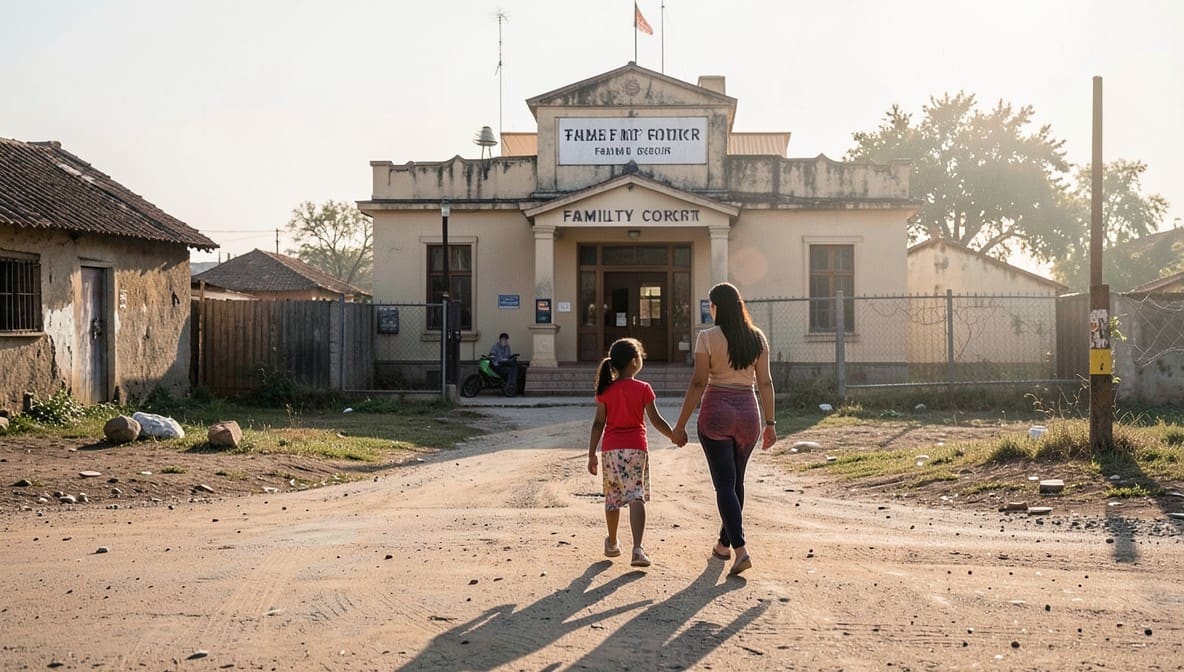
The petition was allowed. The High Court ordered the withdrawal of H.M.O.P. No. 83 of 2025 from the Senior Civil Judge Court, Bhimavaram, West Godavari District, and its transfer to the Additional Family Court, Vijayawada, Krishna District. The Senior Civil Judge, Bhimavaram, was directed to transmit the entire case record to the Family Court, Vijayawada, within two weeks of receipt of a copy of this order. All pending interim orders and miscellaneous petitions were closed. There shall be no order as to costs.
What This Means For Similar Cases
Wife’s Convenience Is a Determinative Factor
- Practitioners must now treat the wife’s physical, financial, and emotional accessibility to the forum as a primary, not secondary, consideration in Section 24 CPC transfer applications.
- Distance exceeding 100 km, especially with a minor child, constitutes prima facie grounds for transfer.
Parallel Criminal Proceedings Strengthen Transfer Requests
- When a criminal case under Section 498A, POCSO, or Disha Act is pending in the same city where the wife resides, transfer of the civil matrimonial petition to that forum is strongly favored.
- Consolidation avoids contradictory findings and reduces trauma to the victim.
Non-Appearance by Respondent Is Not a Barrier
- Courts may proceed on the basis of unchallenged affidavits and proof of service when the respondent fails to appear, even if the petition is contested in substance.
- Service via registered post with trackable proof is sufficient to discharge the burden of notice.
Family Courts Are Preferred Forums
- Transfer to a designated Family Court is now the default expectation in matrimonial disputes, even if the original petition was filed in a Civil Judge Court.
- Family Courts are statutorily equipped to handle emotional, custodial, and economic dimensions of marital breakdown.