The Bombay High Court has reaffirmed that the approval of a corporate insolvency resolution plan under the Insolvency and Bankruptcy Code, 2016, extinguishes all independent claims for monetary dues, including wages, against the corporate debtor. This judgment clarifies that even if delay in filing a complaint is condoned, no effective relief can be granted by an Industrial Court once the resolution plan has attained finality.
Background & Facts
The Dispute
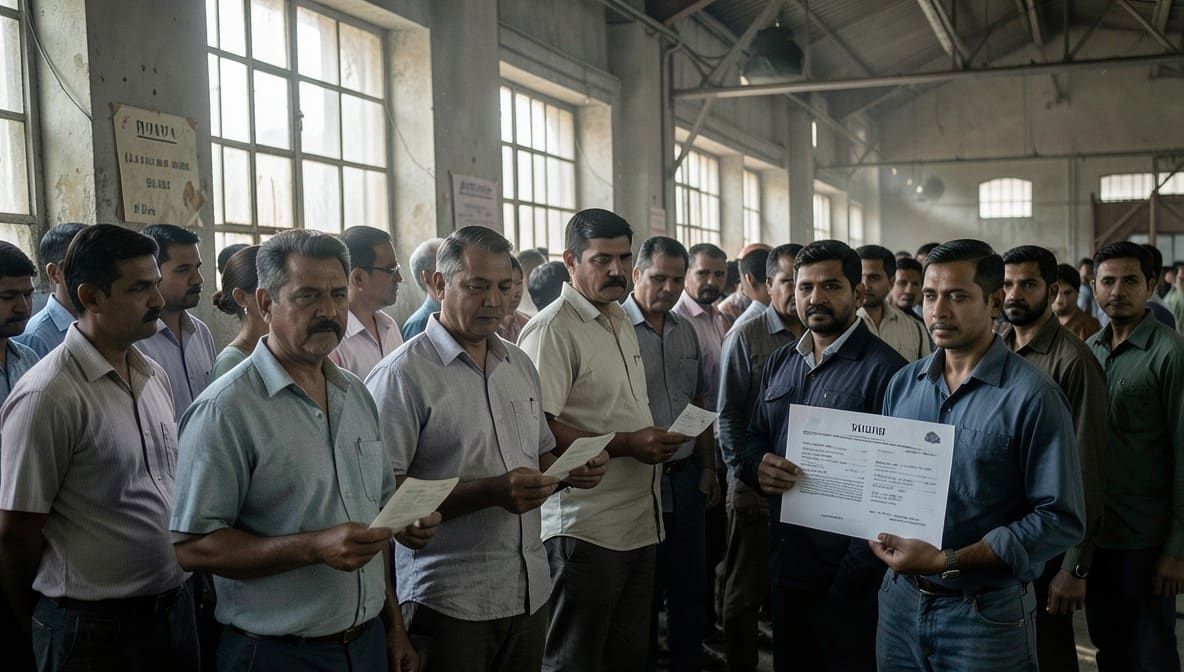
The petitioners, who are workmen of a corporate debtor, filed a complaint before the Industrial Court at Thane under Complaint (ULP) No. 87 of 2019, seeking payment of unpaid wages from 29 July 2017 until the date of filing. The complaint was filed after a delay of 531 days. The petitioners sought condonation of this delay and a direction for the payment of wages.
Key Facts
- The corporate debtor company underwent insolvency proceedings under the Insolvency and Bankruptcy Code, 2016
- The National Company Law Tribunal, Ahmedabad, approved the corporate insolvency resolution plan on 08.03.2019 and confirmed it on 26.07.2019
- The approved resolution plan included provisions for settlement and payment of workers' dues
- The petitioners lodged their claims before the National Company Law Tribunal in Contempt Petition No. 15 of 2023
- The Industrial Court rejected the petitioners' application for condonation of delay, relying on the overriding effect of Section 238 of the IBC
- The petitioners challenged this order before the Bombay High Court via Writ Petition No. 2122 of 2023
Procedural History
- 29.07.2017: Date from which wages were allegedly due and unpaid
- 08.03.2019: National Company Law Tribunal approved the corporate insolvency resolution plan
- 26.07.2019: NCLT confirmed the resolution plan
- 2019: Petitioners filed ULP Complaint No. 87 of 2019 before the Industrial Court, Thane
- 2023: Industrial Court dismissed the application for condonation of delay, citing the binding effect of the resolution plan
- 2023: Writ Petition No. 2122 of 2023 filed before the Bombay High Court
- 10.04.2026: Judgment delivered by the Bombay High Court
The Parties' Positions
The petitioners contended that their wages were due and unpaid for over two years and that the delay in filing the complaint was due to ignorance of legal remedies and reliance on the insolvency process. They argued that the Industrial Court erred in refusing condonation by examining the merits of the claim.
The respondents, including the resolution applicant and the corporate debtor, submitted that the approved resolution plan had already provided for the payment of workers' dues and that any challenge to the quantum or allocation of such dues must be raised within the IBC framework, not before the Industrial Court.
Relief Sought
The petitioners sought: (1) condonation of the 531-day delay in filing the ULP complaint; (2) restoration of the complaint before the Industrial Court; and (3) a direction for payment of wages from 29.07.2017 until the date of filing.
The Legal Issue
Can an Industrial Court grant relief for unpaid wages when a corporate insolvency resolution plan, approved under the Insolvency and Bankruptcy Code, 2016, has already been finalized and includes provisions for workers' dues?
Arguments Presented
For the Petitioner
The petitioners argued that the Industrial Court erred in refusing condonation of delay by examining the substantive merits of the claim. They relied on the principle that applications for condonation of delay must be decided solely on the basis of whether sufficient cause is shown, and not on whether the claim is likely to succeed. They contended that their right to wages is a statutory right under the Industrial Disputes Act and cannot be extinguished by the IBC resolution process.
For the Respondent
The respondents submitted that once a resolution plan is approved under Section 31 of the IBC, it becomes binding on all stakeholders, including workmen, under Section 238. They cited Ghanshyam Mishra and Sons Private Limited v. Edelweiss Asset Reconstruction Company Limited to argue that any claim not included in the approved plan stands extinguished. They further stated that the petitioners had already lodged their claims before the NCLT and that any dissatisfaction with the allocation must be challenged within the IBC framework, not through an independent proceeding before the Industrial Court.
The Court's Analysis
The Court acknowledged that the Industrial Court erred in its approach by examining the merits of the substantive claim while deciding on condonation of delay. The Court noted that the correct legal position is that condonation applications must be decided on the basis of sufficient cause alone, without prejudging the outcome of the claim.
"However, at the same time, this Court exercising jurisdiction under Article 226 cannot ignore surrounding circumstances which have direct bearing on the relief sought."
The Court emphasized that writ jurisdiction is discretionary and must be exercised with judicial restraint. It held that if the facts on record demonstrate that even if the delay is condoned and the matter is remanded, no enforceable relief can be granted, then entertaining the petition would serve no useful purpose.
The Court relied on the Supreme Court's decision in Ghanshyam Mishra and Sons Private Limited v. Edelweiss Asset Reconstruction Company Limited (2021) 9 SCC 657, which established that an approved resolution plan is binding on all stakeholders and extinguishes all claims not expressly included in the plan. The Court found that the petitioners' wage claims were covered under the approved resolution plan and that the plan had attained finality.
The Court further held that allowing the petitioners to pursue their claim before the Industrial Court would create a parallel forum, undermining the finality and efficiency of the insolvency process. The Court concluded that the appropriate remedy, if the petitioners were dissatisfied with the quantum of allocation, was to challenge the resolution plan under the IBC, not to initiate proceedings under the Industrial Disputes Act.
The Verdict
The writ petition was dismissed. The Bombay High Court held that the petitioners cannot seek independent adjudication of wage claims before the Industrial Court once a resolution plan under the IBC has been approved and includes provision for such dues. The petitioners' remedy, if any, lies solely within the framework of the Insolvency and Bankruptcy Code, 2016.
What This Means For Similar Cases
Independent Wage Claims Are Barred Post-Resolution Plan
- Practitioners must advise workers that wage claims against a corporate debtor must be filed with the Resolution Professional during the CIRP
- Post-approval, no Industrial Court, Labour Court, or civil court can entertain independent claims for wages or dues
- Any challenge to the quantum of payment under the resolution plan must be raised before the NCLT under Section 60(5)(c) of the IBC
Procedural Compliance Over Substantive Relief
- Courts will not condone delay if the underlying claim is legally extinguished by a binding resolution plan
- The doctrine of futility applies: if no enforceable relief is possible, writ jurisdiction will not be exercised
- Legal representatives must prioritize IBC-compliant channels for worker claims, not traditional labour forums
Finality of Resolution Plans Is Absolute
- The Supreme Court's ruling in Ghanshyam Mishra is now binding precedent in all forums
- Resolution plans are not subject to collateral attack through other statutory regimes
- Creditors, including workmen, must ensure their claims are properly documented and submitted during the CIRP