The Andhra Pradesh High Court has affirmed that when an ex-serviceman’s land assignment is undisputed, legally restored, and confirmed by multiple authoritative orders, the state cannot delay or obstruct deletion of the property from the prohibited list under Section 22A of the Registration Act, 1908. This judgment reinforces the principle that procedural inaction by revenue authorities, even in the face of clear legal directives, violates constitutional guarantees of equality and non-arbitrariness.
Background & Facts
The Dispute
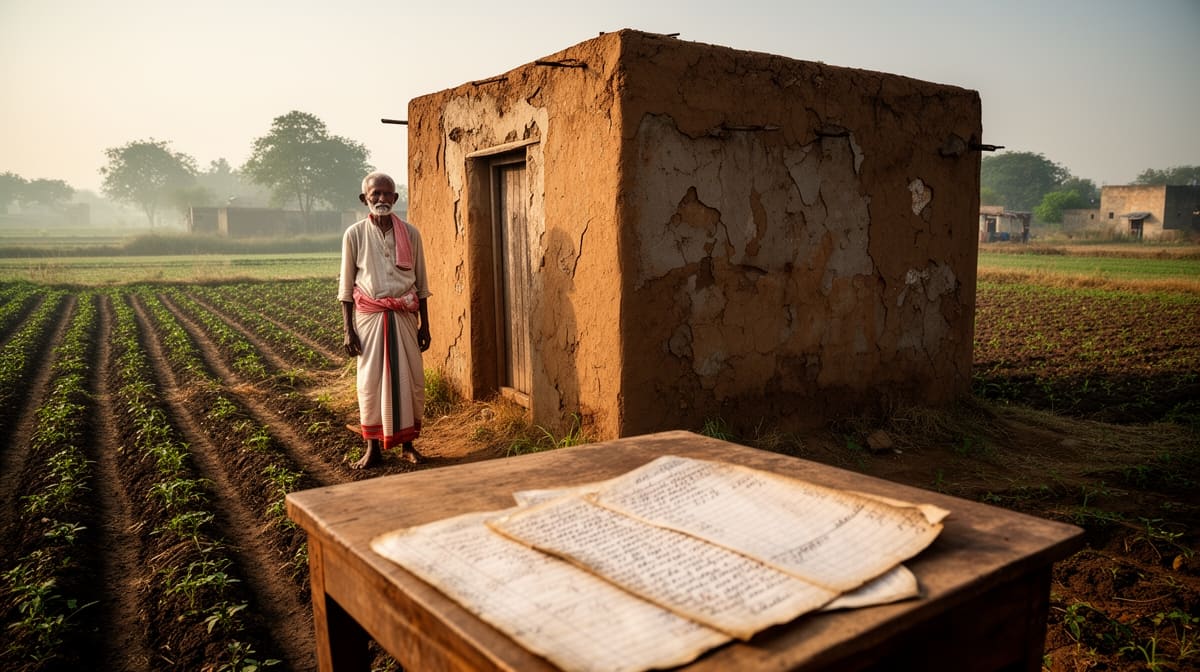
The petitioner, M. Appa Rao, an octogenarian and retired serviceman, was assigned an extent of 5.00 acres in Sy.No.352/3 of Madhurawada Village, Visakhapatnam Rural Mandal, under D.R.No.436/87 dated 05.06.1979. The assignment was made under the ex-serviceman category. In 2002, the Tahsildar unilaterally cancelled the assignment without serving a show-cause notice, alleging non-cultivation within three years. The petitioner, unaware of this cancellation, remained in continuous possession until 2010, when he discovered the resumption through an RTI reply.
Key Facts
- The petitioner was granted D-Form patta on 05.06.1979 under D.R.No.436/87.
- The Tahsildar issued cancellation proceedings under Rc.No.99/2001/A dated 20.01.2002, without notice or evidence of cultivation violation.
- The petitioner appealed before the Revenue Divisional Officer (RDO), who, on 05.11.2016, set aside the cancellation in D.Dis.No.7544/2013/C, holding that no show-cause notice was served and no proof of non-cultivation was produced.
- The RDO directed restoration of possession and recommended consideration under G.O.Ms.No.279, Revenue (Assn.I) Dept., dated 04.07.2016.
- The Revenue Divisional Officer wrote to the District Collector on 10.11.2016 urging implementation of G.O.Ms.No.279.
- The 1st respondent (Principal Secretary, Revenue) issued Memo No.LANAOLAND/46/Assn.II(1)/2019 dated 27.02.2019, confirming no dispute over the assignment and directing deletion of the land from the prohibited list under Section 22A of the Registration Act, 1908.
- The petitioner filed W.P.No.4291/2020 seeking implementation of the 27.02.2019 order. The High Court, on 04.03.2020, directed deletion of the land from the prohibited list and declared the inaction illegal and arbitrary.
- Despite these orders, the land remained on the prohibited list.
- A fraudulent claim was made by Smt. K. Ramayamma, who produced a forged D-Form patta. The Tahsildar rejected her claim on 31.12.2007. The District Collector confirmed the forgery in Rc.No.79/2005/E1 dated 08.12.2014. Criminal proceedings were initiated.
- Smt. Ramayamma filed W.P.Nos.20342/2012 and 34450/2015, which were initially allowed by the erstwhile High Court at Hyderabad on 20.12.2018 and modified on 11.02.2019.
- The Andhra Pradesh High Court set aside those orders on 24.12.2019 on jurisdictional grounds, directing fresh adjudication.
- The Supreme Court, in SLP Nos.3096 - 3098/2021, held on 03.03.2021 that the Telangana High Court had jurisdiction to pass the 11.02.2019 order, and directed fresh appeals to be filed before Telangana HC within 30 days.
- The State filed W.A.Nos.809/2023 and 810/2023 before the Telangana High Court, which were dismissed on 23.09.2023 on the ground that the 11.02.2019 order was based on consent, not adjudication.
- The 1st respondent issued a fresh order on 13.12.2024, conclusively rejecting Smt. Ramayamma’s claim, affirming the petitioner’s title, and reiterating the deletion directive.
- The petitioner’s land remains on the prohibited list as of 16.06.2026.
Procedural History
- 05.06.1979: Assignment of land to petitioner under D.R.No.436/87.
- 20.01.2002: Tahsildar cancels assignment without notice.
- 31.12.2007: Tahsildar rejects Smt. Ramayamma’s claim; finds D-Form forged.
- 08.12.2014: District Collector confirms forgery and rejects claim.
- 05.11.2016: RDO sets aside cancellation, restores possession.
- 10.11.2016: RDO recommends implementation under G.O.Ms.No.279.
- 27.02.2019: 1st respondent orders deletion from prohibited list.
- 04.03.2020: High Court directs implementation of 27.02.2019 order.
- 24.12.2019: High Court sets aside Telangana HC’s 11.02.2019 order on jurisdiction.
- 03.03.2021: Supreme Court upholds Telangana HC’s jurisdiction but allows fresh appeals.
- 23.09.2023: Telangana HC dismisses State’s appeals on technical ground.
- 13.12.2024: 1st respondent reaffirms petitioner’s title and deletion order.
- 16.06.2026: Judgment delivered by Andhra Pradesh High Court.
The Parties' Positions
For the Petitioner
The petitioner, an elderly ex-serviceman, argued that his assignment was lawful, restored by appellate authority, and confirmed by the State Government. He emphasized that the fraudulent claim of Smt. Ramayamma had been conclusively rejected by revenue authorities and courts. He contended that continued non-compliance with the 2019 and 2024 orders violated Article 14 and caused irreparable hardship, as sale of the land was his only means to clear debts.
For the Respondents
The State contended that the petitioner’s relief was in conflict with the Telangana High Court’s 2019 order in favor of Smt. Ramayamma. It argued that the matter was sub judice and that the 2024 order required further review. It also cited the pending appeal before the Joint Collector (R.P.No.3/2020) as justification for inaction.
Relief Sought
The petitioner sought:
- Immediate deletion of the land from the prohibited list under Section 22A of the Registration Act, 1908.
- Restoration of possession and update of revenue records in his name.
- Implementation of the Government’s orders dated 27.02.2019 and 13.12.2024.
- Directions to the respondents to permit registration of sale transactions.
The Legal Issue
The central question was whether Section 22A of the Registration Act, 1908 permits continued listing of land as prohibited when the State Government has conclusively affirmed the assignee’s undisputed title, rejected all competing claims as fraudulent, and directed deletion - yet the revenue authorities refuse to act.
Arguments Presented
For the Petitioner
The petitioner relied on G.O.Ms.No.279, dated 04.07.2016, which mandates deletion from the prohibited list where there is no dispute with the Government. He cited State of Andhra Pradesh v. K. Srinivas and S. Rajagopal v. State of Tamil Nadu to argue that administrative inaction in the face of binding orders amounts to arbitrariness under Article 14. He emphasized that the fraudulent nature of Smt. Ramayamma’s claim had been judicially and administratively established, rendering any parallel claim legally untenable.
For the Respondent
The State argued that the 2019 and 2024 orders were in conflict with the Telangana High Court’s 2019 order in favor of Smt. Ramayamma, and that the matter was sub judice. It contended that the pending appeal before the Joint Collector (R.P.No.3/2020) created legal uncertainty, justifying delay. It also claimed that the petitioner’s relief could prejudice the rights of VUDA, which had received possession in 2005.
The Court's Analysis
The Court meticulously traced the timeline of administrative and judicial actions, concluding that the petitioner’s title was not merely established but affirmed at every level - from the RDO, the State Government, and this Court - while the competing claim was exposed as fraudulent.
"The claim of Smt. K. Ramayamma was duly enquired into by the competent authorities, who conclusively found that she was relying upon a fake and fabricated patta and consequential criminal action was also initiated against her."
The Court held that the Telangana High Court’s 2019 order, though initially favorable to Smt. Ramayamma, was based on consent and lacked adjudication on merits. The subsequent dismissal of appeals against it on technical grounds did not revive the fraudulent claim. The 2024 order by the 1st respondent was a final, binding determination that the land belonged to the petitioner.
The Court rejected the State’s argument that the pending appeal before the Joint Collector could override the Government’s directive. It observed:
"The orders passed in W.P.No.4291 of 2020 contain clear and unequivocal directions to the respondents to delete the subject property from the prohibitory list... Instead of complying with the said directions, the respondents contended that the said orders are in conflict with the orders passed by the Hon’ble High Court of Telangana..."
The Court emphasized that G.O.Ms.No.279 was not discretionary but mandatory: where there is no dispute, deletion is obligatory. The State’s failure to act for over four years after the RDO’s order and six years after the Government’s directive constituted a violation of Article 14 and Article 21 (right to livelihood).
The Court further noted that the petitioner, an octogenarian, was being subjected to undue harassment. The reference to the CCLA circular dated 04.05.2022, permitting sale after 10 years if assignment is genuine, reinforced the petitioner’s entitlement.
The Verdict
The writ petition is allowed. The respondent Nos. 2 (District Collector) and 4 (District Registrar) are directed to implement the orders passed by the 1st respondent vide Memos dated 27.02.2019 and 13.12.2024 by deleting the subject land from the prohibited list under Section 22A of the Registration Act, 1908, updating the revenue records in the petitioner’s name, and restoring possession. All consequential reliefs, including permitting registration of sale transactions, shall be granted within two months from the date of receipt of this order. There shall be no order as to costs. All interim orders are vacated. Pending interlocutory applications are closed.
What This Means For Similar Cases
Deletion Under G.O.Ms.No.279 Is Mandatory, Not Discretionary
- Practitioners must argue that G.O.Ms.No.279 imposes a statutory duty on revenue authorities to delete land from the prohibited list where the assignment is undisputed - even if a third party files a frivolous claim.
- Delay or inaction cannot be justified on grounds of pending litigation if the claimant’s title has been conclusively established.
Fraudulent Claims Cannot Suspend Legitimate Rights
- When a competing claim is proven fraudulent through administrative findings and criminal proceedings, it cannot be revived through procedural technicalities in court.
- Courts will not permit fraudulent litigants to use litigation as a tool to indefinitely block lawful owners.
Administrative Orders Bind Lower Authorities
-
Orders issued by the Principal Secretary (Revenue) or equivalent are binding on District Collectors and Registrars.
-
Revenue officers cannot ignore or delay implementation of such orders on speculative grounds of jurisdictional conflict.
-
Always cite G.O.Ms.No.279, Para 6(ii) as a non-discretionary mandate.
-
File writ petitions under Article 226 if deletion is delayed beyond 6 months after a binding government order.
-
Highlight the petitioner’s age and financial hardship to invoke Article 21 protections.
-
The 2024 order by the 1st respondent is a conclusive administrative determination - treat it as res judicata in any future proceedings.
-
If VUDA or any other agency claims possession, argue that such possession is void if granted after a lawful assignment and subsequent restoration.
-
Always verify whether the land was ever formally transferred to VUDA under a valid legal instrument - mere receipt of possession without assignment is legally insufficient.