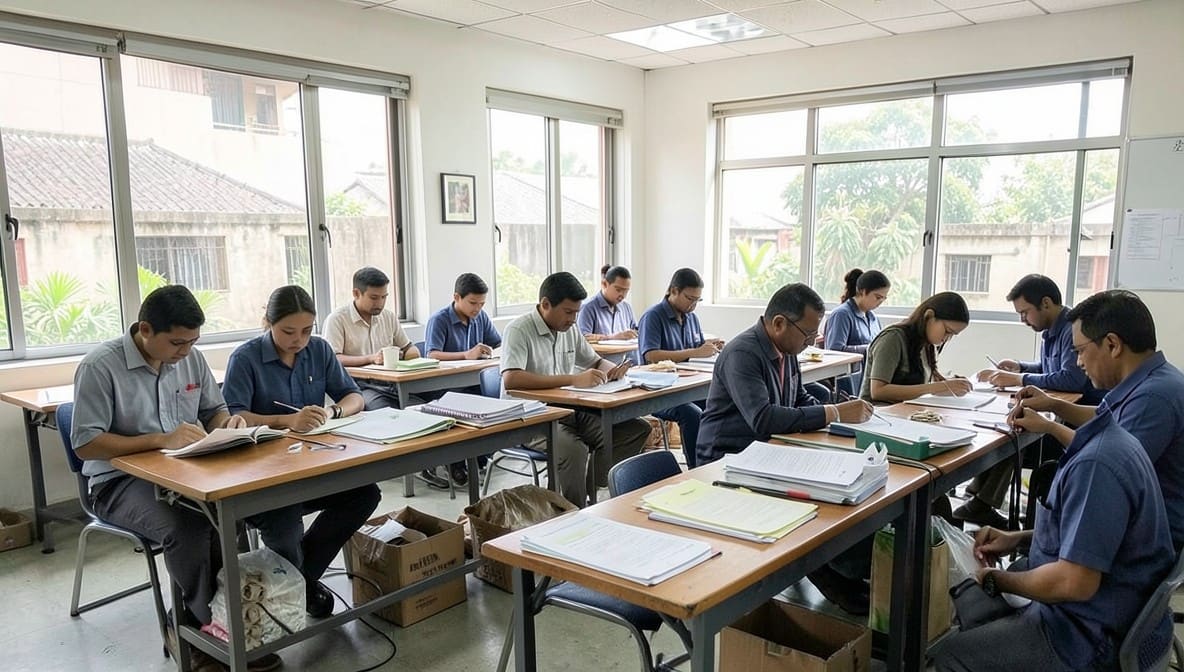
The Income Tax Appellate Tribunal, Nagpur, has clarified that organizing medical conferences and workshops for the dissemination of specialized knowledge constitutes an educational activity under Section 2(15) of the Income Tax Act, 1961. This ruling affirms that such activities, even when attended primarily by professionals, qualify as charitable purposes and cannot be denied registration under Section 12A merely due to procedural gaps or surplus generation.
Background & Facts
The Dispute
The assessee, Maha Academy of Pediatric Neurology, a registered society, applied for registration under Section 12A(1)(ac)(vi) of the Income Tax Act, 1961, on 25.09.2024. The application was filed in Form No. 10AB seeking recognition as a charitable trust for the purpose of obtaining income tax exemption. The Ld. Commissioner of Income Tax (Exemptions), Pune, rejected the application on 07.03.2025, citing insufficient evidence of genuineness of activities and irregular financial transactions.
Key Facts
- The society was registered on 02.02.2024 and opened its bank account on 21.06.2024.
- No financial transactions or balance sheet existed for AY 2023-24, hence no income tax return was filed for that year.
- On 06.11.2024, the CIT(E) issued a notice under Section 12AB(1)(b)(i) requesting documents to verify the genuineness of activities.
- The assessee responded on 23.01.2025 by submitting a brochure of the Neuropedicon 2024 conference, held from 26.09.2024 to 28.09.2024, along with a single photograph.
- The CIT(E) observed that large sums were credited to the trust’s account and immediately paid to resorts and hospitality services, with no supporting documentation such as bills, vouchers, beneficiary details, or activity reports.
- The assessee later submitted a paper book of 75 pages on 08.02.2025, including photographs (pages 41-49), invoices from the event manager, and a brief note by the Secretary detailing the conference.
- The conference was attended by over 650 doctors from across India and included workshops on pediatric neurology and medical science advancements.
- Delegate fees and sponsorships were the primary sources of income, amounting to 12.6% of total receipts.
- All receipts were utilized for conference expenses or donated to other registered charitable institutions with similar objectives.
Procedural History
- 25.09.2024: Application for registration under Section 12A(1)(ac)(vi) filed.
- 06.11.2024: Notice issued by CIT(E) under Section 12AB(1)(b)(i) requesting documentation.
- 23.01.2025: Second notice issued due to inadequate response.
- 07.03.2025: CIT(E) rejected application citing lack of credible evidence and unexplained bank transactions.
- 24.02.2026: Hearing held before ITAT Nagpur.
- 26.03.2026: Judgment pronounced.
The Parties' Positions
For the Assessee: The society’s sole objective is the advancement of pediatric neurology through education. The conference was a legitimate educational activity. The absence of prior financial records was due to the society’s recent formation. The submitted documents, including invoices and photographs, were sufficient for prima facie verification. The CIT(E) failed to consider judicial precedents recognizing medical conferences as educational.
For the Revenue: The rejection was justified due to non-submission of annual accounts, bills, vouchers, and beneficiary details. The pattern of payments to resorts raised suspicion of misuse. The absence of an income tax return for AY 2023-24 indicated non-compliance. The burden of proof lay with the assessee, which was not discharged.
Relief Sought
The assessee sought setting aside of the CIT(E)’s order dated 07.03.2025 and direct grant of registration under Section 12A with effect from 01.04.2024.
The Legal Issue
Whether organizing a medical conference attended by professionals constitutes an educational activity under Section 2(15) of the Income Tax Act, 1961, and whether procedural lapses or surplus generation can justify denial of registration under Section 12A at the preliminary stage.
Arguments Presented
For the Appellant/Petitioner
The assessee relied on Queen’s Educational Society v. CIT (372 ITR 699) and DIT (Exemption) v. Ahmedabad Management Association (366 ITR 85) to argue that dissemination of knowledge through seminars and workshops qualifies as education. The Ananda Social and Educational Trust (Civil Appeal No. 5437-5438/2012) was cited to establish that surplus generated for charitable purposes does not imply profit motive. The ITAT Chennai in Neuro Update Chennai v. ITO (ITA No. 1480/Chny/2025) was cited as directly on point. The assessee emphasized that the burden at the registration stage is only prima facie, and the CIT(E) had no material to prove non-charitable intent.
For the Respondent/State
The Revenue contended that the assessee failed to comply with the mandatory documentation requirements under Section 12AB. The absence of balance sheets, bills, vouchers, and beneficiary records rendered the claim unsubstantiated. Payments to resorts were indicative of personal benefit. The non-filing of income tax return for AY 2023-24 was a procedural violation warranting rejection. The Revenue did not dispute the nature of the conference but insisted on strict compliance with documentation norms.
The Court's Analysis
The Tribunal emphasized that at the registration stage under Section 12A, the inquiry is limited to examining the objects of the trust and the prima facie genuineness of its activities. It held that the CIT(E) erred in conflating procedural deficiencies with substantive illegitimacy.
"The expression 'education' in section 2(15) has been interpreted liberally by various judicial authorities to include not merely formal schooling but also systematic dissemination of knowledge through seminars, workshops, and continuing education programmes."
The Tribunal noted that the Hon’ble Gujarat High Court in DIT (Exemption) v. Ahmedabad Management Association and the Rajasthan High Court in CIT (Exemption) v. Anesthesia Society had consistently held that medical conferences constitute educational activities. The Supreme Court in Queen’s Educational Society was cited to affirm that surplus generated and ploughed back into charitable objectives negates any profit motive.
The Tribunal further observed that the delegate fees constituted only 12.6% of total receipts, well below the 20% threshold under the proviso to Section 2(15). Since the activity fell squarely under the head of 'education', the proviso was irrelevant. The CIT(E)’s reliance on bank transactions and non-filing of returns was misplaced, as these are matters for assessment proceedings, not registration.
The Tribunal also held that the assessee was denied a meaningful opportunity to explain its case, as the CIT(E) did not consider the supplementary documents submitted on 08.02.2025, including invoices and photographs, which were sufficient for prima facie verification.
The Verdict
The appeal was allowed. The order of the CIT(E) dated 07.03.2025 was set aside. The Ld. CIT(E) was directed to grant registration under Section 12A of the Income Tax Act, 1961, with effect from 01.04.2024, expeditiously.
What This Means For Similar Cases
Educational Activities Extend Beyond Formal Institutions
- Practitioners can now confidently argue that medical, scientific, and technical conferences qualify as educational activities under Section 2(15), even if attended by professionals.
- Documentation such as attendee lists, speaker profiles, workshop agendas, and invoices from event managers are sufficient for prima facie verification at the registration stage.
- The mere fact that a trust has no prior financial history or has not filed returns in its first year cannot be grounds for rejection if the objects are charitable.
Surplus Does Not Imply Profit Motive
- Any surplus generated from educational events must be assessed in context: if reinvested into the trust’s objectives, it does not invalidate charitable status.
- The 20% threshold under the proviso to Section 2(15) applies only if the activity is classified as 'general public utility' - not if it falls under 'education', which is an independent head.
- Revenue authorities must distinguish between surplus and profit; the former is permissible, the latter is not.
Procedural Non-Compliance ≠ Substantive Disqualification
- Failure to submit annual accounts or balance sheets at the registration stage cannot override the prima facie test.
- Such deficiencies must be addressed during assessment, not used to deny registration outright.
- Tribunals will now scrutinize whether the rejection was based on genuine suspicion or mere technical non-compliance.