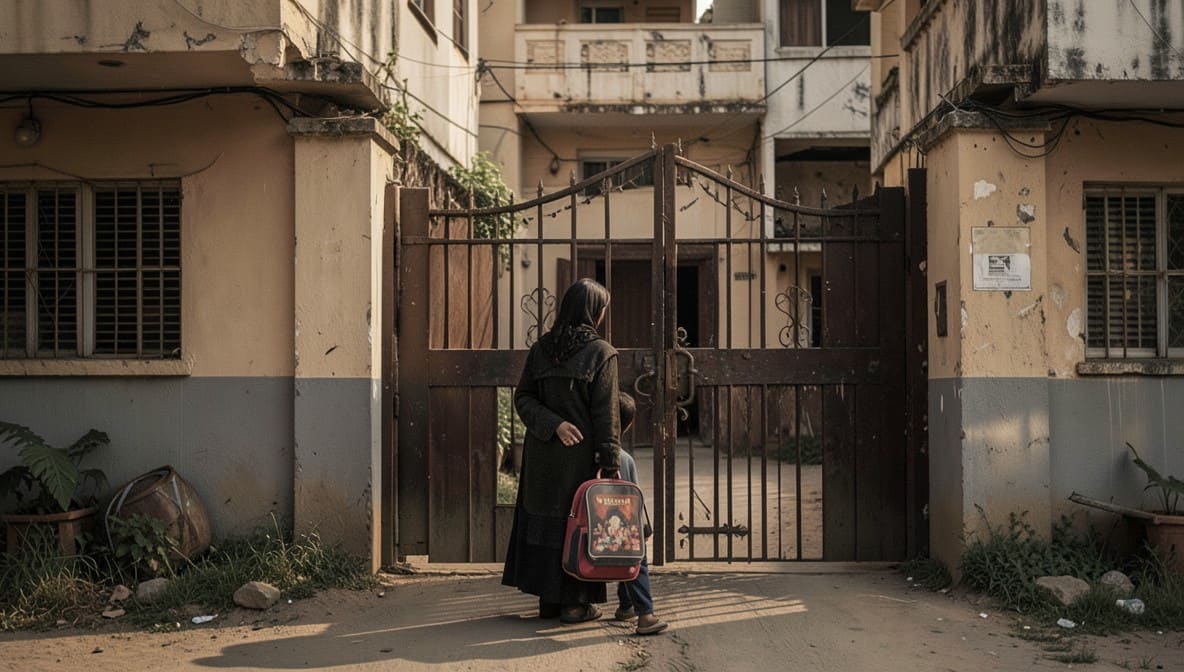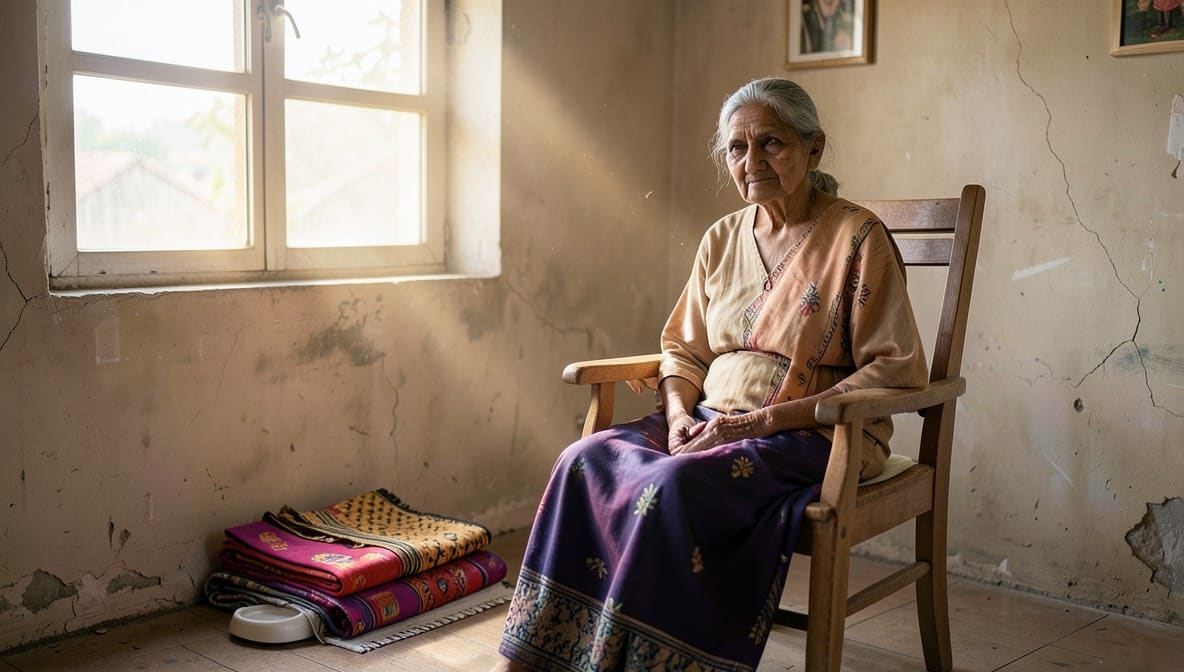
The Delhi High Court affirmed that a widow's statutory right to reside in her matrimonial home under the Protection of Women from Domestic Violence Act, 2005 survives her husband's death and cannot be overridden by mere title documents, requiring the father-in-law to secure alternate accommodation or pay adequate rent before executing a possession decree.
Background & Facts
The Dispute
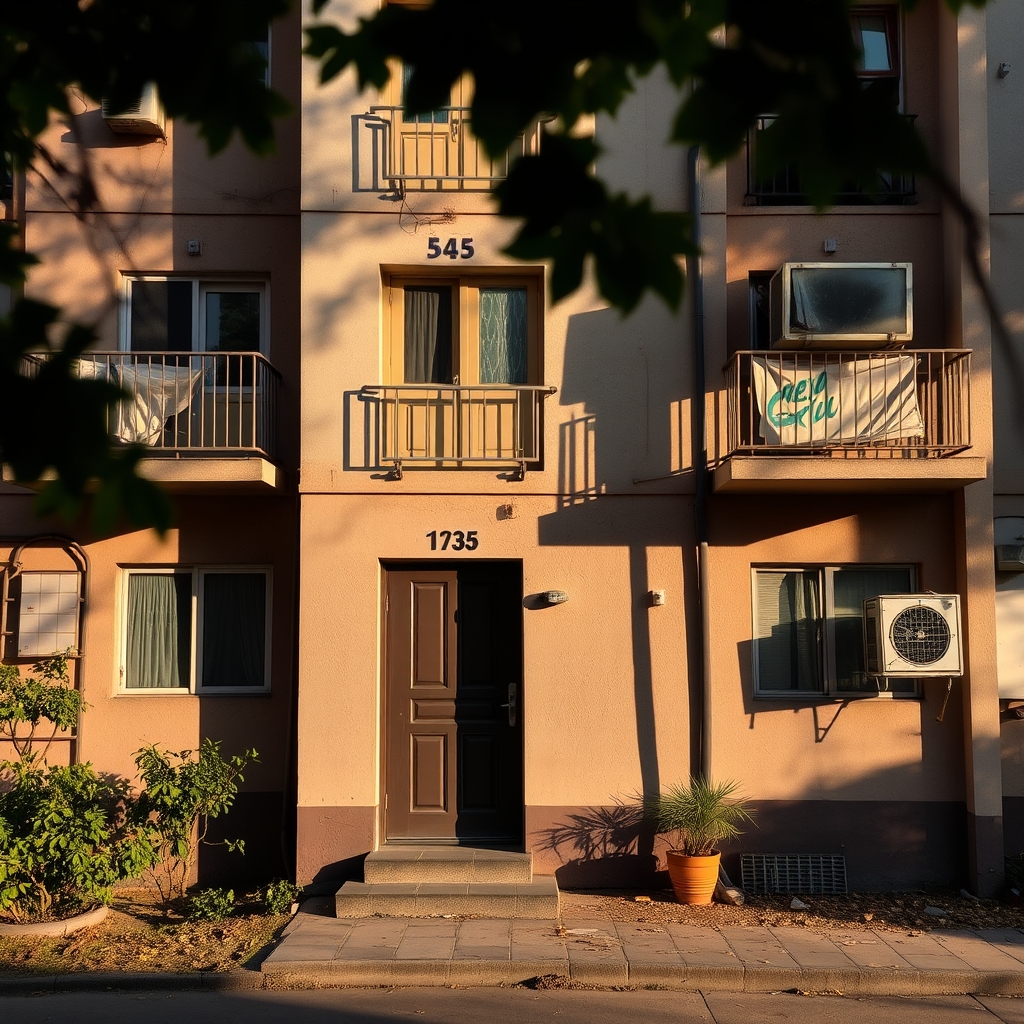
The suit property (Flat No. A5/139A, Ground Floor, Paschim Vihar, New Delhi) was purchased by the Plaintiff (Respondent) from Mr. Tara Singh on 29.07.1988 via Agreement to Sell, Special Power of Attorney, General Power of Attorney, registered Receipt and Will. Defendant No. 1 (Mr. Raj Kumar @ Babbal) married Appellant No. 1 (Ms. Manju Verma) in 1990 and resided with her and their two daughters (Appellant Nos. 2 and 3) in the suit property as part of a joint family. After Defendant No. 1's death on 25.07.2015, the Appellants continued residing in the suit property. The Plaintiff filed Suit CS DJ/10776/2016 for possession and damages, alleging the Appellants were unauthorized occupants.
Key Facts
- The Plaintiff purchased the suit property for ₹30,000 in 1988, stating it was self-acquired from his savings
- Defendant No. 1 married Appellant No. 1 in 1990; they resided in the suit property with the Plaintiff's family initially
- Appellant No. 1 and her daughters have continuously resided in the suit property since marriage, exceeding two decades
- Defendant No. 1 paid ₹1,000/month rent to Plaintiff from February 2006 to December 2013 (exclusive of electricity/water)
- Plaintiff issued Public Notice dated 04.06.2006 disowning Defendant No. 1 and Appellant No. 1
- Defendant No. 1 died on 25.07.2015 due to prolonged illness
- Appellants were impleaded as Legal Representatives of Defendant No. 1 under Order XXII Rule 4 CPC after his death
- Plaintiff valued suit property at ₹15-20 lakhs (06.02.2019) and ₹20-25 lakhs (09.05.2019)
Procedural History
- 29.07.1988: Purchase of suit property by Plaintiff from Tara Singh
- 1990: Marriage of Defendant No. 1 and Appellant No. 1
- 04.06.2006: Public Notice disowning Defendant No. 1 and Appellant No. 1 issued by Plaintiff
- 25.07.2015: Death of Defendant No. 1 (Raj Kumar @ Babbal)
- Suit filed: CS DJ/10776/2016 (exact date not specified in judgment)
- 22.05.2023: Trial Court (ADJ, Delhi) decreed possession in favor of Plaintiff and awarded damages/mesne profits @ ₹10,000/month from 01.01.2013
- Present Appeal: RFA No. 778/2023 filed by Appellants (Legal Representatives of Defendant No. 1)
- Judgment date: 12th October, 2026
Relief Sought
Appellants sought: (1) Setting aside of trial court's possession and damages decree; (2) Declaration of their right to reside in suit property as shared household under DV Act; (3) Direction to Plaintiff to provide alternate accommodation or pay adequate rent before eviction.
The Legal Issue
The central questions were: (i) Whether the suit property constitutes a 'shared household' under Section 2(s) of the Protection of Women from Domestic Violence Act, 2005 giving Appellant No. 1 an independent right of residence; and (ii) Whether, after her husband's death, Appellant No. 1 is entitled to protection against eviction by her father-in-law (Plaintiff) who holds exclusive title to the property.
Arguments Presented
For the Appellants
The Appellants contended that the suit property qualified as a 'shared household' under Section 2(s) of the DV Act since Appellant No. 1 resided therein with the Plaintiff's family after her marriage in 1990, forming a domestic relationship. They relied on Prabha Tyagi v. Kamlesh Devi (2022) 8 SCC 90 to assert that Section 17(1) of the DV Act confers an independent right to reside in a shared household on every woman in a domestic relationship, irrespective of her husband's ownership interest or any act of domestic violence. Citing Seema Bansal v. Durga Dass Bansal (RFA 704/2019), they argued that a decree for possession based solely on title, without examining statutory residence rights under the DV Act, violates the procedure established by law. They emphasized their continuous residence for over two decades, lack of independent earnings or property, and the Plaintiff's failure to provide alternate accommodation despite knowing their financial vulnerability.
For the Respondent
The Plaintiff maintained that Defendant No. 1 was merely a permissive licensee who paid nominal rent (₹1,000/month from 2006-2013), and the Appellants' occupation flowed through him. He asserted exclusive ownership of the suit property as self-acquired, denying any joint family character or contribution from Defendant No. 1's income. The Plaintiff argued that the Appellants had no independent right to reside in the property, especially after Defendant No. 1's death, and that the trial court correctly awarded mesne profits @ ₹10,000/month based on the property's letting value. He relied on the trial court's findings that Defendant No. 1 admitted tenancy and that the Appellants did not challenge title during the original proceedings.
The Court's Analysis
The Court began by noting that the Appellants' right of residence under the DV Act is a pure question of law requiring no further evidence, as established in Greater Mohali Area Development Authority v. Manju Jain (2010) 9 SCC 157. It interpreted Section 2(s) of the DV Act expansively, holding that a 'shared household' depends on cohabitation in a domestic relationship, not on ownership, title, or interest in the property. Drawing from Satish Chander Ahuja v. Sneha Ahuja (2021) 1 SCC 414, the Court affirmed that even property belonging to a husband's relative can constitute a shared household where the wife resides with the family.
Crucially, the Court emphasized Section 17(1) of the DV Act, which confers on every woman in a domestic relationship the right to reside in the shared household 'notwithstanding anything contained in any other law' and 'whether or not she has any right, title or beneficial interest therein'. It rejected the Plaintiff's contention that the Appellants' right flowed solely through her husband, citing Prabha Tyagi (supra) to hold that this right is independent and not defeated by the husband's death. The Court found the suit property to be a shared household qua Appellant No. 1 based on: (i) her residence therein with the Plaintiff's family after marriage; (ii) the Plaintiff's own admission in cross-examination that they lived as a joint family for six months post-marriage; and (iii) the Appellants' continuous residence for over two decades.
However, the Court clarified that this right is not absolute, referencing Satish Chander Ahuja (supra) that the owner may seek possession 'in accordance with the procedure established by law'. It adopted the reasoning from Seema Bansal v. Durga Dass Bansal (RFA 704/2019), stating: 'the procedure contemplated in the law ought to be just, fair and reasonable. If the procedure adopted by a Court tramples upon the statutory rights of any party, or overlooks such rights, it could not be termed as just, fair and reasonable.' Consequently, while upholding the decree for possession, the Court directed that execution must be delayed until the Plaintiff either secures suitable alternate accommodation for the Appellants in the same or nearby locality or pays rent of ₹15,000 per month sufficient to secure such accommodation. The damages/mesne profits decree (@ ₹10,000/month from 01.01.2013) was set aside as unsustainable given the Appellants' statutory right of residence.
The Verdict
The Appeal was partly allowed. The decree for possession dated 22.05.2023 was upheld but made executable only after the Respondent secures suitable alternate accommodation for Appellant No. 1 in the same or nearby locality commensurate with her residence in the suit property, or alternatively pays rent of ₹15,000 per month. The decree for damages/mesne profits @ ₹10,000 per month from 01.01.2013 was set aside. The Executing Court was directed to ensure compliance with the alternate accommodation/rent direction before giving effect to the possession decree.
What This Means For Similar Cases
Statutory Rights Trump Bare Title
Practitioners must now scrutinize whether a property qualifies as a 'shared household' under Section 2(s) of the DV Act before proceeding with eviction suits based solely on title documents. The judgment confirms that a woman's right of residence flows from her domestic relationship with the family, not from her husband's ownership interest. In matrimonial home disputes, courts must independently examine DV Act rights even if unpleaded, as held in Greater Mohali Area (supra). This shifts the burden: defendants in possession suits must proactively raise statutory residence rights under Sections 17 and 19 of the DV Act to prevent eviction 'not in accordance with procedure established by law'.
Procedure Must Be Just, Fair and Reasonable
The judgment establishes that executing a possession decree without securing alternate accommodation or adequate rent violates the DV Act's procedural safeguards. Lawyers defending possession suits must now: (i) quantify the actual rental value of alternative accommodation in the locality; (ii) gather evidence of the plaintiff's willingness and financial capacity to provide such accommodation; and (iii) seek directions under Section 19(1)(f) for alternate accommodation or rent payment as a precondition to eviction. The ₹15,000/month benchmark here reflects the court's assessment of suit property's letting value in Paschim Vihar, signaling that nominal or arbitrary rent amounts will be insufficient.
Widow's Right to Shelter Is Not Extinguished by Husband's Death
This ruling reinforces that a widow's right to reside in her matrimonial home survives her husband's demise under Sections 17 and 19 of the DV Act, independent of any domestic violence allegation. Combined with HAMA Section 19 (maintenance by father-in-law), it creates a dual-layer protection: widows can claim residence under DV Act and maintenance (including shelter) under HAMA. Practitioners advising widowed daughters-in-law should now: (i) verify continuous residence in the property post-marriage to establish shared household status; (ii) document lack of independent means to secure alternate accommodation; and (iii) invoke both DV Act and HAMA proceedings where applicable, as the judgment read Sections 17/19 DV Act and HAMA Sections 19/21/22 conjunctively.