The Uttarakhand High Court recently dismissed a criminal miscellaneous application seeking quashing of protection orders under the Protection of Women from Domestic Violence Act, 2005, affirming that a widowed daughter-in-law retains rights over the shared household even after her husband's death. The judgment underscores the statutory protection against dispossession and interference, reinforcing the Act's applicability beyond marital relationships where residence in the shared household is established.
Background & Facts
The Dispute
The case involves a dispute between respondent no.1 (the daughter-in-law) and the applicants (her in-laws) regarding her right to reside in the shared household following her husband's death. Respondent no.1 filed an application under Section 12 of the Protection of Women from Domestic Violence Act, 2005 seeking relief under Sections 18, 19, 20, and 22 of the Act, including protection from dispossession and interference with her possession of the shared household.
Key Facts
- Respondent no.1 is the daughter-in-law of applicant no.1 and resided in the shared household with her husband until his death
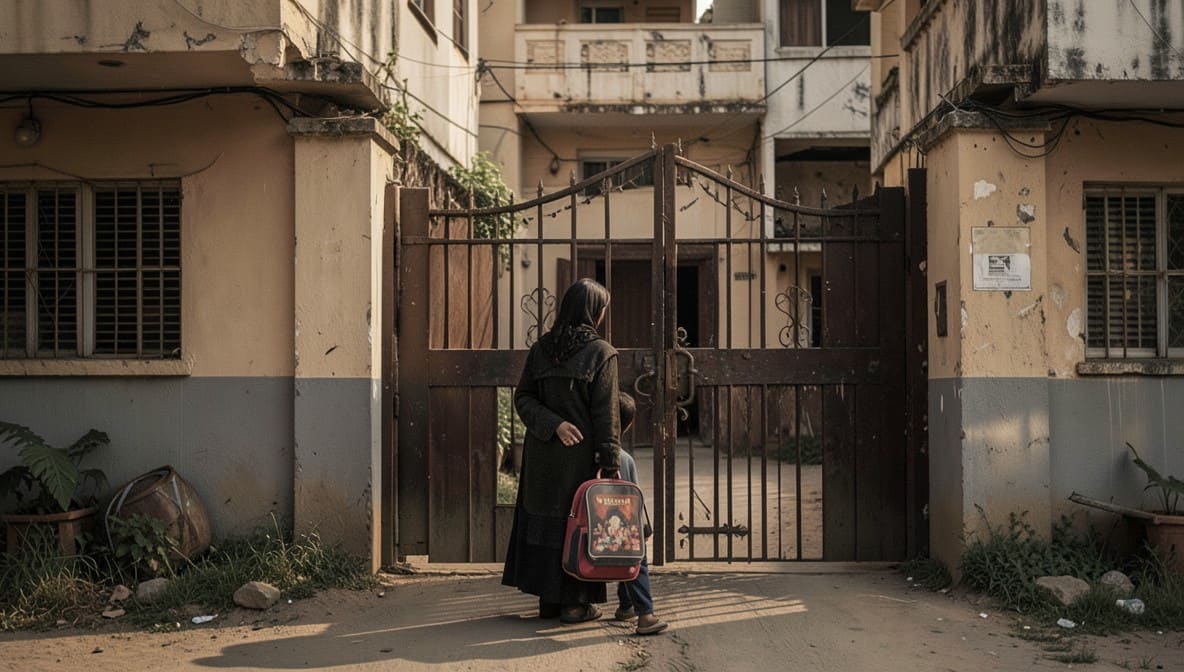
- On 31.03.2023, respondent no.1 filed a complaint alleging that after the Terahvin (13th-day ritual) of her husband, the applicants forcibly prevented her from accessing the shared household
- She was compelled to temporarily stay at her parental home but was threatened and locked out when she attempted to retrieve her child’s school belongings the following day
- Respondent no.1 filed an application under Section 23 of the Act for interim relief, seeking restraint orders against dispossession and interference
Procedural History
- 31.03.2023: Respondent no.1 filed a complaint under Section 12 of the Domestic Violence Act
- 04.09.2023: Learned Judicial Magistrate-I, Dehradun, allowed the interim application under Section 23, restraining the applicants from dispossessing respondent no.1 or interfering with her possession (Misc. Case No. 1312 of 2023)
- 20.08.2025: Learned Sessions Judge, Dehradun, dismissed the Criminal Appeal (No. 281 of 2023) filed by the applicants
- 27.03.2026: Present criminal miscellaneous application (No. 1916 of 2025) filed before the Uttarakhand High Court seeking quashing of both orders
Relief Sought
The applicants sought quashing of:
- The order dated 04.09.2023 passed by the Judicial Magistrate-I, Dehradun
- The judgment dated 20.08.2025 passed by the Sessions Judge, Dehradun
The Legal Issue
The central question was whether a widowed daughter-in-law, who resided in the shared household with her husband until his death, is entitled to protection under the Protection of Women from Domestic Violence Act, 2005 against dispossession and interference by her in-laws, even after her husband's death.
Arguments Presented
For the Applicants
The applicants contended that respondent no.1’s right to the shared household ceased upon her husband’s death, as she no longer had a marital relationship with the family. They argued that the orders passed by the lower courts were without jurisdiction and amounted to an abuse of the legal process.
For Respondent No.1
Respondent no.1 relied on the definition of "shared household" under Section 2(s) of the Act, which includes a household where the aggrieved person lived with the respondent in a domestic relationship. She argued that her residence in the household prior to her husband’s death qualified as a shared household, entitling her to protection under the Act.
The Court's Analysis
The Court observed that the admitted facts established respondent no.1’s residence in the shared household with her husband until his death. The Protection of Women from Domestic Violence Act, 2005 defines a "shared household" under Section 2(s) as a household where the aggrieved person lived or had lived in a domestic relationship with the respondent. The Court held that this definition does not restrict protection to married women alone but extends to any aggrieved person who has resided in the household, regardless of the current status of the relationship.
"Considering the admitted facts, the household clearly qualifies as a 'shared household' within the meaning of the Protection of Women from Domestic Violence Act, 2005. Respondent no.1, having resided there with her husband, is entitled to protection from dispossession or interference by the applicants."
The Court further noted that the impugned orders did not suffer from any illegality, infirmity, or jurisdictional error. The orders were consistent with the provisions of the Act and aligned with the objective of protecting women from domestic violence and dispossession.
The Verdict
The Uttarakhand High Court dismissed the criminal miscellaneous application, upholding the orders of the Judicial Magistrate-I and the Sessions Judge. The Court affirmed that respondent no.1 is entitled to protection under the Domestic Violence Act and directed that the restraint orders against dispossession and interference remain in force.
What This Means For Similar Cases
Shared Household Protection Extends Beyond Marital Relationships
- The judgment clarifies that the Protection of Women from Domestic Violence Act, 2005 protects not only married women but also widowed daughters-in-law who have resided in the shared household
- Practitioners should argue that the definition of "shared household" under Section 2(s) is inclusive and not contingent on the continuation of a marital relationship
Lower Courts' Orders Are Presumptively Valid
- The High Court emphasized that lower courts' orders under the Domestic Violence Act will not be interfered with unless they suffer from jurisdictional errors or illegality
- This sets a high threshold for quashing applications, reinforcing the Act's protective intent
Evidence of Residence Suffices for Protection
- The Court relied on admitted facts of residence to establish the shared household, without requiring additional proof of domestic violence
- This lowers the evidentiary burden for aggrieved persons seeking protection under the Act