The Allahabad High Court has reaffirmed that when a specific remedy is available under a special statute, aggrieved parties cannot bypass it to invoke general criminal proceedings. In dismissing a petition under Section 156(3) CrPC, the Court held that the petitioner should have pursued the remedy under Section 138 of the Negotiable Instruments Act instead of seeking police investigation for alleged fraud and cheating.
Background & Facts
The Dispute
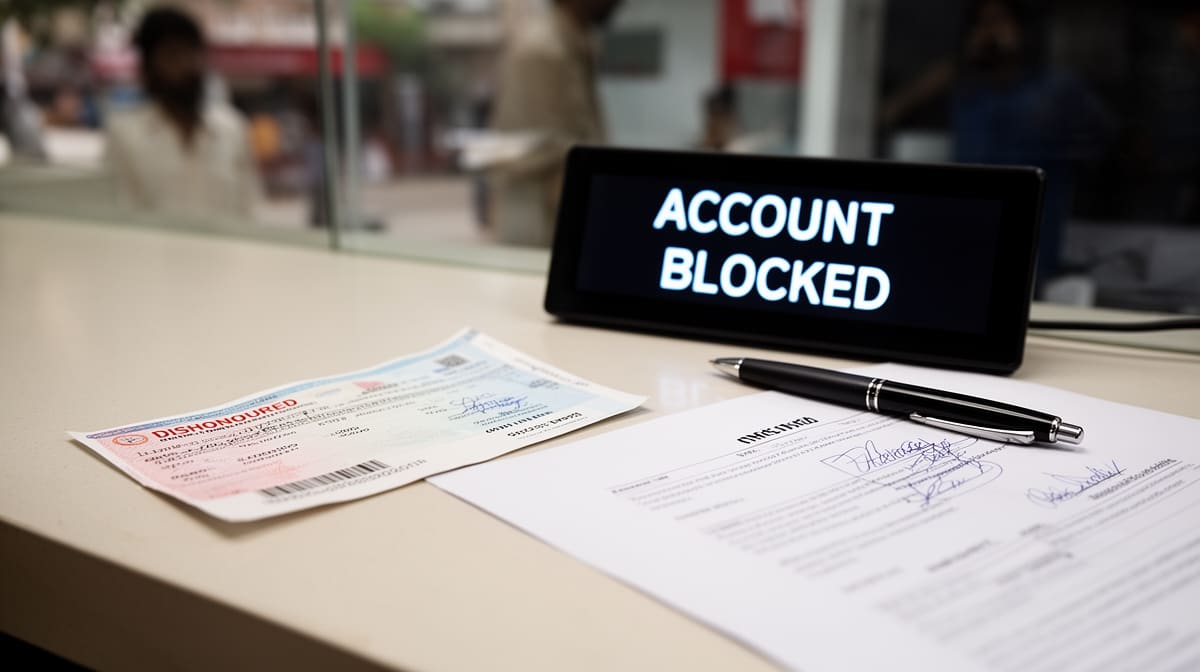
The petitioner, Virendra Kumar Yadav, alleged that the private respondent issued a cheque in 2022, which was dishonoured upon presentation. He further claimed that the respondent habitually borrows money from innocent persons, issues cheques in lieu of repayment, and ensures the cheques lapse due to limitation, amounting to fraud and cheating.
Key Facts
- The respondent issued a cheque to the petitioner in 2022, which was dishonoured
- The petitioner filed an application under Section 156(3) CrPC on 30.09.2024, seeking police investigation into the alleged fraud
- The petitioner alleged that the respondent habitually cheats persons by issuing cheques that lapse due to limitation
- The petitioner did not initiate proceedings under Section 138 of the Negotiable Instruments Act
Procedural History
- 30.09.2024: The learned Judicial Magistrate, Court No. 2, Saidpur, Ghazipur, rejected the application under Section 156(3) CrPC, observing that the petitioner had an efficacious remedy under the NI Act
- 21.05.2025: The petitioner filed Criminal Revision No. 336 of 2024 before the Sessions Judge, Ghazipur, which was dismissed
- 2025: The petitioner filed the present petition under Article 227 of the Constitution
Relief Sought
The petitioner sought the setting aside of:
- The order dated 30.09.2024 passed by the Judicial Magistrate, Saidpur
- The order dated 21.05.2025 passed by the Sessions Judge, Ghazipur
He further prayed for directions to the police to investigate the matter under Section 156(3) CrPC.
The Legal Issue
The central question was whether an aggrieved party can bypass the specific remedy provided under Section 138 of the Negotiable Instruments Act and invoke Section 156(3) CrPC for investigation into allegations of cheating and fraud arising from a dishonoured cheque.
Arguments Presented
For the Petitioner
Learned counsel for the petitioner argued that:
- The application under Section 156(3) CrPC disclosed specific allegations of fraud and cheating against the respondent
- The respondent habitually issues cheques that lapse due to limitation, amounting to a criminal offence
- The rejection of the application by the lower courts was perverse and unjust
For the Respondent
Learned counsel for the private respondent contended that:
- The petitioner could have instituted proceedings under Section 138 NI Act but deliberately chose not to
- The petitioner failed to avail the remedy within the prescribed time, indicating mala fide intent
- The findings of the lower courts were correct and did not suffer from any perversity
The Court's Analysis
The Court examined the principle that where a specific remedy is provided under a special statute, the aggrieved party cannot bypass it to invoke general criminal proceedings. The Court relied on the well-established legal position that Section 138 of the Negotiable Instruments Act provides a specific remedy for dishonour of cheques, and aggrieved parties must exhaust this remedy before resorting to general criminal law provisions like Section 156(3) CrPC.
"Where a specific remedy has been provided under a special statute, the aggrieved party cannot bypass such statutory remedy and resort to proceedings under general law for prosecuting the proposed accused."
The Court observed that the petitioner had an efficacious remedy under Section 138 NI Act but chose not to avail it. Instead, the petitioner sought to invoke Section 156(3) CrPC, which was rightly rejected by the lower courts. The Court held that the findings of the lower courts did not suffer from any infirmity or perversity.
The Verdict
The Allahabad High Court dismissed the petition. The Court upheld the orders of the lower courts, which rejected the application under Section 156(3) CrPC on the ground that the petitioner had a specific remedy under Section 138 of the Negotiable Instruments Act.
What This Means For Similar Cases
Special Statute Remedy Must Be Exhausted First
- Practitioners must advise clients to exhaust the specific remedy available under special statutes (e.g., Section 138 NI Act) before invoking general criminal proceedings under Section 156(3) CrPC
- Courts are likely to dismiss applications under Section 156(3) CrPC if a specific remedy under a special statute is available and not availed
Timely Action Is Critical
- Aggrieved parties must act within the prescribed limitation period under Section 138 NI Act (typically 30 days from the date of dishonour)
- Failure to initiate proceedings under the special statute within the limitation period may bar subsequent attempts to invoke general criminal law provisions
Fraud Allegations Require Specific Evidence
- Mere allegations of fraud or cheating, without specific evidence, may not suffice to invoke Section 156(3) CrPC
- Courts will scrutinize whether the allegations disclose a cognizable offence before directing police investigation