The Bombay High Court has clarified that mere payment by an elected representative to a relative for work not performed does not trigger disqualification under Section 14(1)(g) of the Maharashtra Village Panchayats Act, 1959. The judgment underscores that disqualification requires a demonstrable share or interest in panchayat work or contracts - not mere administrative impropriety or familial favoritism.
Background & Facts
The Dispute
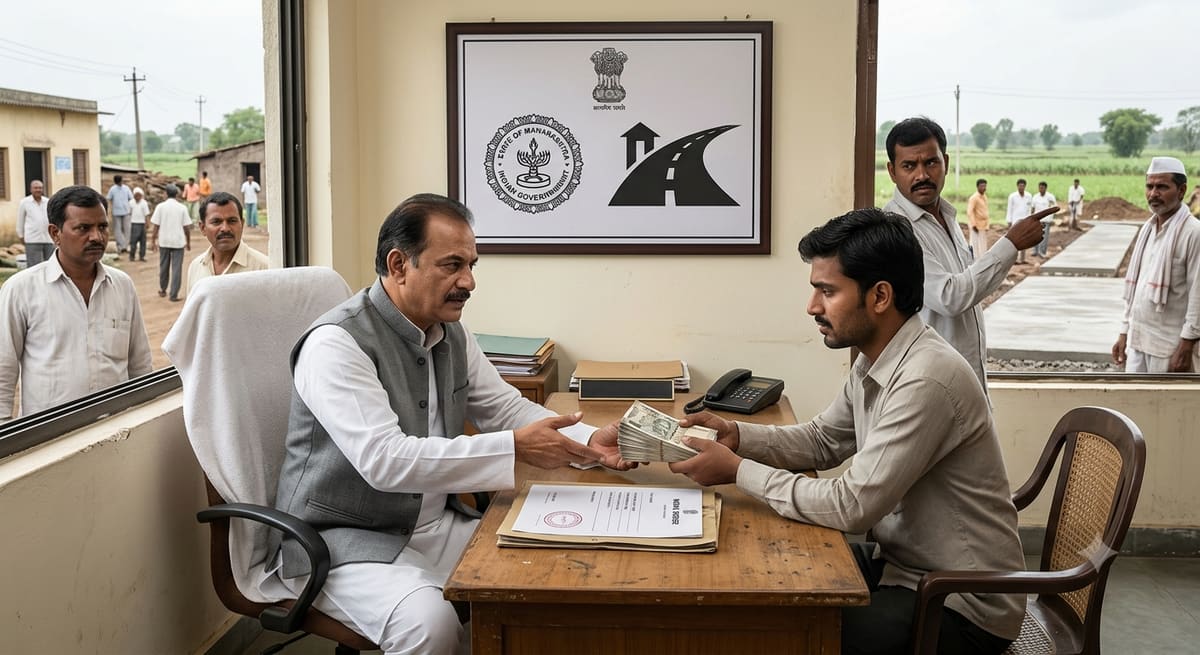
The petitioner, Sau. Minatai Dadarao Uike, was elected Sarpanch of Gram Panchayat Mundgaon in December 2022. Respondent No.4, Swapnil Nandakumar Dahibhat, filed a complaint before the Collector, Akola, alleging that the petitioner incurred disqualification under Section 14(1)(g) of the Maharashtra Village Panchayats Act, 1959 (MVP Act). The allegation was that the petitioner, a widow, made a payment of Rs.2,000/- to her brother for cleaning a drain located in the premises of the Anganwadi center, thereby establishing an indirect financial interest in panchayat work.
Key Facts
The petitioner was elected Sarpanch on 01.12.2022
Respondent No.4 filed complaint on 15.01.2023 (Case No. MGPA, 1959/Section 14(1)(g)/Mundgaon/73/2023-24)
Collector passed initial order of disqualification on 03.04.2025
Petitioner appealed under Section 16(2) MVP Act before the Additional Commissioner, Amravati
On 02.09.2025, the Appellate Authority allowed the appeal, set aside the disqualification order, and remanded the matter
The Appellate Authority found that the petitioner was residing separately in rented accommodation and not with her parents or brother
On remand, the Collector passed a fresh order of disqualification on 24.03.2026
The Collector held that although no drain existed at the Anganwadi premises, the payment of Rs.2,000/- to the petitioner’s brother constituted indirect financial interest under Section 14(1)(g)
Petitioner filed application for stay of the disqualification order before the Additional Commissioner on 05.04.2026
The Additional Commissioner rejected the stay application on 21.04.2026
Writ petition filed before the Bombay High Court on 25.04.2026
Procedural History
15.01.2023: Complaint filed by Respondent No.4 before Collector
03.04.2025: First order of disqualification passed by Collector
02.09.2025: Appellate Authority (Additional Commissioner) allowed appeal, set aside disqualification, and remanded
24.03.2026: Collector passed fresh order of disqualification on remand
05.04.2026: Petitioner filed application for stay before Additional Commissioner
21.04.2026: Additional Commissioner rejected stay application
25.04.2026: Writ Petition No.4791 of 2026 filed before Bombay High Court, Nagpur Bench
23.06.2026: Case reserved for judgment
01.07.2026: Judgment delivered
The Parties' Positions
For the Petitioner
The petitioner contended that Section 14(1)(g) requires a direct or indirect share or interest in any work done by order of the panchayat. She argued that no such interest existed because:
The work (drain cleaning) was not ordered by the panchayat
The drain allegedly cleaned did not exist
Payment was made personally by her, not by the panchayat
No financial benefit accrued to her from the payment
She was residing separately from her brother, as confirmed by the Appellate Authority
She relied on Gulam Yasin Khan v. Sahebrao Yeshwarntao Walaskar (AIR 1966 SC 1339) and Dhrupadabai Laxmanrao Mhaske v. Additional Commissioner, Amravati (2015 (4) Mh.L.J. 509), where courts held that mere familial relationship and payment to a relative do not constitute interest under Section 14(1)(g) if the representative resides separately.
For the Respondent/State
Respondent No.4 and the State contended that:
Payment of Rs.2,000/- to a relative for non-existent work amounted to misuse of office
The payment created an indirect financial relationship with the panchayat
The Collector’s finding of indirect interest was valid
Precedents like Sheela Nandkishor Ingle v. Additional Commissioner (2019 (4) MhLJ 381) and Rambhau Narayan Bhomle v. State of Maharashtra supported disqualification where payments were made to family members
Relief Sought
The petitioner sought:
Quashing of the order dated 21.04.2026 rejecting her stay application
Stay of the disqualification order dated 24.03.2026
Restoration of her position as Sarpanch pending final disposal of the appeal
The Legal Issue
The central question was whether Section 14(1)(g) of the Maharashtra Village Panchayats Act, 1959 is attracted when an elected representative makes a personal payment to a relative for work not ordered or performed by the panchayat, without any financial benefit or interest accruing to the representative.
Arguments Presented
For the Petitioner
The petitioner’s counsel argued that Section 14(1)(g) requires a share or interest in work done by order of the panchayat or in a contract with the panchayat. The payment in question was not made by the panchayat, nor was it for any work ordered by it. The drain did not exist, so no panchayat work was performed. The payment was a personal transaction, even if improper. The Appellate Authority had already found the petitioner resided separately from her brother, negating any presumption of joint interest. Reliance was placed on Gulam Yasin Khan and Dhrupadabai Mhaske, where courts held that familial ties alone, without co-residence or financial benefit, do not trigger disqualification.
For the Respondent/State
The State and Respondent No.4 contended that the payment, even if personal, was made in the capacity of Sarpanch and constituted an indirect interest in panchayat affairs. They argued that the Collector’s finding of indirect financial benefit was reasonable, especially since the payment was made to a close relative. They cited Sheela Nandkishor Ingle and Varsha Baban Pawar, where disqualification was upheld when payments were made to spouses or family members residing with the representative. They asserted that the purpose of Section 14(1)(g) is to prevent conflicts of interest, and the payment here created a clear appearance of impropriety.
The Court's Analysis
The Court began by noting that the Appellate Authority’s finding that the petitioner resided separately from her brother had attained finality and could not be revisited by the Collector on remand. This was critical because prior judgments, including Gulam Yasin Khan, had distinguished cases where the representative and beneficiary resided together from those where they did not.
The Court then examined the text of Section 14(1)(g): "has directly or indirectly, by himself or his partner, any share or interest in any work done by order of the panchayat or in any contract with, by or on behalf of, or employment with or under, the panchayat." The Court emphasized that the provision requires a "share or interest" - a legal or financial stake - in the work or contract. The mere act of paying a relative for work not performed does not equate to having an interest in the work itself.
"The foundation of the order is that payment is made for cleaning of a drain which does not exist at the site. This can be a misconduct in performance of duty by the petitioner. However, misconduct in performance of duty is not a ground for disqualification under Section 14 of the MVP Act."
The Court held that if the payment was improper, it constituted misconduct under Section 39 of the MVP Act, which permits removal by the Commissioner - not disqualification by the Collector. The Collector lacked jurisdiction to impose disqualification on grounds of misconduct.
The Court further distinguished the precedents relied upon by the Respondent. In Sheela Nandkishor Ingle and Rambhau Bhomle, the elected representative resided with the family member who received payment from the panchayat. Here, the petitioner resided separately, and the payment was not from the panchayat’s funds but from her own pocket. No evidence showed she derived any benefit from the payment.
The Court concluded that the Collector’s order was legally unsustainable. The absence of any panchayat-ordered work, the non-existence of the drain, and the personal nature of the payment meant Section 14(1)(g) was not attracted.
The Verdict
The writ petition was allowed. The order dated 21.04.2026 rejecting the stay application was quashed and set aside. The application for stay before the Additional Commissioner was allowed. The operation, effect, and implementation of the disqualification order dated 24.03.2026 are stayed until final disposal of the appeal under Section 16(2) of the MVP Act. The petitioner shall remain in office as Sarpanch during the pendency of the appeal.
What This Means For Similar Cases
Disqualification Requires Actual Interest, Not Alleged Misconduct
Practitioners must distinguish between grounds for disqualification under Section 14 and grounds for removal under Section 39
Mere payment to a relative, even if improper, does not trigger Section 14(1)(g) unless the representative has a share or interest in the work or contract
Evidence of co-residence or financial benefit must be established to invoke indirect interest
Residence Status Is Decisive in Familial Payment Cases
If the elected representative and the beneficiary reside separately, courts will not presume indirect interest
The Gulam Yasin Khan principle remains binding: familial relationship alone is insufficient
Legal notices and complaints must clearly allege and prove interest, not just favoritism
Panchayat Authorities Must Act Within Jurisdictional Limits
Collectors cannot use Section 14(1)(g) to punish misconduct; that power lies with the Commissioner under Section 39
Orders of disqualification must strictly align with the statutory language - no expansive interpretation permitted
Petitioners should challenge disqualification orders on jurisdictional grounds where the facts do not meet the statutory threshold