The Bombay High Court has affirmed that courts may intervene under Section 9 of the Arbitration and Conciliation Act, 1996 to preserve the subject matter of arbitration even before the tribunal is constituted, where withholding of high-value cargo risks irreparable loss. In a decisive order, the Court directed the immediate discharge of a diesel cargo worth over Rs. 661 crores, rejecting the argument that contractual disputes between charterers and owners justify unlawful detention of goods.
Background & Facts
The Dispute
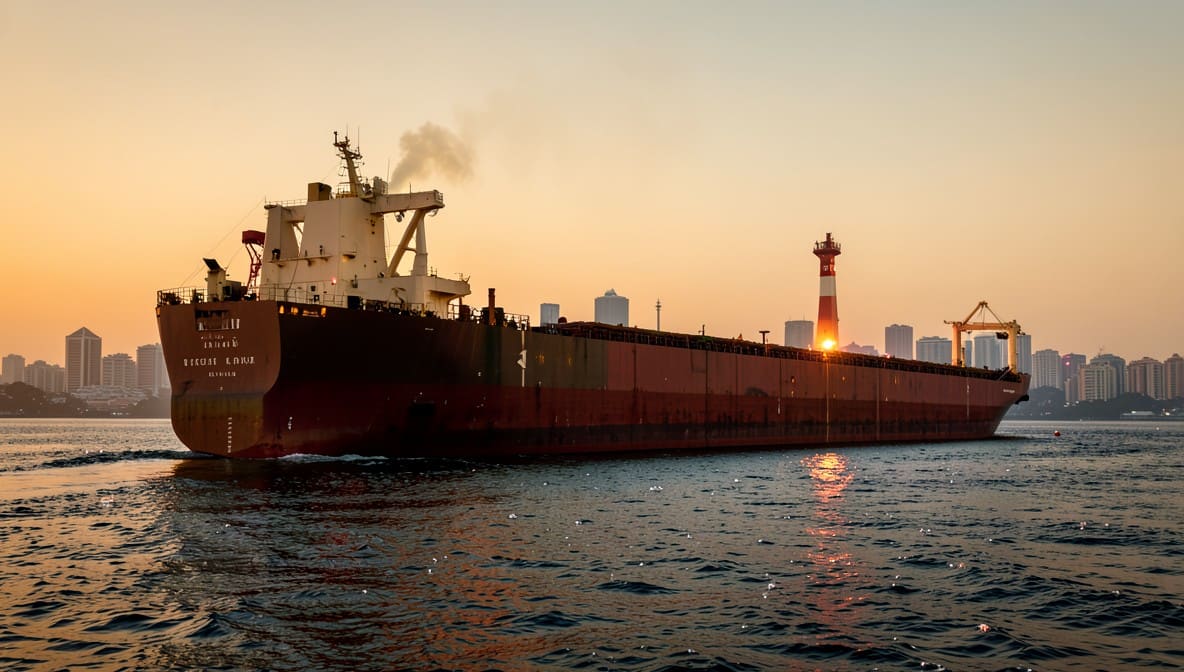
Nayara Energy Limited (Petitioner) entered into a Time Charter Party Agreement on 23 February 2026 with Respondent No. 6, which had itself secured time charter rights over MT BAM SANDY (IMO 9326914), owned by Respondent No. 1 and operated by Respondent No. 4 (the Master). The vessel was contracted to transport Automotive Diesel Fuel BS VI (Regular) from Vadinar Port to Mumbai Port for delivery to Respondent No. 9, Bharat Petroleum Corporation Ltd. (BPCL). A Bill of Lading dated 3 April 2026, issued by the Master, named Nayara as shipper and BPCL as consignee, and contained an arbitration clause mandating arbitration in Mumbai under Indian law.
Key Facts
- The vessel completed three prior voyages between 2 March 2026 and 29 March 2026 without incident.
- On 3 April 2026, the vessel loaded 43,062.172 cubic meters of diesel fuel at Vadinar Port.
- The Bill of Lading explicitly incorporated an arbitration agreement: "any claims whatsoever arising hereunder brought by, or against Nayara Energy Limited shall be determined by arbitration at Mumbai..."
- The vessel arrived at Mumbai Port on 6/7 April 2026 but refused to discharge cargo.
- Instead, the vessel sailed to a position 18 nautical miles off the Indian coastline and remained anchored.
- Correspondence from Respondent No. 5 (Yacht Fuel Trading FZC) dated 3 April 2026 disclosed that the Head Owner (Respondent No. 1) had ceased operations due to "compliance issues" flagged by its P&I club and bank.
- Respondent No. 6’s email dated 8 April 2026 confirmed that the Head Owner was demanding "significant additional hire" and refusing to berth pending resolution of disputed claims.
- BPCL issued a formal demand for immediate delivery on 11 April 2026.
- The Petitioner estimated the cargo value at Rs. 661 crores.
Procedural History
- 3 April 2026: Cargo loaded; Bill of Lading issued.
- 6/7 April 2026: Vessel arrives at Mumbai Port but refuses to discharge.
- 8 April 2026: Respondent No. 6 acknowledges Head Owner’s refusal to berth.
- 11 April 2026: BPCL demands immediate delivery.
- 16 April 2026: Petitioner files Commercial Arbitration Petition (L) No. 13043 of 2026 under Section 9 seeking urgent ex-parte interim relief.
- 16 April 2026: Court hears arguments and passes interim order.
The Parties' Positions
The Petitioner contended that the refusal to discharge cargo was unlawful, unrelated to its obligations, and threatened to render any future arbitral award meaningless. Respondent No. 9 (BPCL) supported the Petitioner’s application. Respondent Nos. 1 to 8 were not heard, as the application was moved ex-parte due to urgency.
Relief Sought
The Petitioner sought:
- Immediate discharge of the diesel cargo at Mumbai Port;
- Restraint on Respondent Nos. 1 to 4 from parting with possession of the cargo;
- Assistance from Indian Coast Guard, Director General of Shipping, and Mumbai Port Authorities to bring the vessel back to port.
The Legal Issue
Can a court grant ex-parte interim relief under Section 9 of the Arbitration and Conciliation Act, 1996 to compel discharge of high-value cargo when the dispute over hire charges lies between other parties, and the cargo’s detention threatens to frustrate the arbitral process?
Arguments Presented
For the Petitioner
The Petitioner relied on the principle of preservation of subject matter under Section 9, arguing that the cargo’s value (Rs. 661 crores) and its critical nature as fuel for BPCL rendered any delay irreversible. The arbitration clause in the Bill of Lading bound the parties to Indian arbitration, and the refusal to discharge was not a legitimate exercise of lien but an unlawful withholding. The Petitioner cited the urgency of preventing the vessel from entering international waters, which would render enforcement impossible.
For the Respondent
Respondent No. 9 (BPCL) supported the Petitioner. Respondent Nos. 1 to 8 were not heard, as the application was ex-parte and no counter-submissions were filed prior to the hearing.
The Court's Analysis
The Court examined the nature of the dispute and the purpose of Section 9. It held that the existence of a dispute between the Head Owner and the charterer (Respondent No. 6) over hire charges could not justify the detention of cargo belonging to a third party (Nayara) and destined for a contractual consignee (BPCL). The Court emphasized that the Bill of Lading, as a document of title, created obligations independent of the underlying charter party.
"Perusal of the Bill of Lading indicates presence of arbitration agreement between the Petitioner and Respondent No.1..."
The Court noted that the arbitration clause was binding on Nayara and the vessel owner, and that the dispute over hire charges was not a defence available against the consignee’s right to delivery. The Court further observed that the vessel’s anchorage 18 nautical miles offshore indicated an intent to evade jurisdiction and potentially remove the cargo beyond the reach of Indian courts.
"In my prima facie view, existence of disputes relating to charges payable to the Petitioner for hire of the Vessel cannot be a reason for not discharging the cargo, which is worth more than Rs.661 crores..."
The Court applied the triple test under Section 9: (i) prima facie case, (ii) irreparable injury, and (iii) balance of convenience. It found all three satisfied. The Court rejected the notion that interim relief under Section 9 requires the tribunal to be constituted first, holding that preservation of the subject matter is paramount when the risk of dissipation is imminent.
The Verdict
The Petitioner succeeded. The Court granted ex-parte ad-interim relief under Section 9 of the Arbitration and Conciliation Act, 1996. The order directs:
- Respondent Nos. 1 to 4 to forthwith discharge the cargo of 43,062.172 cubic meters of Automotive Diesel Fuel BS VI at Mumbai Port;
- Respondent Nos. 1 to 4 to be restrained from transferring, disposing of, or creating third-party rights over the cargo;
- Indian Coast Guard, Director General of Shipping, and Mumbai Port Authorities to assist in bringing the vessel to Mumbai Port and facilitating discharge;
- A copy of the order to be served on the authorities immediately, and on Respondent Nos. 1 to 8 after compliance;
- The Petition to be listed for further hearing on 24 April 2026.
What This Means For Similar Cases
Interim Relief Under Section 9 Extends to Physical Preservation of Goods
- Practitioners may now seek Section 9 relief to compel physical delivery of goods in transit, even if the underlying dispute is between charterers and owners.
- The presence of an arbitration clause in a Bill of Lading strengthens the case for court intervention under Section 9.
- Courts will prioritize preservation of high-value, time-sensitive cargo over commercial disputes between non-consignee parties.
Maritime Disputes Cannot Justify Withholding of Cargo Beyond Contractual Boundaries
- A lien or retention right under a charter party does not override the obligations under a Bill of Lading to the consignee.
- Refusal to discharge cargo to evade arbitration jurisdiction may be treated as an attempt to frustrate the arbitral process.
- Courts may involve statutory authorities (Coast Guard, Port Authorities) to enforce Section 9 orders in maritime contexts.
Urgent Ex-Parte Relief Is Available When Dissipation Risk Is Credible
- A credible apprehension that the vessel will enter international waters justifies ex-parte applications under Section 9.
- Affidavits detailing vessel location, cargo value, and communication history are critical to establishing urgency.
- Courts will not require notice to respondents if there is a real risk of the subject matter being removed beyond jurisdiction.