The Karnataka High Court has clarified that the recall of suspension of sentence under Section 138 of the Negotiable Instruments Act must not be automatic upon non-compliance with a deposit condition, especially where hardship is demonstrated and the appeal remains pending. The judgment underscores judicial discretion in balancing procedural compliance with equitable relief.
Background & Facts
The Dispute
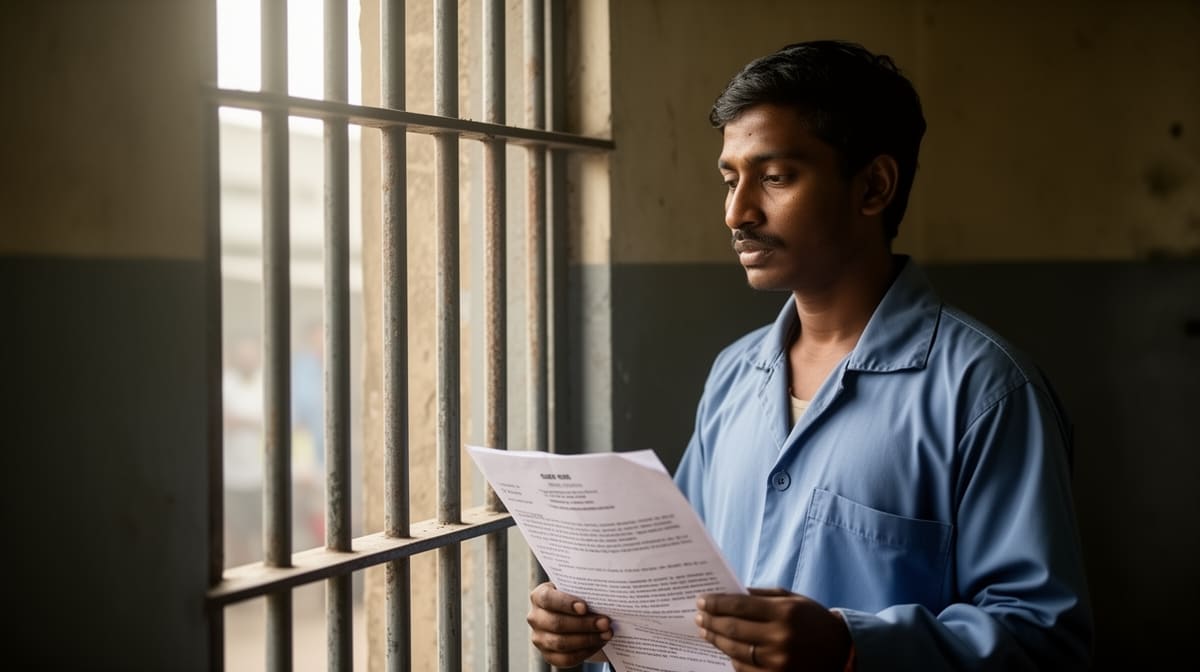
The petitioner, Santosh S/o Rajaram Wagmore, a businessman operating a hair cutting salon in Vijayapura, was convicted by the Trial Court in Criminal Case No. 996/2023 for the offence under Section 138 of the Negotiable Instruments Act, 1881. He was sentenced to pay a fine of Rs. 3,00,000. Aggrieved, he filed an appeal before the III Additional District and Sessions Judge, Vijayapura (Appellate Court) in Criminal Appeal No. 78/2025.
Key Facts
- The petitioner was convicted on 31.12.2025 by the I Additional Civil Judge and JMFC-I Court, Vijayapura.
- The sentence imposed was a fine of Rs. 3,00,000.
- On 31.12.2025, the Appellate Court suspended the sentence subject to the condition that the petitioner deposit 20% of the fine amount (i.e., Rs. 60,000) within 30 days from the date of the order.
- The petitioner did not deposit the amount within the stipulated period.
- On 26.02.2026, the Appellate Court recalled its order of suspension, citing non-compliance, and directed the matter to proceed for arguments.
- The petitioner’s appeal remains pending before the Appellate Court.
- The petitioner is engaged in a small-scale business and claims financial hardship.
Procedural History
- 31.12.2025: Appellate Court passes order suspending sentence on condition of depositing Rs. 60,000 within 30 days.
- 26.02.2026: Appellate Court recalls suspension order due to non-deposit of Rs. 60,000.
- 12.05.2026: Criminal Petition No. 200665 of 2026 filed before the Karnataka High Court, Kalaburagi Bench, under Section 482 CrPC and Section 528 BNSS, seeking restoration of suspension and extension of time.
Relief Sought
The petitioner sought:
- Setting aside of the order dated 26.02.2026 recalling the suspension of sentence.
- Restoration of the suspension order dated 31.12.2025.
- Grant of additional time to deposit 20% of the fine amount (Rs. 60,000).
The Legal Issue
The central question was whether the Appellate Court was justified in recalling the suspension of sentence under Section 138 NI Act solely on the ground of non-deposit of the stipulated 20% fine amount, without considering the petitioner’s financial hardship and the pendency of the appeal.
Arguments Presented
For the Petitioner
Learned counsel submitted that the petitioner is a small business owner with limited means, running a hair cutting salon. The fine of Rs. 3,00,000 is disproportionate to his income, and the requirement to deposit Rs. 60,000 within 30 days imposed undue hardship. He emphasized that the appeal is still pending and that the petitioner has consistently undertaken to comply. He urged the Court to exercise its inherent powers under Section 482 CrPC and Section 528 BNSS to grant a reasonable extension to meet the ends of justice.
For the Respondent
The Respondent did not appear or file any written submission. The Court proceeded ex parte, relying on the record and the petitioner’s representation.
The Court's Analysis
The Court observed that the suspension of sentence is a discretionary remedy granted to ensure that an appellant is not subjected to immediate incarceration or financial coercion while the appeal is pending. The condition of depositing 20% of the fine is not a punitive measure but a safeguard to prevent frivolous appeals and ensure bona fide intent.
"The condition of depositing 20% of the fine is not an end in itself but a means to ensure that the appeal is prosecuted in good faith. The recall of suspension on mechanical grounds, without considering the circumstances of the appellant, defeats the very purpose of the suspension.
The Court noted that the petitioner had not shown any intention to evade compliance. He had merely failed to meet the deadline due to financial constraints, not malice. The Appellate Court’s order of recall was abrupt and failed to consider the petitioner’s representation or the principle of proportionality.
The Court further held that Section 482 CrPC and Section 528 BNSS empower the High Court to intervene to prevent abuse of process or to secure the ends of justice. In this case, the petitioner’s undertaking to deposit the amount, coupled with the pendency of the appeal, warranted a reasonable extension.
The Court rejected the notion that non-compliance with a procedural condition automatically invalidates a suspension order. It emphasized that judicial discretion must be exercised with sensitivity to the appellant’s socio-economic condition, particularly in cases involving non-violent economic offences.
The Verdict
The petition succeeded. The High Court set aside the order dated 26.02.2026 recalling the suspension of sentence. The suspension order dated 31.12.2025 is restored. The petitioner is granted 21 days from 12.05.2026 (i.e., until 02.06.2026) to deposit Rs. 60,000 (20% of Rs. 3,00,000). Failure to deposit within this period will result in automatic revival of the original sentence. All interim applications are disposed of as infructuous.
What This Means For Similar Cases
Suspension Is Not Automatically Revoked for Delay
- Practitioners must argue that non-compliance with deposit conditions under Section 138 NI Act does not ipso facto nullify suspension; courts must assess intent, hardship, and pendency of appeal.
- A mechanical recall of suspension without inquiry into reasons for delay violates the principle of proportionality.
Courts Must Apply Discretion with Sensitivity
- The High Court’s reliance on Section 482 CrPC and Section 528 BNSS affirms that inherent powers can be invoked to prevent injustice in procedural enforcement.
- Financial hardship of small business owners or low-income appellants must be factored into bail and suspension orders.
- A 21-day extension was granted not as a matter of right but as a judicial accommodation - a model for similar applications.
Appeal Pendency Is a Critical Factor
- Where the appeal remains pending, courts should avoid actions that effectively punish the appellant before the merits are decided.
- Suspension orders are interim protections; their recall should be a last resort, not a default.
Procedural Compliance Must Be Balanced with Equity
- Courts should issue clear, realistic timelines for deposit conditions, considering the appellant’s means.
- A notice-and-hearing opportunity before recall of suspension should be considered mandatory in all cases involving financial conditions.
Practical Takeaway for Practitioners
- Always file an application for extension of time before the deadline expires, supported by affidavit of financial status.
- Cite K. S. Puttaswamy v. Union of India and Arnesh Kumar v. State of Bihar to argue for proportionality and reasonable accommodation.
- Use Section 482 CrPC and Section 528 BNSS as tools to seek equitable relief when procedural rigidity leads to injustice.