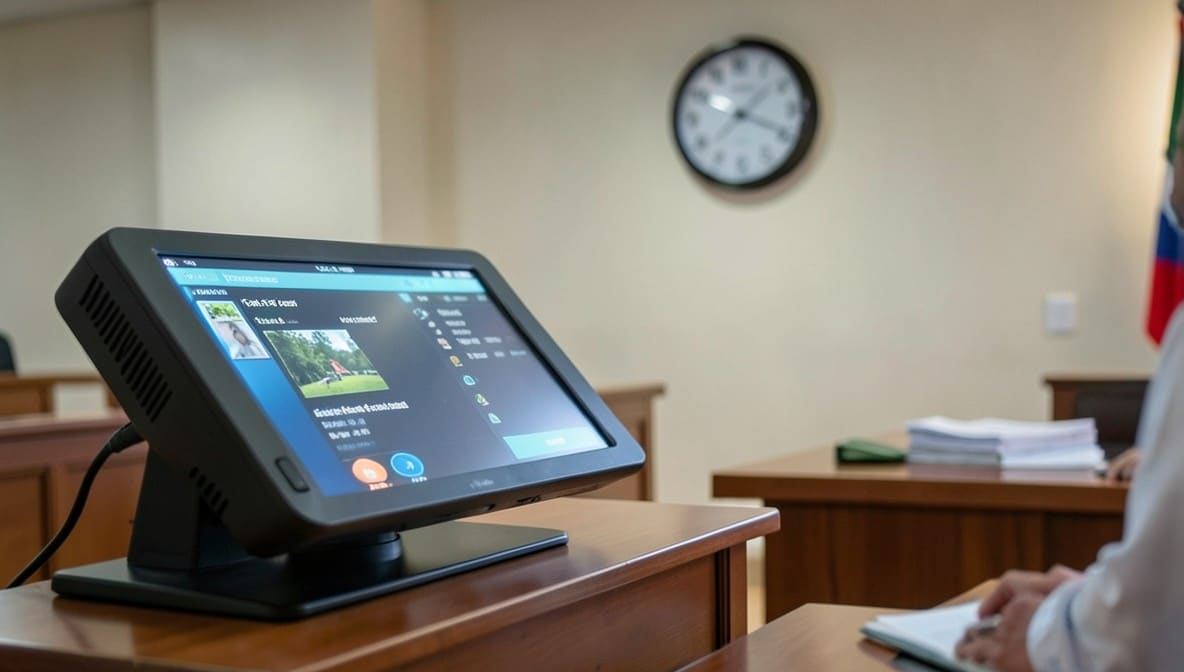
The Bombay High Court has clarified that the date of electronic filing through the court’s payment gateway, not physical submission or portal registration, determines the limitation period for filing arbitration petitions. This ruling reinforces the legal recognition of digital filings as binding acts under India’s evolving procedural framework.
Background & Facts
The Dispute
The petitioner, JBM Industries Limited, sought to challenge an arbitral award dated 28 November 2022 under Section 34 of the Arbitration and Conciliation Act, 1996, which mandates filing within three months of receipt of the award, extendable by 30 days with sufficient cause. The petitioner claimed receipt of the award on 28 November 2022, making the last date for filing 26 February 2023. The respondent challenged the petition as time-barred, alleging it was filed on 28 February 2023.
Procedural History
- 28 November 2022: Arbitral award received by petitioner
- 26 February 2023: Statutory deadline for filing Section 34 petition
- 27 February 2023: Petitioner paid court fees via e-filing portal
- 28 February 2023: Respondent alleged physical filing occurred on this date
- March 2026: Court directed verification of e-filing records after dispute over filing date
Relief Sought
The petitioner sought confirmation that the petition was filed within limitation by virtue of e-filing on 27 February 2023, and requested dispensation of the objection regarding delay.
The Legal Issue
The central question was whether the date of payment via the e-filing portal constitutes the date of filing for the purpose of computing limitation under Section 34 of the Arbitration and Conciliation Act, 1996, when the physical submission or portal registration is delayed due to technical migration.
Arguments Presented
For the Petitioner
Counsel relied on Navodaya Enterprises v. Tata Motors Finance Solution Limited and NBK Films LLP v. Reliance Industries Limited, arguing that electronic payment of court fees through the court’s designated gateway constitutes a completed act of filing. The OTP-verified certificate and EC Number were presented as conclusive proof of filing on 27 February 2023. The petitioner emphasized that the court’s migration to a new portal in August 2024 should not prejudice parties who filed under the old system.
For the Respondent
The respondent contended that the petition was only deemed filed upon physical registration by the court office, which occurred after 27 February 2023. They argued that without formal registration or acknowledgment from the court, the e-payment alone could not establish timely filing, citing procedural formalities under the Code of Civil Procedure.
The Court's Analysis
The Court examined the nature of e-filing under modern court infrastructure and the intent of procedural law to facilitate access to justice. It noted that the e-filing system is not merely a convenience but a legally recognized mode of submission. The Court held that payment of court fees through the official gateway, coupled with an OTP-verified certificate and EC Number, constitutes a complete and irrevocable act of filing.
"The action taken electronically, when authenticated by the court’s own payment system and verified by an official certificate, must be accepted as the date of filing. To hold otherwise would defeat the purpose of digitization and penalize litigants for administrative transitions beyond their control."
The Court distinguished the respondent’s reliance on physical registration norms, noting that such requirements are superseded by statutory and judicial recognition of electronic filing. It affirmed that Navodaya Enterprises and NBK Films LLP establish binding precedent: the date of payment via the court’s e-payment portal governs limitation, irrespective of subsequent administrative delays or portal migration.
The Verdict
The petitioner succeeded. The Court held that the date of e-filing is the date of payment via the court’s official gateway, and since payment was made on 27 February 2023, the petition was filed within limitation. The petition was ordered to be registered and listed for admission.
What This Means For Similar Cases
E-Filing Payment Date Is Controlling
- Practitioners must retain OTP-verified payment receipts and EC Numbers as conclusive proof of filing date
- In disputes over timing, the e-payment timestamp supersedes manual registration dates
- Courts will not allow procedural technicalities to override digital evidence authenticated by the court’s own system
Portal Migration Does Not Invalidate Prior Filings
- Cases filed under legacy e-filing systems remain valid even if the portal is later decommissioned
- Courts are obligated to verify historical e-filing records through available digital trails (e.g., payment logs, OTP certificates)
- Litigants need not re-file or seek condonation merely because the court upgraded its system
Burden of Proof Shifts to Opposing Party
- When a petitioner produces authenticated e-payment evidence, the burden shifts to the respondent to prove actual delay
- Mere assertion of late physical filing without corroborating evidence will not suffice
- Courts must prioritize verifiable digital records over uncorroborated oral claims