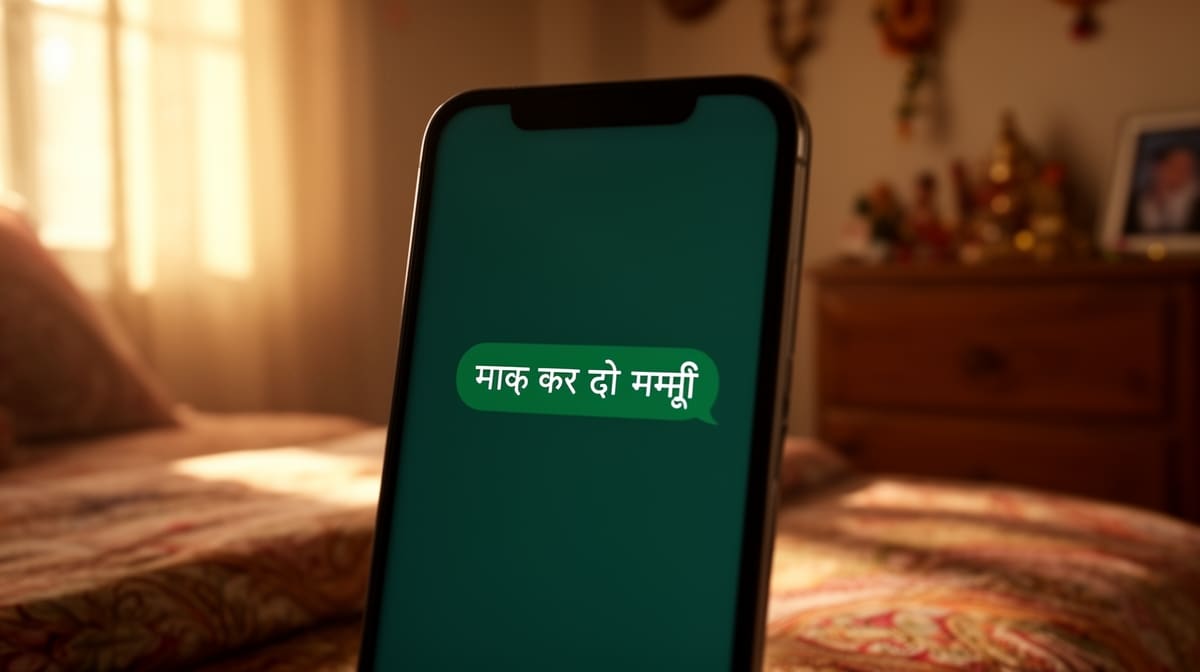
The Punjab and Haryana High Court has clarified that a pending civil property dispute, even when accompanied by allegations of verbal abuse, does not by itself constitute instigation to commit suicide under Section 108 of the Bharatiya Nyaya Sanhita, 2023. The Court granted anticipatory bail to a 64-year-old woman, emphasizing the necessity of proving specific intent and direct causal link before invoking criminal liability for abetment of suicide.
Background & Facts
The Dispute
The petitioner, Kuldip Kaur, a 64-year-old single woman, is accused in FIR No. 45 dated 10.03.2026 under Section 108 Bharatiya Nyaya Sanhita, 2023, at Police Station Mehtiana, District Hoshiarpur. The complaint was filed by Harinder Singh, the nephew of the deceased, Kulwinder Kaur, who was the petitioner’s cousin sister. The dispute arose from a long-standing civil conflict over a jointly owned residential property located in Village Dhakowal. Both women were co-sharers in the property, and the deceased had commenced construction of a new house on the plot in October 2025.
Key Facts
- The petitioner’s mother had earlier filed a suit for declaration of rights over the property.
- The petitioner subsequently filed a civil suit for partition and permanent injunction against the deceased, seeking separate possession.
- An application under Order XXXIX Rules 1 and 2 CPC for injunction was dismissed by the Additional Civil Judge (Senior Division), Hoshiarpur.
- The petitioner filed an appeal against this dismissal.
- The deceased’s construction work proceeded despite the pending civil suit.
- The complainant alleged that the petitioner frequently visited the village and subjected the deceased to mental harassment, verbal abuse, and threats to kill her.
- On 09.03.2026 at 04:30 PM, the deceased was found dead by hanging from a wooden beam in her ceiling.
- A suicide note, written in the deceased’s own handwriting, was found beside her body. It stated that she ended her life due to the mental harassment, abuses, and threats inflicted by the petitioner.
- The petitioner has no prior criminal record and is not accused of any physical violence.
- No property or evidence has been seized from her possession.
Procedural History
- October 2025: Deceased commenced construction on the jointly owned property.
- Before 09.03.2026: Civil suit for partition and injunction filed by petitioner; application for injunction dismissed by Civil Judge.
- 09.03.2026: Deceased committed suicide; suicide note recovered.
- 10.03.2026: FIR No. 45 registered under Section 108 BNS against the petitioner.
- 04.05.2026: Petition for anticipatory bail filed before the High Court of Punjab and Haryana, Chandigarh.
The Parties' Positions
Petitioner’s Position: The petitioner asserts she had no intention to instigate or abet suicide. She contends that the civil dispute was being resolved through legal channels, and her presence at the property or verbal exchanges, even if harsh, do not amount to criminal instigation under Section 108 BNS. She has clean antecedents and is willing to cooperate with the investigation.
Complainant’s Position: The complainant, through his counsel, argues that the suicide note directly implicates the petitioner and establishes a causal link between her conduct and the deceased’s death. He contends that persistent threats and harassment, even in the context of a civil dispute, constitute abetment under Section 108 BNS.
Relief Sought
The petitioner seeks anticipatory bail to prevent arrest and to ensure her right to personal liberty while the investigation proceeds. She requests that the Court recognize the absence of mens rea and the preliminary nature of the allegations.
The Legal Issue
The central question was whether the mere existence of a civil property dispute, coupled with allegations of verbal abuse and threats as recorded in a suicide note, is sufficient to establish the offence of abetment of suicide under Section 108 of the Bharatiya Nyaya Sanhita, 2023, without proof of direct instigation or requisite mens rea.
Arguments Presented
For the Petitioner
Learned counsel for the petitioner argued that Section 108 BNS requires active instigation or intentional abetment, not passive conduct arising from a civil disagreement. He cited State of Haryana v. Bhagwan Das and Gian Kaur v. State of Punjab to emphasize that mere harassment or emotional distress, without a clear causal nexus to the act of suicide, cannot attract criminal liability. He submitted that the petitioner was pursuing a legitimate legal remedy through court proceedings and had no motive to cause the deceased’s death. The petitioner’s age, gender, and clean record further supported the grant of anticipatory bail.
For the Respondent
The State and complainant’s counsel contended that the suicide note was a direct and reliable statement of the deceased’s state of mind, implicating the petitioner as the cause of her despair. They argued that repeated threats and abuse, even if not physical, amounted to psychological coercion under Section 108 BNS. They relied on State of Maharashtra v. Suresh to assert that the gravity of the offence and the presence of a suicide note justified denial of anticipatory bail.
The Court's Analysis
The Court observed that while the suicide note is a relevant piece of evidence, it cannot be the sole basis for criminal liability without corroborative proof of intent or direct instigation. The Court noted that the petitioner’s conduct occurred within the context of a legitimate civil dispute over property rights, which had already been adjudicated at the civil level. The dismissal of the injunction application did not justify criminalizing the petitioner’s subsequent actions.
"The fact that a person is involved in a civil dispute and is alleged to have used harsh words does not, by itself, establish the mens rea required for abetment of suicide under Section 108 BNS."
The Court emphasized that Section 108 BNS requires proof of intentional act or illegal omission that directly leads to suicide. Mere emotional distress caused by familial or property-related friction, however regrettable, does not meet this threshold. The Court further held that the petitioner’s clean antecedents, her willingness to cooperate with the investigation, and the absence of any recovery of incriminating material weighed in her favor.
The Court also distinguished this case from those involving domestic violence or prolonged harassment where a pattern of abuse is established. Here, the allegations were confined to a single civil dispute and lacked evidence of systematic persecution.
The Verdict
The petition for anticipatory bail is allowed. The petitioner shall surrender before the Investigating Officer within one week or as directed. In the event of arrest, she shall be released on anticipatory bail upon furnishing personal or surety bonds to the satisfaction of the Investigating Officer. She shall comply with all conditions under Section 482(2) of the Bharatiya Nagarik Suraksha Sanhita, 2023. Pending miscellaneous applications are disposed of.
What This Means For Similar Cases
Civil Disputes Do Not Automatically Trigger Criminal Liability
- Practitioners must now argue that allegations arising from civil property or inheritance disputes require independent proof of intent to abet suicide, not just emotional distress.
- Suicide notes alone are insufficient to establish criminal liability under Section 108 BNS without corroborative evidence of direct instigation.
Mens Rea Is Non-Negotiable in Abetment Cases
- The burden remains on the prosecution to prove that the accused’s conduct was intentionally aimed at causing the victim to commit suicide.
- Verbal abuse or threats in the context of a legal dispute must be evaluated for specificity, frequency, and directness before criminal charges are sustained.
Anticipatory Bail Should Be Granted Where No Flight Risk or Evidence Tampering Is Apparent
- Courts should consider age, health, clean record, and cooperation as strong factors favoring anticipatory bail in non-violent, non-economic offences.
- Arrest should not be the default response in cases where the accused is willing to appear before investigators and no incriminating material is in their possession.