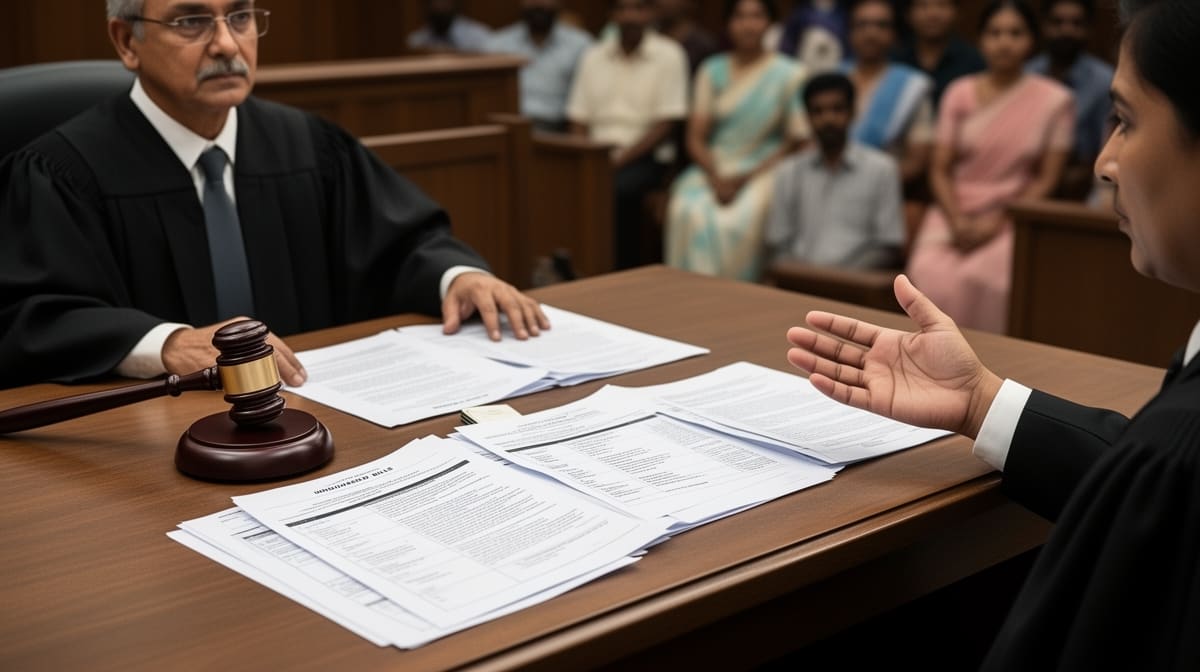
The Gauhati High Court has reaffirmed the limited scope of second appeals under Section 100 of the Code of Civil Procedure, holding that an appellate court’s factual finding grounded in uncontroverted documentary evidence cannot be overturned merely because a different view is possible. This judgment reinforces the principle that appellate findings on facts are final unless they are perverse.
Background & Facts
The Dispute
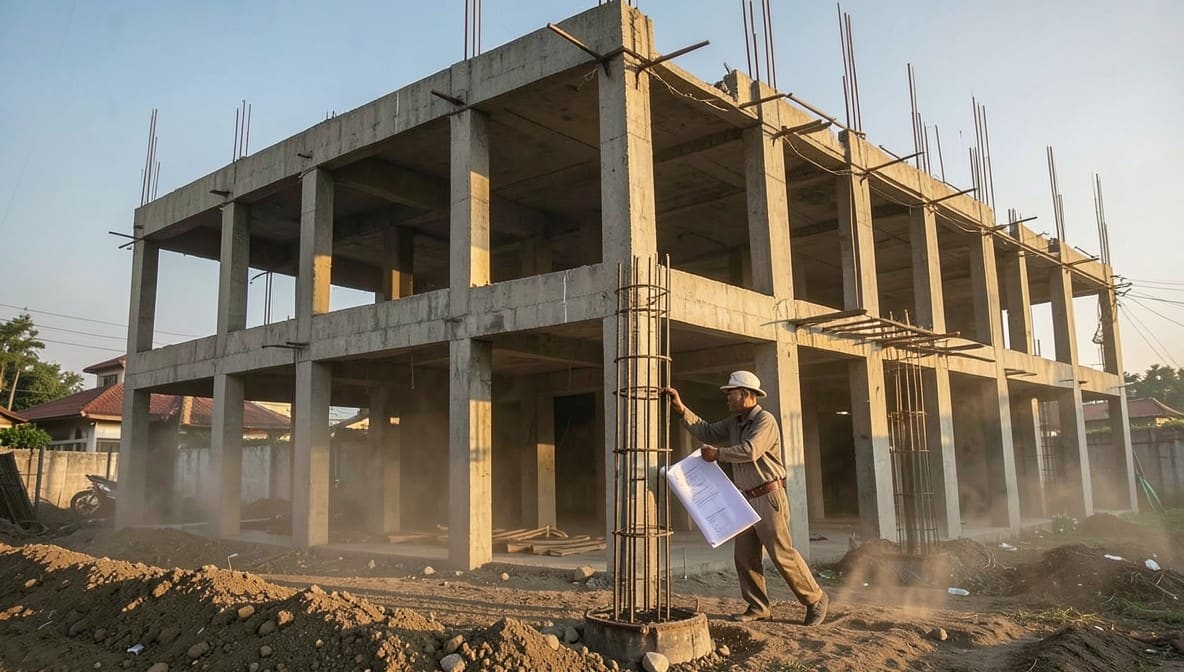
The respondent, Dipak Choudhury, was awarded a contract by the Oil and Natural Gas Corporation Ltd. (ONGC) through a work order dated 15.09.1995 for civil works at its Cachar Project in Silchar. The work was to be completed within one month and six days from the third day of the work order, i.e., by approximately 21.10.1995. A formal agreement was executed on 06.10.1995, and work commenced on 08.10.1995.
Key Facts
- The respondent submitted progress reports on 10.11.1995, claiming 97% completion of work.
- On 02.11.1995, ONGC issued a show-cause notice alleging non-commencement of work, which the respondent claims to have received only on 11.11.1995.
- On 13.11.1995, ONGC issued another notice rescinding the contract and forfeiting the earnest money.
- On 16.11.1995, ONGC sent a telegram directing the respondent to be present on 18.11.1995 for joint measurement of materials, but no record was produced to prove service of this notice.
- On 28.11.1995, ONGC threatened to blacklist the respondent, accusing him of falsely claiming 97% completion.
- The respondent had not been afforded any inquiry, hearing, or opportunity to explain the delay or verify the extent of work completed.
- The respondent filed Title Suit No. 102/1997 seeking: (i) declaration that the rescission was illegal, (ii) decree for payment of Rs. 2,08,019.70 for completed work, and (iii) refund of forfeited earnest money.
Procedural History
- 06.10.1995: Formal contract executed between respondent and ONGC.
- 08.10.1995: Work commenced.
- 10.11.1995: Respondent sent letter claiming 97% completion.
- 11.11.1995: Respondent received show-cause notice dated 02.11.1995.
- 13.11.1995: ONGC issued notice rescinding contract and forfeiting earnest money.
- 16.11.1995: Telegram issued for joint inspection; no proof of service.
- 28.11.1995: Threat of blacklisting issued.
- 1997: Title Suit No. 102/1997 filed by respondent.
- 29.06.2006: Trial Court dismissed the suit, holding that despite establishing cause of action, respondent failed to prove completion of work.
- 29.08.2011: First Appellate Court allowed the appeal, reversed the trial court’s decision, and decreed the suit in favor of the respondent.
- 11.06.2013: Gauhati High Court admitted the second appeal on a formulated substantial question of law.
- 22.02.2017: Respondent withdrew 50% of the deposited decretal amount upon furnishing a personal bond.
- 24.03.2026: Judgment delivered by the Gauhati High Court.
The Parties' Positions
Appellants (ONGC): Contended that the respondent failed to complete work within the stipulated time, breached contractual clauses (III)(a)(b)(c), and failed to prove completion of 97% work. They argued that the First Appellate Court erred in relying on unverified documents and ignored the absence of rebuttal evidence.
Respondent: Asserted that he completed 97% of the work, that the rescission was mala fide and without due process, and that ONGC failed to adduce any evidence to contradict his claims. He emphasized that the documents submitted were uncontroverted and thus entitled to full weight.
Relief Sought
The respondent sought: (i) declaration that the rescission order was illegal and void, (ii) decree for payment of Rs. 2,08,019.70 for completed work, (iii) refund of forfeited earnest money, and (iv) interest on the amounts due.
The Legal Issue
Whether the First Appellate Court committed perversity in holding that the respondent completed 97% of the contractual work by 10.11.1995, based on uncontroverted documentary evidence, when the appellants failed to adduce any rebuttal evidence or conduct an inquiry before rescinding the contract.
Arguments Presented
For the Appellant
The appellants contended that the First Appellate Court erred in relying on documents (Exhibit-8, 11, 21 - 527) without proper proof, ignoring the contractual timeline, and failing to consider the respondent’s non-appearance at the joint inspection. They cited H. Siddiqui v. A. Ramalingam, Mukhtiar Singh v. State of Punjab, and LIC v. Ram Pal Singh Bisen to argue that appellate findings based on unverified documents amount to perversity. They further argued that the respondent failed to prove payment of forest royalty, wage registers, or earth-filling expenses, rendering his claim unsubstantiated.
For the Respondent
The respondent argued that no substantial question of law existed, as the appeal involved only factual disputes. He relied on Mallanaguoda v. Ninganagouda to assert that second appeals cannot re-appreciate facts. He cited Vidyadhar v. Manikrao to argue that failure to adduce evidence by the defendant raises a presumption against their case. He emphasized that the documents were uncontroverted, no inquiry was held before rescission, and the rescission violated principles of natural justice.
The Court's Analysis
The Court began by reiterating the foundational principle that a second appeal under Section 100 of the Code of Civil Procedure is not a rehearing of facts. The jurisdiction is confined to substantial questions of law, and findings of fact by the First Appellate Court are final unless they are perverse.
"A good working test of perversity is contained in two judgments... If a decision is arrived at on no evidence or evidence which is thoroughly unreliable and no reasonable person would act upon it, the order would be perverse. But if there is some evidence on record which is acceptable and which could be relied upon, howsoever compendious it may be, the conclusions would not be treated as perverse."
The Court examined the First Appellate Court’s reasoning and found that it had relied on multiple uncontroverted documents submitted by the respondent - including progress reports, correspondence, and photographs - none of which were challenged or rebutted by the appellants. Crucially, the appellants did not examine any witness, did not produce any AD card or postal receipt to prove service of the show-cause notice, and did not conduct any inquiry into the extent of work completed before rescinding the contract.
The Court held that the First Appellate Court’s conclusion that the respondent had completed 97% of the work was not based on speculation or irrelevant material, but on documentary evidence that remained unchallenged. The absence of rebuttal evidence from the appellants, as per Vidyadhar v. Manikrao, strengthened the respondent’s case.
The Court further noted that the rescission of the contract without affording a reasonable opportunity of hearing violated the principles of natural justice. The failure to conduct a joint inspection or verify the claim before termination rendered the rescission arbitrary.
The Court explicitly declined to examine the probative value of individual documents, as such challenges are not maintainable in a second appeal unless they raise a substantial question of law - which the appellants failed to demonstrate.
The Verdict
The appeal was dismissed with costs. The Gauhati High Court upheld the First Appellate Court’s judgment dated 29.08.2011, which decreed the suit in favor of the respondent. The Court directed the restoration of the decree for payment of Rs. 2,08,019.70 for completed work and refund of the forfeited earnest money. The appellants were directed to pay costs of Rs. 25,000 to the respondent. The records of the Trial Court and First Appellate Court were to be returned along with a copy of this judgment.
What This Means For Similar Cases
Uncontroverted Evidence Is Sufficient to Sustain a Decree
- Practitioners must argue that where the plaintiff adduces documentary evidence and the defendant fails to rebut it, the appellate court’s reliance on such evidence cannot be termed perverse.
- In contract disputes, failure to conduct an inquiry before termination may render the action voidable on grounds of natural justice.
Second Appeals Cannot Be Used to Re-Appreciate Facts
- A second appeal under Section 100 CPC is not a platform to re-evaluate evidence or substitute one’s view of facts.
- Courts must resist the temptation to interfere merely because a different conclusion is possible - interference is permissible only if the finding is irrational or based on no evidence.
Burden of Rebuttal Lies with the Defendant
- When a plaintiff presents credible documents and the defendant does not examine any witness or produce contrary evidence, a presumption arises that the plaintiff’s case is true.
- This principle applies equally in civil, service, and consumer disputes where documentary proof is central.