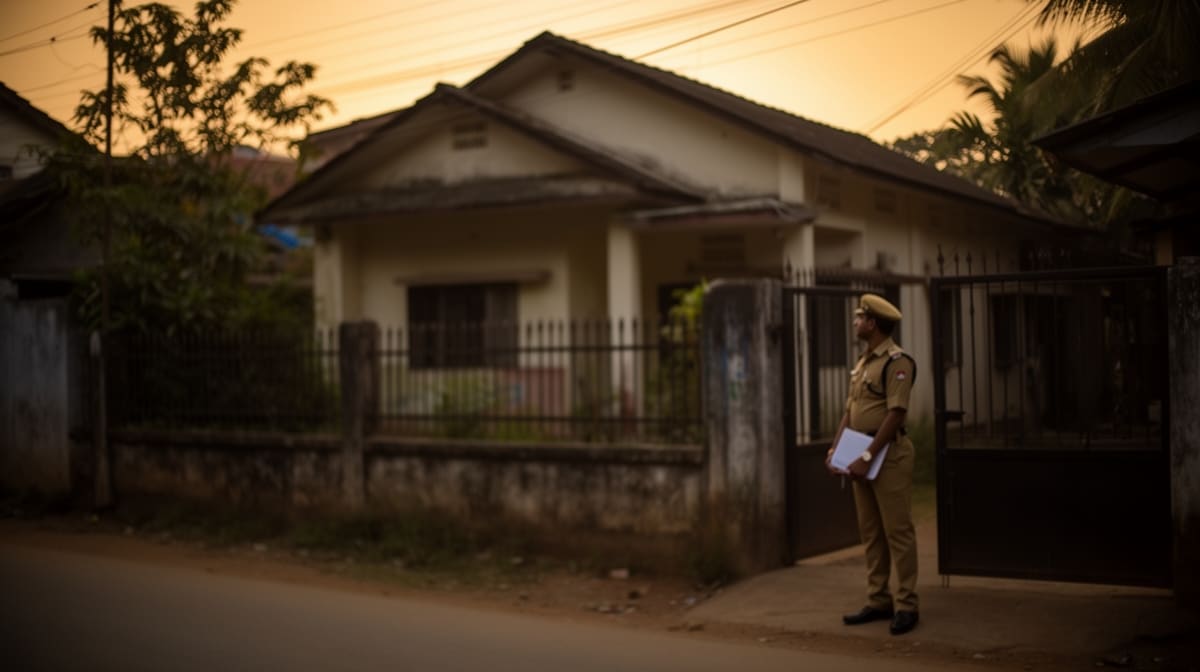
The Allahabad High Court has clarified that mere use of caste-based slurs does not automatically attract prosecution under the SC/ST Act. The judgment emphasizes that both intentional humiliation and occurrence in public view are indispensable elements, setting a critical threshold for invoking Sections 3(1)(r) and 3(1)(s). This ruling reinforces doctrinal precision in hate crime prosecutions and curbs misuse of statutory provisions.
Background & Facts
The Dispute
The applicants, Shahid Khan and eleven others, were named as accused in Crime No. 249/2025 registered at Police Station Motipur, District Bahraich, under multiple provisions of the Indian Penal Code and the Scheduled Castes and Scheduled Tribes (Prevention of Atrocities) Act, 1989. The case originated from an alleged altercation on 12.06.2025, during which the applicants reportedly used caste-based language directed at the victim, a member of a Scheduled Caste. The complainant filed a First Information Report (FIR) on 13.06.2025, leading to the filing of a chargesheet on 16.07.2025. A summoning order was issued by the Special Judge, SC/ST Act, Bahraich, on 06.10.2025, prompting the present application under Section 528 of the Bharatiya Nagarik Suraksha Sanhita (BNSS).
Key Facts
- The alleged incident occurred on 12.06.2025 at the doorway of the victim’s residence in Motipur, Bahraich
- The FIR (Annexure 1) alleges the applicants used caste-based abusive language, including references to the victim’s caste
- The victim’s statement, recorded under Section 161 CrPC, does not indicate any prior hostility or provocation
- The complainant did not allege any physical assault, damage to property, or obstruction of public duty
- The location of the incident - the doorway of a private residence - was not described as a place accessible to or visible by the general public
- The chargesheet (Annexure 2) invoked Sections 191(2), 191(3), 190, 115(2), 352, 351(3), 333, 3(1)(r), 3(1)(s), 3(2)(va) of BNSS and SC/ST Act, along with Sections 147, 148, 149, 323, 504, 506, 452 IPC
- No evidence was recorded indicating that the language used was intended to humiliate the victim in public view
Procedural History
- 12.06.2025: Alleged incident occurred at the doorway of the victim’s house
- 13.06.2025: FIR No. 249/2025 registered at Police Station Motipur
- 16.07.2025: Chargesheet filed by the investigating officer under multiple IPC and SC/ST Act provisions
- 06.10.2025: Summoning order issued by Special Judge, SC/ST Act, Bahraich
- 15.03.2026: Application under Section 528 BNSS filed before the Allahabad High Court, Lucknow Bench
- 11.05.2026: Apex Court delivered judgment in Gunjan @ Girija Kumari v. State (NCT of Delhi), relied upon by applicants
- 15.05.2026: Judgment delivered by the High Court
The Parties' Positions
For the Applicants
- Argued that the language used, even if offensive, lacked the necessary mens rea of intentional insult or humiliation
- Contended that the incident occurred at a private doorway, not a place within public view
- Relied on the Supreme Court’s recent ruling in Gunjan @ Girija Kumari v. State (NCT of Delhi) to argue that mere use of caste names without intent and public context does not constitute an offence under the SC/ST Act
- Submitted that the chargesheet was filed with ulterior motive, given absence of corroborative evidence or witnesses
For the Respondent/State
- Argued that the use of caste-based slurs in the presence of the victim, even if not witnessed by the public, satisfies the requirement of the SC/ST Act
- Contended that the location - a doorway - is inherently a semi-public space and thus qualifies as "within public view"
- Maintained that the intent to insult can be inferred from the nature of the language used
- Opposed quashing, asserting that the trial court must determine the facts after evidence is recorded
Relief Sought
The applicants sought quashing of the entire criminal proceeding, including the chargesheet dated 16.07.2025 and the summoning order dated 06.10.2025, specifically with respect to the offences under Sections 3(1)(r), 3(1)(s), and 3(2)(va) of the SC/ST Act. They requested that the remaining charges under IPC be allowed to proceed.
The Legal Issue
The central question was whether the use of caste-based abusive language at the doorway of a private residence, without evidence of intent to humiliate in public view, constitutes an offence under Sections 3(1)(r) and 3(1)(s) of the Scheduled Castes and Scheduled Tribes (Prevention of Atrocities) Act, 1989.
Arguments Presented
For the Applicants
The applicants relied on the Supreme Court’s judgment in Gunjan @ Girija Kumari v. State (NCT of Delhi), which held that for an offence under Section 3(1)(r), there must be a clear intention to insult or intimidate a member of a Scheduled Caste or Scheduled Tribe, and the act must occur in a place within public view. The counsel argued that the victim’s statement and the FIR contained no indication of public presence, nor did they establish that the applicants acted with the deliberate purpose of humiliating the victim. The absence of any corroborative witness or prior animosity further undermined the claim of intentional insult. The applicants contended that the chargesheet was legally unsustainable and amounted to an abuse of process.
For the Respondent/State
The State’s counsel argued that the doorway of a house, especially in rural settings, is a common area where interactions occur and is therefore within public view. They submitted that the use of caste-based slurs, regardless of intent, is inherently degrading and sufficient to invoke the SC/ST Act. The counsel relied on the literal reading of the provision and contended that the trial court, not the High Court, is the appropriate forum to assess intent and context after evidence is recorded. They further argued that quashing at this stage would undermine the deterrent purpose of the Act.
The Court's Analysis
The Court undertook a detailed textual and contextual analysis of Sections 3(1)(r) and 3(1)(s) of the SC/ST Act. It emphasized that the opening phrase of both provisions - "Whoever, not being a member of a Scheduled Caste or a Scheduled Tribe" - implies a deliberate, conscious act. The Court observed that the use of the word "intentionally" in Section 3(1)(r) and "abuses" in Section 3(1)(s) requires a subjective element of purpose, not merely an objective outcome.
"The act and conduct of hurling of caste based abuses must take place at a place within the public view and the purpose would not suffice of constituting the offence under S.C./S.T. Act that if the place is 'in the public view'."
The Court noted that the victim’s statement and the FIR described the incident as occurring at the "door side" of the victim’s house. There was no allegation that the incident occurred in a market, road, temple, or any other location accessible to the general public. The Court held that a private doorway, even if visible to passersby, does not equate to "a place within public view" as contemplated by the statute. The Supreme Court’s ruling in Gunjan @ Girija Kumari was binding and directly on point: the public view requirement is not satisfied by mere visibility from a public road.
The Court further held that the absence of any evidence of prior hostility, motive, or corroborative testimony rendered the allegation of intentional insult speculative. The Court rejected the State’s argument that intent could be inferred solely from the nature of the words used, stating that such an approach would render the statutory requirement of intention redundant.
The Court distinguished this case from those involving public rallies, street confrontations, or caste-based abuse in educational or institutional settings, where public view and intent are more readily inferable.
The Verdict
The application was allowed partly. The Court quashed the proceedings under Sections 3(1)(r), 3(1)(s), and 3(2)(va) of the SC/ST Act in Crime No. 249/2025. The chargesheet dated 16.07.2025 and summoning order dated 06.10.2025 relating to these provisions were set aside. The trial court was directed to proceed with the remaining charges under the IPC, including Sections 504, 506, 323, and 147, which do not require proof of public view or specific intent under the SC/ST Act.
What This Means For Similar Cases
Intent Must Be Explicitly Proven
- Practitioners must now demonstrate that the accused acted with a deliberate intention to insult or humiliate - not merely that offensive language was used
- Mere use of caste names without contextual evidence of humiliation will not sustain charges under Section 3(1)(r)
- Defence counsel should move to quash charges at the earliest stage where intent is absent or speculative
Public View Is Not Merely Visible - It Must Be Publicly Accessible
- "Public view" requires a location where the general public has reasonable access or presence - not just a private entrance visible from a road
- Doorways, courtyards, or private verandas do not qualify unless there is evidence of public congregation or observation
- Prosecutors must now plead and prove the location’s public character with specificity
SC/ST Act Cannot Be Used as a General Anti-Abuse Provision
- The Act is not a catch-all for caste-based insults; it requires strict adherence to its statutory conditions
- Courts must resist the temptation to expand the scope of the Act based on emotional or social considerations
- This judgment reinforces that statutory offences must be interpreted narrowly where the legislature has imposed precise conditions