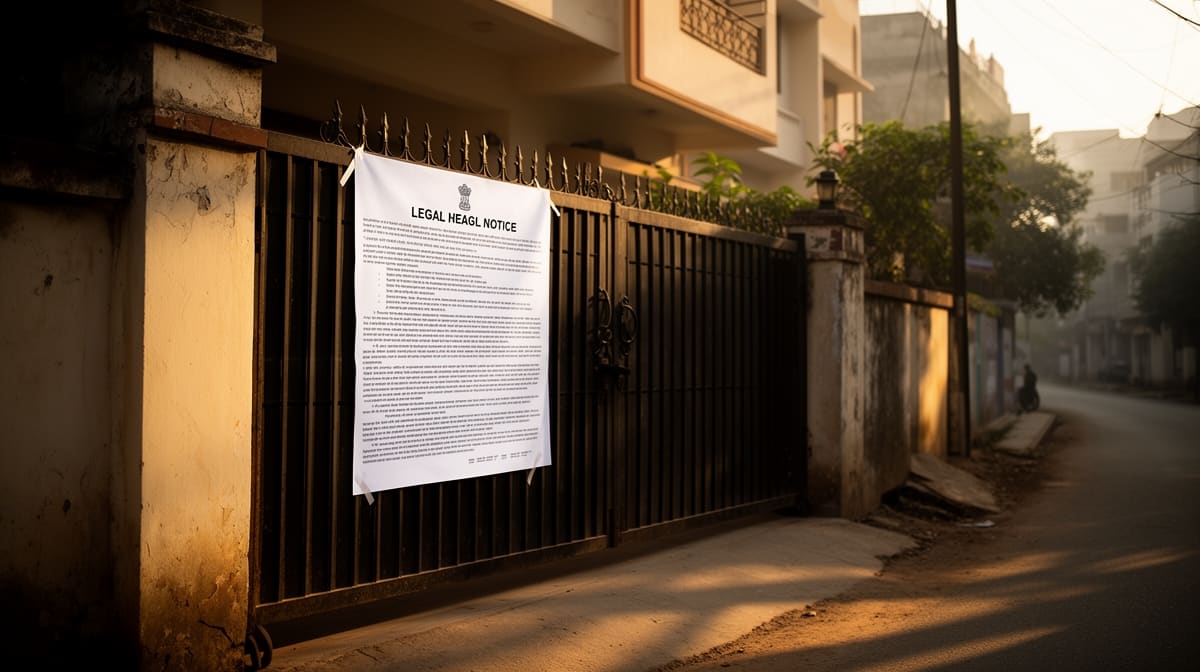
The Andhra Pradesh High Court has clarified that financial institutions cannot proceed with asset auctions under the SARFAESI Act without considering a borrower’s legitimate request for loan rescheduling when the default arises from a documented natural calamity. This ruling reinforces the obligation of banks to apply RBI guidelines fairly, particularly for MSME borrowers facing unforeseen agricultural or livestock losses.
Background & Facts
The Dispute
The petitioner, Pullarevu Mounika Reddy, proprietor of Emen Agri Farms in Anantapuram District, availed two term loans from Karnataka Bank totaling Rs.6,93,00,000 for establishing a poultry farm. The loans were initially repaid regularly until December 2024. In March 2025, a widespread outbreak of bird flu swept across southern India, resulting in the death of approximately 70,000 birds owned by the petitioner. This led to a near-total collapse of her business operations, with farm closure lasting nearly four months and severe losses in egg production and feed costs.
Key Facts
The petitioner’s business is registered under the MSME category.
The petitioner informed the bank of the bird flu impact via letter dated 20.05.2025, requesting enhancement of the overdraft facility.
No response was received from the bank to this communication.
On 27.05.2025, the bank issued a legal notice demanding payment of Rs.31,16,932 as dues, interest, and arrears, declaring the account as Non-Performing Asset (NPA) with effect from 24.05.2025.
The petitioner submitted a formal representation for loan rescheduling on 18.12.2025, citing the bird flu disaster and seeking restructuring under RBI guidelines applicable to MSMEs.
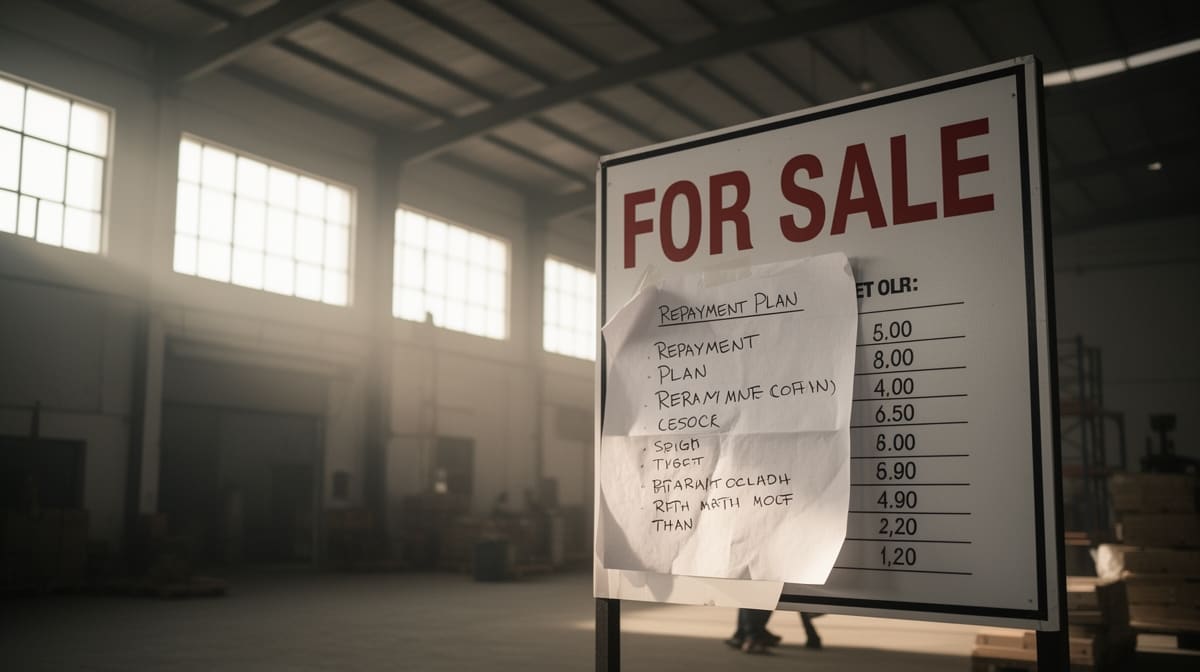
The bank ignored this representation and issued an E-Auction Sale Notice dated 30.03.2026 for the sale of the petitioner’s immovable assets under Section 13(4) of the SARFAESI Act, 2002.
The auction was scheduled for 08.05.2026.
The petitioner had previously filed W.P.No.33727/2025 challenging the Section 13(2) demand notice dated 18.09.2025 for Rs.6,31,38,133.83, which remains pending.
The bank did not file a vakalatnama in the earlier writ petition.
The petitioner also filed I.A.No.1/2026 in the pending writ petition seeking stay of the auction.
Procedural History
20.05.2025: Petitioner wrote to bank seeking OD enhancement after bird flu outbreak.
24.05.2025: Account declared NPA by bank.
27.05.2025: Legal notice issued demanding Rs.31,16,932.
18.12.2025: Formal representation for loan rescheduling submitted.
18.09.2025: Section 13(2) demand notice issued under SARFAESI Act.
29.07.2025: Bank’s internal committee declined to classify petitioner as wilful defaulter, acknowledging loss due to bird flu and feed cost escalation.
30.03.2026: E-Auction Sale Notice issued by 5th respondent.
08.05.2026: Scheduled date of auction.
05.05.2026: Writ Petition No.10484/2026 heard and disposed of by High Court.
Relief Sought
The petitioner sought a writ of mandamus declaring the E-Auction Sale Notice dated 30.03.2026 illegal, arbitrary, and unconstitutional for failing to consider the 18.12.2025 rescheduling request. She also prayed for an interim stay on the auction and a direction to the bank to consider her rescheduling application under RBI and MSME guidelines.
The Legal Issue
The central question was whether a bank, under the SARFAESI Act and RBI guidelines, is obligated to consider a borrower’s request for loan rescheduling arising from a documented natural calamity before initiating asset recovery proceedings under Section 13(4), particularly when the borrower is an MSME.
Arguments Presented
For the Petitioner
Counsel argued that the petitioner’s default was not wilful but caused by an external, uncontrollable natural calamity - bird flu - which led to massive livestock loss and business disruption. The bank’s failure to respond to the 18.12.2025 representation violated the spirit of RBI’s MSME restructuring guidelines, which mandate consideration of such cases. The petitioner had already been excluded from the wilful defaulter list by the bank’s own committee on 29.07.2025, confirming the non-malicious nature of the default. The auction notice, issued without any evaluation of the rescheduling request, was arbitrary and violated principles of natural justice.
For the Respondent
Counsel for the bank contended that the petitioner had not submitted a complete rescheduling application as required under RBI norms, including a viability report, repayment plan, and auditor’s certificate. The bank argued that the petitioner could have approached the Debt Recovery Tribunal (DRT) for relief and that the High Court should not interfere in contractual matters under SARFAESI Act. The bank maintained that the auction notice was issued in compliance with statutory procedures and that the petitioner’s failure to provide requisite documents precluded any consideration of rescheduling.
The Court's Analysis
The Court examined the interplay between the SARFAESI Act and RBI’s circulars on MSME restructuring, particularly those issued in response to natural calamities. It noted that the bank’s own internal committee had, on 29.07.2025, explicitly declined to classify the petitioner as a wilful defaulter, acknowledging the bird flu impact, increased feed costs, and bird mortality as legitimate causes of default. The Court emphasized that the SARFAESI Act does not permit mechanical enforcement; it requires banks to exercise discretion in accordance with RBI guidelines.
"The statutory framework under SARFAESI Act does not contemplate a one-size-fits-all approach to recovery, especially when the default arises from an event beyond the borrower’s control and the borrower has made a bona fide request for restructuring under applicable policy."
The Court held that the bank’s failure to consider the 18.12.2025 representation, despite the documented calamity and prior internal acknowledgment of non-wilful default, amounted to a violation of the principle of fair play and procedural fairness. The bank’s insistence on documents that could not be produced immediately, without granting a reasonable opportunity, was deemed unreasonable.
The Court further observed that the petitioner had demonstrated a willingness to comply and submit the required documents if given a short extension. The scheduled auction date of 08.05.2026 provided a practical window to allow submission without unduly delaying the bank’s rights.
The Verdict
The writ petition was disposed of with the direction that the petitioner shall submit the repayment plan, auditor’s certificate, and other necessary documents along with a written undertaking to the bank on or before 11:00 a.m. on 08.05.2026. Upon such submission, the E-Auction Sale Notice dated 30.03.2026 shall be deferred until the bank takes a final decision on the rescheduling request in accordance with RBI guidelines. No costs were awarded. The bank is directed to decide the request within 15 days of receipt of the documents.
What This Means For Similar Cases
Natural Calamity Triggers Mandatory Consideration
Banks cannot treat defaults arising from natural disasters as wilful merely because documents are pending.
The mere existence of a representation citing calamity, supported by evidence (e.g., veterinary reports, crop/livestock loss certificates), triggers the bank’s duty to evaluate under RBI MSME guidelines.
Procedural Fairness Over Technical Compliance
Requiring complete documentation before even considering a request is legally untenable when the borrower is cooperative and the cause is external.
Practitioners must now argue that the SARFAESI Act’s enforcement mechanism must be balanced with the borrower’s right to be heard under Article 14 and RBI policy.
MSME Status Grants Procedural Leverage
MSME borrowers are entitled to preferential treatment under RBI’s restructuring framework.
Banks must document their internal deliberations on rescheduling requests and cannot ignore representations without written reasons.
Actionable Takeaways for Practitioners
File writ petitions under Article 226 when banks proceed with auction without evaluating rescheduling requests tied to natural calamities.
Submit preliminary evidence of calamity (news reports, government advisories, veterinary certificates) alongside the representation to strengthen the case.
Cite the bank’s own internal committee findings (e.g., non-wilful defaulter status) as evidence of bad faith in proceeding with auction.