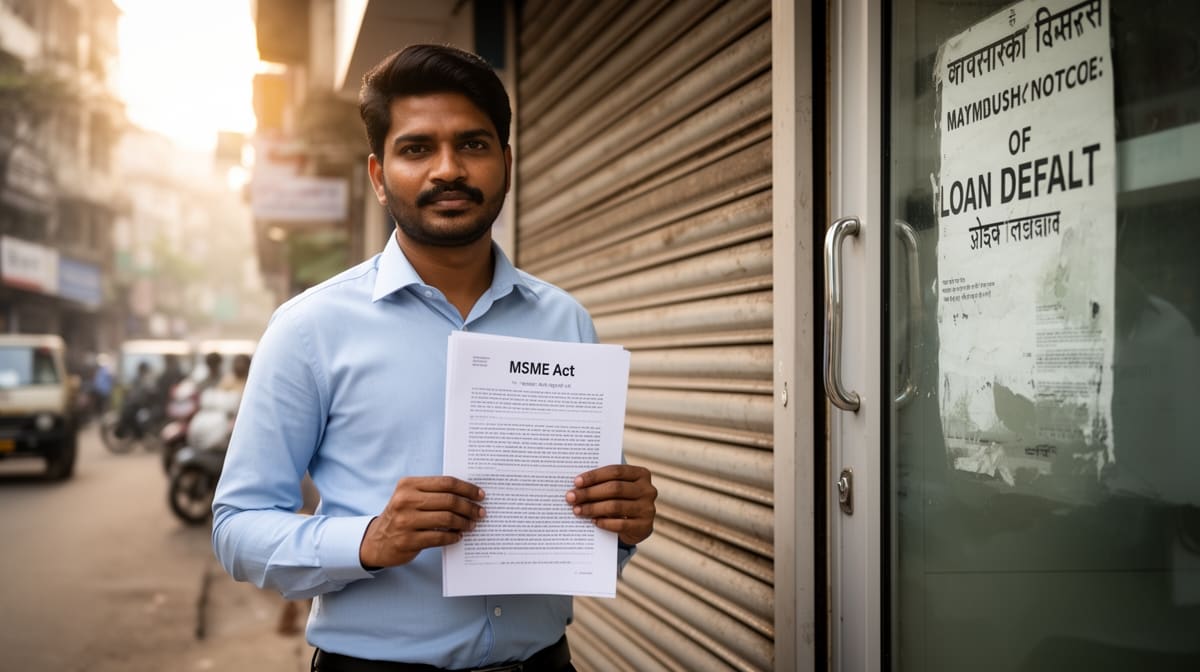
The Himachal Pradesh High Court has affirmed that Reserve Bank of India guidelines on loan restructuring during natural calamities are binding on cooperative banks, setting a critical precedent for borrowers in disaster-affected regions. The judgment reinforces the obligation of financial institutions to implement relief measures as mandated by central banking directives, even when no internal policy exists.
Background & Facts
The Dispute
The petitioner, Atul Sharma, is the proprietor of Whispering Rock Hotel, located in Mohal and Phatti-Palchan, Tehsil Manali, District Kullu, Himachal Pradesh. He purchased land in 2011 and constructed the hotel with a total project cost of ₹2018.83 lakhs, of which ₹1043.83 lakhs was his promoter contribution. On 22.10.2018, he obtained a term loan of ₹975.00 lakhs from Kangra Central Cooperative Bank Ltd. (KCCB), repayable over 10 years.
Key Facts
- The petitioner consistently repaid the loan without default, including during the COVID-19 pandemic.
- On 03.01.2024, the loan was restructured due to pandemic-related economic distress: repayment period extended by 36 months, and the restructured amount increased to ₹1285.00 lakhs.
- In June-July 2025, Himachal Pradesh suffered severe natural disasters, particularly in District Kullu, leading to road blockages, collapse of tourism, and loss of income for the petitioner.
- The petitioner made partial payments in August 2025 and thereafter but could not meet the restructured EMI schedule.
- He submitted multiple representations to the bank on 06.09.2025, 10.10.2025, 23.10.2025, 28.11.2025, and 04.12.2025, seeking deferment of installments and interest waiver.
- The bank initially refused relief, citing absence of internal policy, despite the State Government’s Disaster Management Order dated 01.09.2025 and RBI Master Circular dated 01.07.2013.
- The bank’s letter dated 24.12.2025 rejected the request; a subsequent letter dated 29.12.2025 indicated the matter was referred to Head Office.
Procedural History
- 19.03.2026: Writ Petition filed before the High Court of Himachal Pradesh (CWP No.19946 of 2025).
- 31.12.2025: Interim order passed by the Court directing the bank not to declare the loan account as NPA until next hearing.
- 27.02.2026: Bank emailed petitioner confirming approval of relief measures under SLBC-H.P. letter No.SLBC-HP/2025-26/57 dated 15.10.2025.
- 12.03.2026: Bank confirmed rescheduling of loan account for 12 months (01.08.2025 to 31.07.2026) as per banking guidelines.
Relief Sought
The petitioner sought a direction to the bank to refrain from declaring his loan account as Non-Performing Asset (NPA), to implement RBI-mandated relief measures, and to reschedule the loan in accordance with the RBI Master Circular and State Government directives.
The Legal Issue
The central question was whether RBI Master Circular dated 01.07.2013 on loan restructuring during natural calamities is binding on cooperative banks like KCCB, and whether the bank’s refusal to implement such relief, despite clear statutory and regulatory guidance, constitutes arbitrariness under Article 14 of the Constitution.
Arguments Presented
For the Petitioner
The petitioner’s Senior Advocate relied on Para 19 of the RBI Master Circular dated 01.07.2013, which mandates restructuring of term loans affected by natural calamities by converting overdue principal and interest into term loans. He cited Pro Knits v. Board of Directors of Canara Bank (2024) 10 SCC 292, where the Supreme Court held that RBI guidelines are binding on all banks, including cooperative banks. He also referenced the State Government’s Disaster Management Order dated 01.09.2025 and evidence that other banks had granted similar relief to affected borrowers in Kullu.
For the Respondent
The bank contended that it had no internal policy for granting relief in the 2025 floods and that the RBI circular was merely advisory. It argued that the petitioner’s default in repayment after restructuring justified NPA classification, and that the bank’s internal governance did not permit unilateral waiver or deferment without board approval.
The Court's Analysis
The Court examined the nature of RBI guidelines and their enforceability. It noted that the RBI Master Circular explicitly states that restructuring is necessary because "the repaying capacity of the people affected by natural calamities gets severely impaired due to the damage to the economic pursuits and loss of economic assets." The Court emphasized that the circular is not a suggestion but a directive issued under the Banking Regulation Act, 1949, and binding on all banking entities, including cooperative banks.
"The RBI’s guidelines are not mere policy recommendations; they are regulatory instruments issued under statutory authority and must be complied with by all regulated entities."
The Court rejected the bank’s argument that absence of an internal policy absolves it of obligation. It held that the bank’s reliance on internal procedures cannot override statutory and regulatory mandates. The Court further observed that the bank’s own conduct - issuing the email on 27.02.2026 approving relief under SLBC-H.P. directives - demonstrated implicit recognition of the applicability of the RBI framework.
The Court also noted that the petitioner had not defaulted prior to the 2025 disaster and had made partial payments, indicating good faith. The bank’s initial refusal, despite State Government orders and precedent from other banks, was found to be inconsistent with the spirit of financial inclusion and disaster resilience.
The Verdict
The writ petition was disposed of as the bank’s subsequent actions redressed the petitioner’s grievance. The bank has rescheduled the loan account for 12 months from 01.08.2025 to 31.07.2026 in accordance with applicable banking guidelines. The Court directed that the loan account shall not be classified as NPA during this period. All pending applications are dismissed as infructuous.
What This Means For Similar Cases
RBI Guidelines Are Binding on Cooperative Banks
- Cooperative banks cannot evade RBI directives by citing lack of internal policy.
- Any refusal to restructure loans after natural calamities, despite RBI Master Circular 2013, is legally unsustainable.
- Practitioners must cite Pro Knits v. Canara Bank and the RBI circular as binding authority in similar cases.
NPA Classification Must Consider External Shocks
- A single default post-disaster cannot trigger NPA classification if the borrower has a clean repayment history and has applied for relief.
- Banks must evaluate repayment capacity in context of macroeconomic shocks, not just payment arithmetic.
- Borrowers in disaster zones should immediately submit representations citing RBI Circular 2013 and State disaster orders.
Documentation Is Critical for Relief Claims
- Borrowers must retain copies of all representations, bank responses, and government disaster notifications.
- Evidence of partial payments and prior compliance strengthens the case for equitable treatment.
- Legal action should be preceded by formal written requests referencing specific RBI paragraphs and State orders.