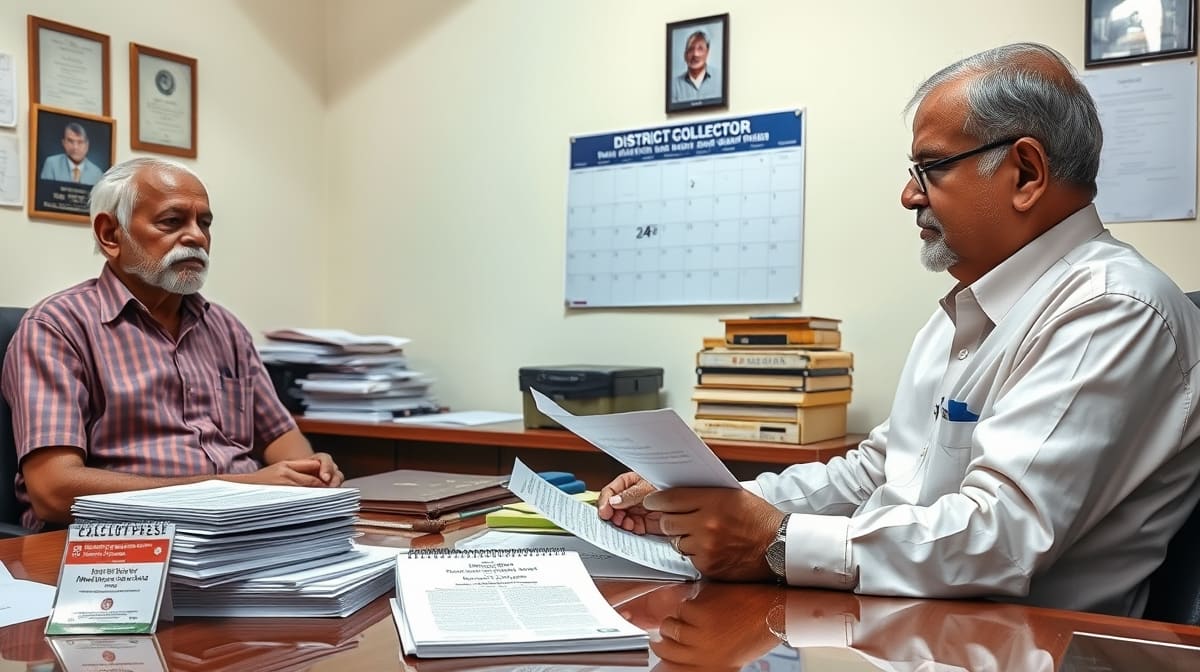
The Madras High Court has affirmed that writ jurisdiction under Article 226 can be invoked to enforce timely adjudication of maintenance claims by senior citizens under the Maintenance and Welfare of Parents and Senior Citizens Act, 2007. This ruling reinforces the state’s affirmative duty to ensure procedural justice for vulnerable elderly petitioners, closing a critical gap in enforcement.
Background & Facts
The Dispute
The petitioner, Mrs. L. Radhamani, a 65-year-old senior citizen and widow of the late H.L. Loganathan, filed an application on 22 December 2025 seeking maintenance under the Maintenance and Welfare of Parents and Senior Citizens Act, 2007. The application was initially submitted to the District Magistrate but was subsequently transferred to the Revenue Divisional Magistrate, the competent authority under the Act, for inquiry and adjudication.
Procedural History
- 22 December 2025: Petitioner filed maintenance application with the District Collector
- January 2026: Application was transferred to the second respondent, the Revenue Divisional Magistrate
- February 2026: Petitioner filed writ petition under Article 226, alleging inordinate delay and non-action
- 24 February 2026: Writ petition heard at admission stage
Relief Sought
The petitioner sought a writ of mandamus directing the second respondent to dispose of her application within a stipulated time frame, as mandated by the Act and the principles of natural justice.
The Legal Issue
The central question was whether a writ of mandamus under Article 226 of the Constitution can be issued to compel a statutory authority to dispose of a maintenance application under the Maintenance and Welfare of Parents and Senior Citizens Act, 2007 within a reasonable time, where no statutory deadline has been explicitly prescribed.
Arguments Presented
For the Petitioner
The petitioner’s counsel, Mr. P.K. Ganesh, argued that the Act imposes a statutory duty on the competent authority to conduct an inquiry and pass orders expeditiously. He relied on the purposive interpretation of the Act, which aims to protect senior citizens from neglect and abandonment. He cited State of Haryana v. Bhagwan Das to emphasize that delay in adjudication defeats the very object of the legislation. The petitioner’s age, vulnerability, and lack of alternative remedies made judicial intervention imperative.
For the Respondent
The learned Government Advocate contended that the application had only recently been transferred to the second respondent and no statutory time limit existed for disposal. He argued that mandamus cannot be issued to direct the manner or timing of administrative action absent a clear legal mandate. He further submitted that the petitioner had not exhausted all remedies and that the matter was still in preliminary stages.
The Court's Analysis
The Court examined the nature of the Maintenance and Welfare of Parents and Senior Citizens Act, 2007, noting its humanitarian purpose and the legislative intent to provide swift redressal to elderly persons. The Court observed that while the Act does not prescribe a fixed timeline, it mandates the competent authority to "hold an inquiry and pass appropriate orders" - a duty that cannot be rendered meaningless by indefinite delay.
"The Act is not a mere procedural statute; it is a social welfare legislation designed to ensure dignity and survival of senior citizens. Delay in adjudication amounts to denial of justice."
The Court distinguished this from routine administrative delays by emphasizing the vulnerability of the petitioner and the non-discretionary nature of the duty imposed. It held that writ jurisdiction is not barred merely because no deadline is specified - where a statutory duty exists and its breach causes irreparable harm, mandamus is an appropriate remedy. The Court also noted that the third respondent, a family member, need not be impleaded at this stage given the innocuous nature of the relief sought.
The Verdict
The petitioner succeeded. The Court held that the second respondent must dispose of the maintenance application within five months of receiving the web copy of the order. The writ petition was disposed of at the admission stage, with no costs awarded, and the Court explicitly declined to express any opinion on the merits of the claim.
What This Means For Similar Cases
Mandamus Is a Viable Remedy for Delayed Maintenance Proceedings
- Practitioners may now file writ petitions under Article 226 when maintenance applications under the Senior Citizens Act remain pending beyond six months without any substantive progress
- Courts will treat such delays as a violation of the right to dignity under Article 21, even absent a fixed statutory deadline
- No need to wait for final order - delay itself constitutes sufficient grounds for intervention
Procedural Compliance Is Non-Negotiable
- Competent authorities must issue notice to all parties within 15 days of receipt of application
- Inquiry must commence within 30 days; failure to do so invites judicial scrutiny
- Web copies of orders are sufficient to trigger timelines - no need to wait for certified copies
Courts Will Not Wait for Exhaustion of Remedies in Welfare Cases
- The doctrine of exhaustion of remedies does not apply where the remedy sought is statutory and the petitioner is a vulnerable senior citizen
- Writ courts may intervene at the admission stage if the delay is palpable and the relief is minimal
- This sets a precedent for similar applications under the Protection of Women from Domestic Violence Act, 2005 and other social welfare statutes