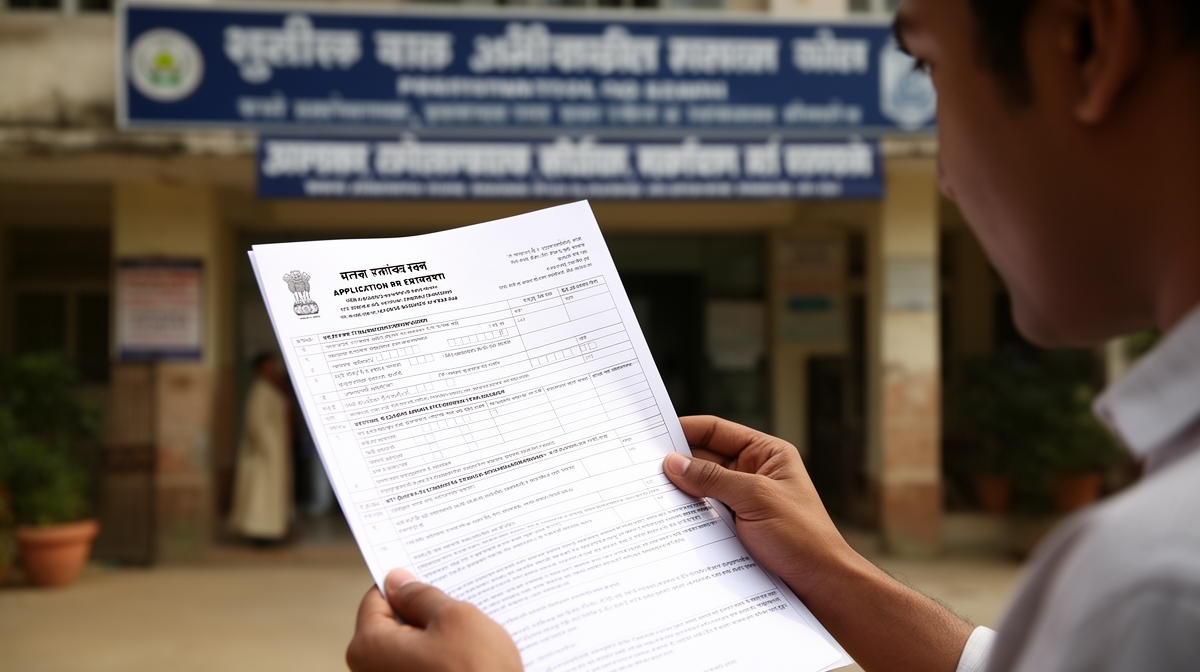

The Central Information Commission has clarified that routine project records maintained by public authorities - such as measurement books, test reports, and sanctioned variations - are not exempt from disclosure under Section 8(1)(j) of the Right to Information Act, 2005. The Commission directed the public authority to provide such information free of cost after redacting only those portions that genuinely contain personal information of third parties.
The Verdict
The Appellant won. The Central Information Commission held that information relating to public infrastructure projects, including measurement books, test check reports, and sanctioned variations, cannot be denied under Section 8(1)(j) of the RTI Act as 'personal information'. The Commission set aside the prior denial and directed the CPIO to provide the information free of cost within three weeks, after severing only those portions exempt under Sections 8(1)(j) and 8(1)(g).
Background & Facts
The Appellant, a practicing advocate, filed an RTI application on 23 May 2024 seeking detailed information regarding ongoing railway infrastructure works in Delhi Division, Northern Railway. The request included the current status of works, amount paid, sanctioned variations, extra items, note sheets, test check reports, measuring books, progress reports, and the contact details of the responsible officer.
The CPIO responded on 25 June 2024, refusing disclosure of points 5 to 9 under Section 8(1)(j), claiming the information constituted 'personal information' of third parties. The First Appellate Authority (FAA) upheld this denial on 18 July 2024, while providing partial information on points 1 to 4. The FAA also imposed a photocopy fee of Rs 2 per page for the variation documents.
The Appellant filed a second appeal with the Central Information Commission. Although the Appellant did not appear at the hearing, the Respondent - represented by senior railway officials - confirmed that the information sought was not confidential and expressed willingness to provide it upon payment of fees. The Commission noted that no proof of service of the second appeal was available on record, but proceeded on the basis of the Respondent’s written submissions and the statutory obligation to ensure transparency.
The Legal Issue
Can routine project records such as measuring books, test reports, and sanctioned variations be denied under Section 8(1)(j) of the RTI Act on the ground that they constitute 'personal information' of third parties?
Arguments Presented
For the Appellant
The Appellant contended that the information sought was not personal but operational and public in nature, relating to the use of public funds and execution of public works. He argued that Section 8(1)(j) applies only to information that has no relationship to any public activity or interest, and that project records maintained by public authorities are inherently subject to public scrutiny under the RTI Act. He relied on the principle that exemptions under the RTI Act must be narrowly construed.
For the Respondent
The Respondent initially relied on Section 8(1)(j) to deny disclosure, asserting that the documents contained personal details of engineers, contractors, and other officials involved in the project. At the stage of the second appeal, the Respondent conceded that the information was not exempt and offered to provide it upon payment of photocopy charges. However, they maintained that the fees were justified under Rule 5 of the RTI Rules, 2005, for reproduction costs.
The Court's Analysis
The Commission undertook a rigorous analysis of Section 8(1)(j), which exempts information that relates to personal information the disclosure of which has no relationship to any public activity or interest, and which would cause unwarranted invasion of privacy. The Commission held that the documents sought - measurement books, test reports, variation orders, and note sheets - are official records created in the course of public duty, maintained for accountability, and funded by public money. These are not personal records of individuals but institutional records of public works.
"The measuring books, test check reports and sanctioned variations are not personal information of any individual but are official records created and maintained by the public authority in the discharge of its statutory functions. Their disclosure serves the public interest in ensuring transparency in public expenditure and project execution."
The Commission further observed that the FAA and CPIO had misapplied Section 8(1)(j) by conflating the presence of names or designations in official documents with personal information. The presence of an officer’s name in a note sheet or measurement record does not transform the document into personal data. The Commission emphasized that Section 10 of the RTI Act mandates severability: if parts of a record are exempt, only those parts must be redacted, and the rest must be disclosed.
The Commission also rejected the Respondent’s attempt to impose photocopy charges at this stage. It held that once an exemption is found to be wrongly invoked, the public authority cannot retroactively impose fees for information that should have been provided without charge. The obligation to provide information free of cost arises when the exemption claim is invalid.
What This Means For Similar Cases
This decision establishes a clear precedent that routine project documentation in public infrastructure - measurement books, test reports, variation orders, and progress records - are not exempt under Section 8(1)(j). Practitioners can now confidently challenge denials of such information on the grounds of 'personal data'. The ruling reinforces the principle that public authorities must proactively sever exempt portions under Section 10 rather than deny entire records.
For RTI applicants, this means that requests for project records should be framed to emphasize public accountability and expenditure. For public authorities, it underscores the need to carefully assess whether information is truly personal or merely contains incidental personal details. The directive to provide information free of cost after invalid exemption claims also curbs the practice of using fees as a de facto barrier to access. This judgment strengthens the transparency mandate of the RTI Act and aligns with the Supreme Court’s consistent view that exemptions are exceptions, not the rule.