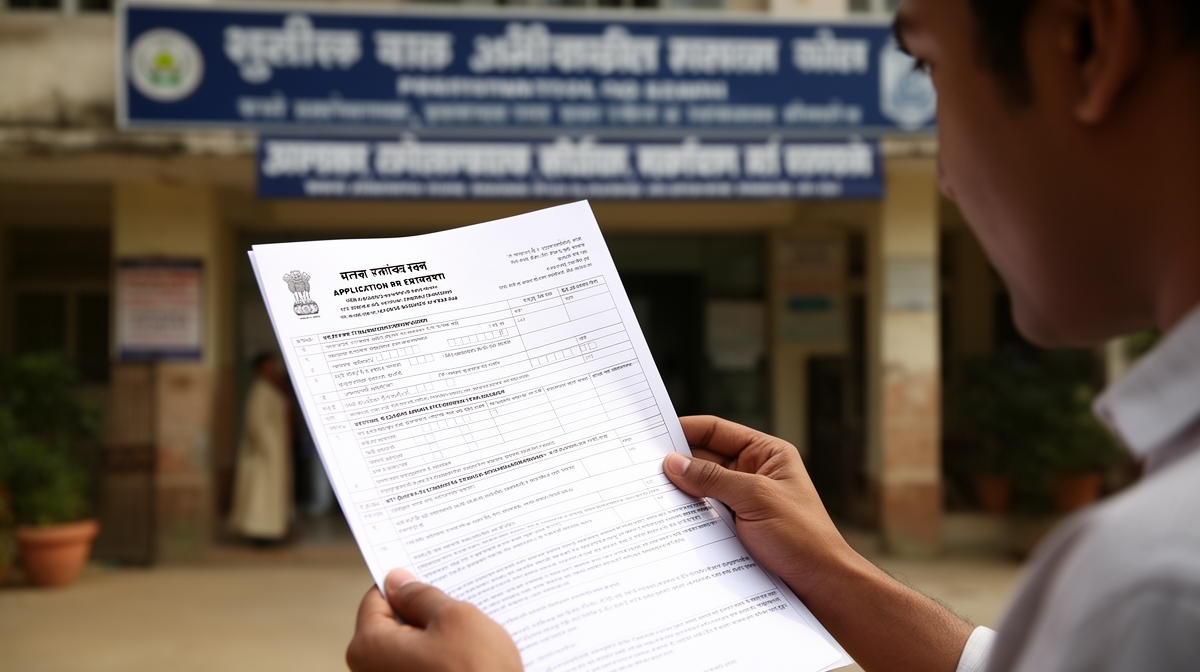

The Central Information Commission has clarified that legal opinions prepared or obtained by public authorities in the context of pending litigation are protected under the fiduciary exemption in Section 8(1)(e) of the RTI Act. This ruling reinforces the boundary between transparency and the integrity of judicial proceedings, setting a critical precedent for handling information requests involving ongoing legal disputes.
Background & Facts
The Dispute
The appellant, Dr. Tejinder Kaur, a retired Joint Director of the National Institute of Public Cooperation & Child Development (NIPCCD), filed an RTI application seeking two categories of information: (1) agenda papers, minutes, and notings from a 2024 Review Screening Committee meeting concerning her financial upgradation under the ACP Scheme; and (2) e-files related to court proceedings involving her, including legal opinions sought from advocates on pension, gratuity, leave encashment, and GPF matters.
Procedural History
The case progressed through three tiers of RTI redressal:
- 04.04.2024: RTI application filed by the appellant
- 03.05.2024: CPIO denied access citing Section 8(1)(b) and Section 8(1)(e) of the RTI Act
- 05.06.2024: First Appellate Authority upheld the CPIO’s denial
- 21.08.2024: Second Appeal filed before the Central Information Commission
Relief Sought
The appellant sought full disclosure of all documents related to her service matters and pending litigation, arguing that the CPIO’s refusal was arbitrary and violated the spirit of the RTI Act.
The Legal Issue
The central question was whether legal opinions exchanged between a public authority and its legal counsel in the context of pending litigation qualify as information held in a fiduciary capacity under Section 8(1)(e) of the RTI Act, and whether such information may be withheld to prevent prejudice to ongoing judicial proceedings.
Arguments Presented
For the Appellant
The appellant contended that the documents sought were administrative records pertaining to her service benefits and were not confidential. She argued that the CPIO’s reliance on Section 8(1)(e) was misplaced, as legal opinions were not being shared in a fiduciary relationship but were part of official record-keeping. She further asserted that the CPIO’s refusal was a tactic to conceal procedural irregularities in her case.
For the Respondent
The CPIO argued that the e-files sought contained internal legal advice, strategic assessments, and communications with external counsel regarding litigation pending before courts. These communications, they submitted, were protected under Section 8(1)(e) as they were held in a fiduciary capacity. Disclosure, they warned, would compromise the legal strategy in active proceedings and violate the confidentiality essential to effective legal representation.
The Court's Analysis
The Commission examined the nature of the information sought and the statutory framework of the RTI Act. It noted that while transparency is a cornerstone of the Act, it is not absolute. The Commission emphasized that Section 8(1)(e) explicitly exempts information held in a fiduciary relationship, including legal advice.
"Legal opinions of advocates are held in a fiduciary capacity, and disclosure of such information would be detrimental to the court case presently pending against the Appellant."
The Commission relied on the Supreme Court’s observation in ICAI v. Shaunak H. Satya that the RTI Act must balance transparency with the efficient functioning of public authorities and the preservation of sensitive information. It further cited the Delhi High Court’s ruling in Shail Sahni v. Sanjeev Kumar that abuse of the RTI mechanism undermines public trust in the statute.
The Commission distinguished between administrative records (which must be disclosed) and privileged legal communications (which are protected). It found that the files sought under Point No. 2 contained internal legal assessments, not mere factual records, and thus fell squarely within the fiduciary exemption. The CPIO’s reliance on Section 8(1)(e) was therefore legally sound.
The Verdict
The Commission dismissed the appeal and upheld the CPIO’s and FAA’s decisions. It held that legal opinions exchanged in the context of pending litigation are exempt from disclosure under Section 8(1)(e) of the RTI Act, as they are held in a fiduciary capacity. The appellant’s request for disclosure was denied.
What This Means For Similar Cases
Legal Advice Is Fiduciary, Not Administrative
- Practitioners must now treat internal legal communications - whether with in-house counsel or external advocates - as exempt under Section 8(1)(e) if they relate to pending litigation
- Public authorities should clearly segregate legal advice from factual records to avoid inadvertent disclosure
- RTI applicants cannot compel disclosure of legal strategy documents merely by framing them as "administrative records"
Misuse of RTI Triggers Judicial Scrutiny
- Repeated RTI applications (150 in this case) coupled with numerous representations and court cases may be viewed as abuse of process
- Authorities may now cite habitual litigant patterns to justify stricter scrutiny of RTI requests
- The Commission has signaled that the RTI Act is not a substitute for litigation or grievance redressal
Burden of Justifying Exemption Shifts to the Authority
- While the authority must demonstrate the existence of a fiduciary relationship, it need not disclose the content of the exempted information
- A generic assertion that legal advice is involved, supported by context (e.g., pending litigation), suffices if the nature of the documents is reasonably inferable
- Authorities should maintain a log of exempted communications to defend their position in appeals