The Uttarakhand High Court has affirmed that long-term outsourced workers who have served continuously for over a decade acquire a legitimate expectation of regularisation, irrespective of their formal termination. This judgment reinforces the principle that substantive service, not merely contractual form, determines entitlement under statutory regularisation frameworks.
Background & Facts
The Dispute
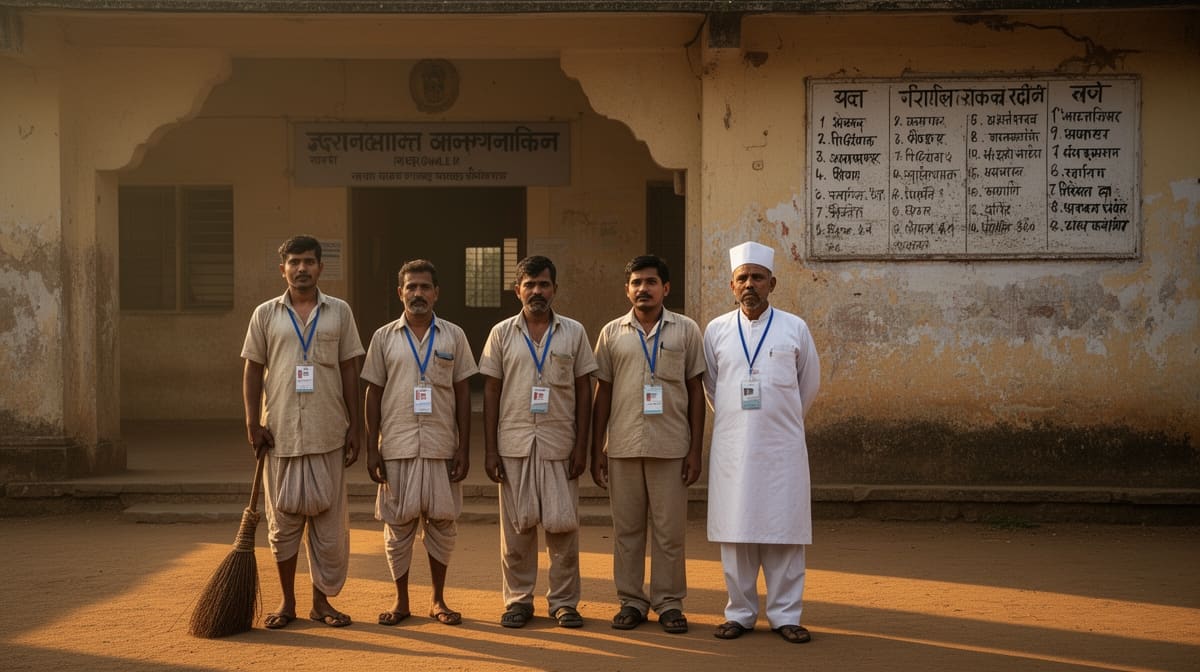
The petitioners were engaged as Data Entry Operators through private outsourcing agencies - M/s BIITS Computers Limited and later M/s TDS Management Consultant Private Limited - to perform essential government functions across various Tehsils in Tehri Garhwal. Despite their contractual status, they performed duties integral to public administration for more than 14 years, from before 04.12.2008 until their abrupt disengagement on 31.03.2023.
Procedural History
- Pre-2021: Petitioners were paid by outsourcing agencies, not directly by the State.
- September 2021: State Government began paying petitioners directly, indicating de facto absorption into public service.
- March 2023: Petitioners were unilaterally terminated without notice or opportunity to be heard.
- 2023: Two writ petitions filed under Articles 226 and 227 of the Constitution seeking regularisation and reinstatement.
Relief Sought
The petitioners sought a direction to the State to consider their claims for regularisation under the Uttarakhand Regularisation Rules, 2013, as amended in 2025, arguing that their continuous service and direct payment by the State conferred upon them a vested right.
The Legal Issue
The central question was whether a right to regularisation under the Regularisation Rules, 2013 can be extinguished merely because the worker was formally terminated before the application for regularisation was made, or whether long-term service and direct State payment create an enforceable entitlement.
Arguments Presented
For the Petitioner
Counsel argued that the petitioners had fulfilled the essential conditions of the Regularisation Rules, 2013: continuous service exceeding 10 years and direct payment by the State since September 2021. Reliance was placed on State of U.P. v. Ramesh Chandra and K. Srinivas v. State of Andhra Pradesh, which held that substantive service trumps formal employment status. The termination was challenged as arbitrary and violative of Article 14 and Article 21.
For the Respondent
The State did not dispute the duration of service or the fact of direct payment since 2021. However, it contended that since the petitioners were never formally absorbed into the State payroll, they remained contractual employees and thus ineligible for regularisation. The State relied on the principle that regularisation is a privilege, not a right, and that the Rules require formal appointment before eligibility.
The Court's Analysis
The Court rejected the State’s narrow interpretation of the Rules. It held that the purpose of the Regularisation Rules, 2013 is to rectify historical injustices faced by long-serving outsourced workers who perform core governmental functions. The Court observed that the State’s direct payment of salaries since September 2021 was not a mere administrative convenience but a recognition of the petitioners’ functional integration into the public system.
"The fact that the State has been paying the petitioners directly for over a year, and they have served for more than a decade, cannot be ignored merely because their initial engagement was through an agency. The Rules were framed to prevent exploitation of such workers, not to deny them justice on technical grounds."
The Court further noted that the termination order dated 29.03.2023 was passed without any inquiry or opportunity of hearing, rendering it procedurally flawed. The Court emphasized that natural justice demands that eligibility be assessed on the basis of service rendered, not on the timing of termination.
The Verdict
The petitioners succeeded. The Court held that eligibility for regularisation is determined by the duration and nature of service, not by the formal status at the time of application. The State was directed to consider their claims upon representation, with the Regularisation Committee to evaluate eligibility under the Rules.
What This Means For Similar Cases
Service Duration Overrides Contractual Form
- Practitioners must now argue that continuous service exceeding 10 years, coupled with direct State payment, creates a legitimate expectation under regularisation schemes.
- Termination prior to application does not extinguish the right if the service criteria were met before termination.
Direct Payment by State Is Decisive Evidence
- Where the State assumes financial responsibility for outsourced workers, courts will treat this as de facto absorption, even without formal appointment letters.
- This shifts the burden to the State to prove why such workers should be excluded from regularisation.
Procedural Fairness Is Non-Negotiable
- Any termination of long-serving workers must be preceded by a show-cause notice and hearing.
- Orders passed without compliance with natural justice are liable to be set aside, regardless of the worker’s contractual status.