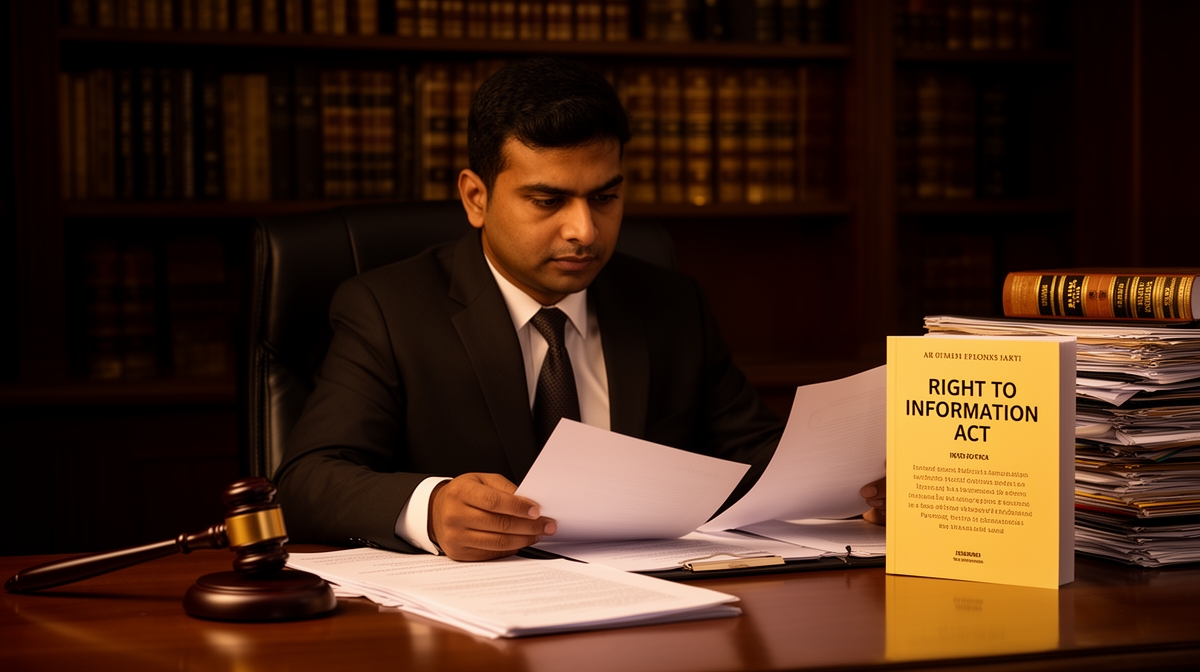
The High Court of Telangana has affirmed that the state cannot remain silent on applications for peaceful public assemblies. Inaction by police authorities constitutes a violation of fundamental rights under Article 19(1)(b), and any restriction must be grounded in concrete, proximate threats to public order - not speculative concerns or administrative convenience.
The Verdict
The petitioner won. The High Court of Telangana held that the Commissioner of Police’s inaction on the petitioner’s application for a peaceful public meeting violated Article 19(1)(b) of the Constitution. The Court directed the authorities to grant permission for the meeting, subject to specific, narrowly tailored conditions to ensure public order. The ruling establishes that administrative silence on assembly applications is unlawful and that restrictions must be justified by demonstrable, imminent risks - not generalized fears.
Background & Facts
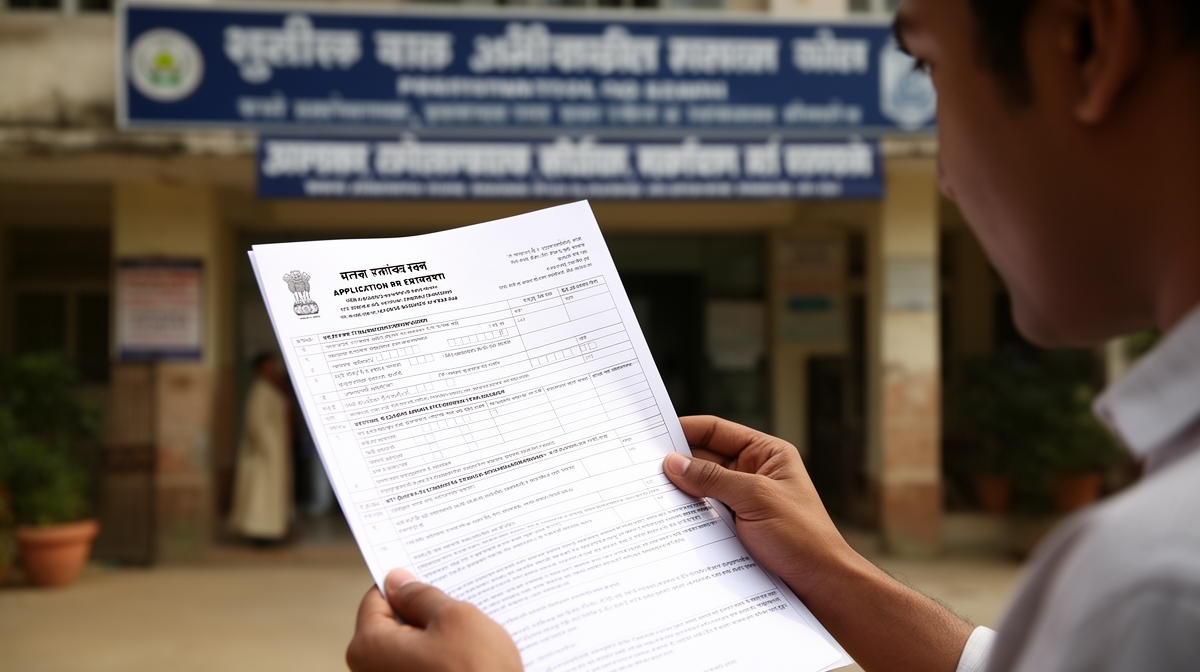
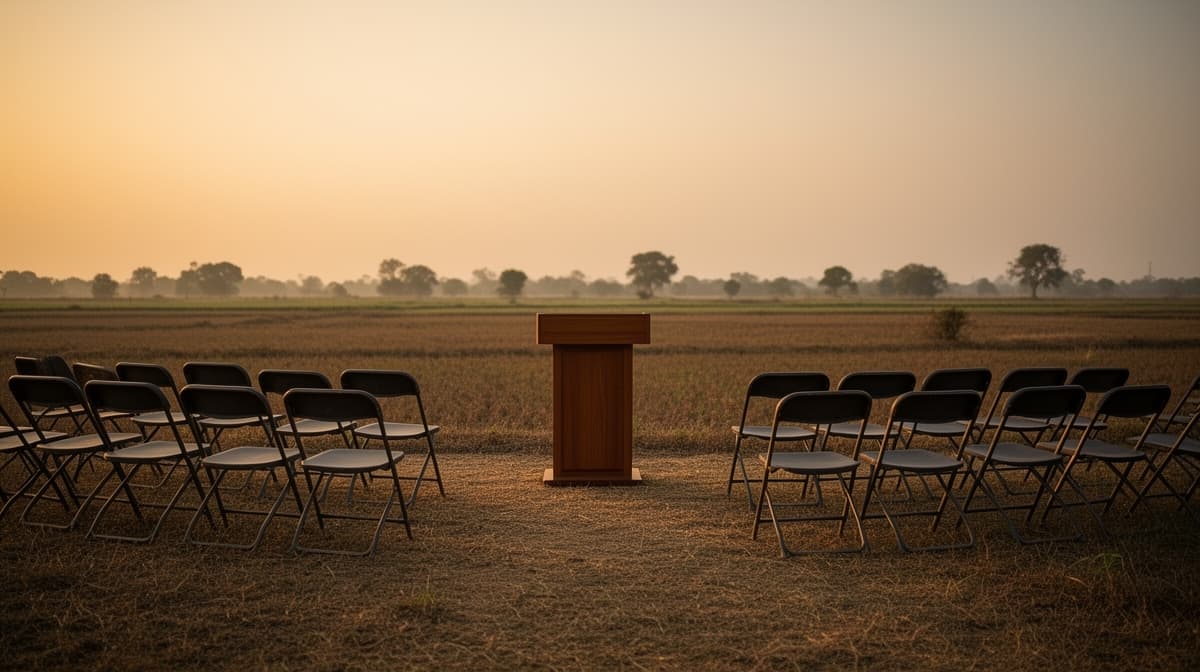
The petitioner, as Convener of Ganesh Sena (Youth Wing of Bhagyanagar Ganesh Utsav Samithi), applied on January 9, 2026, seeking permission to hold a peaceful public meeting titled "Dharma Raksha Sabha" on January 24, 2026, at Survey Nos. 9 and 10, Balapur Village. The meeting aimed to raise awareness about illegal immigration from Bangladesh and Myanmar, particularly concerning Rohingya nationals, and their alleged acquisition of government identity documents, which the petitioner claimed was altering local demographics and threatening national security.
The application was received by the Commissioner of Police on January 12, 2026. Despite the meeting date being only 12 days away, no order was passed. No permission was granted; no rejection was issued. The petitioner filed a writ petition under Article 226 of the Constitution, alleging arbitrary inaction and violation of fundamental rights.
The respondents, including the Home Department and Police, opposed the petition by submitting internal instructions from the Balapur Police Station dated January 21, 2026. These cited eight reasons for denying permission: the venue’s mixed-community character, history of communal incidents, proximity to critical infrastructure, upcoming Republic Day celebrations, recent communal disturbances, intelligence reports of potential sabotage, upcoming municipal elections, and the presence of approximately 6,993 Rohingya individuals in the area.
The petitioner sought not only a declaration of illegality but also a mandamus directing immediate permission for the meeting.
The Legal Issue
Can the state’s failure to respond to an application for a peaceful public assembly be treated as a lawful restriction under Article 19(2)? And does a generalized concern about potential public disorder, without evidence of imminent threat, justify denying the right to assemble?
Arguments Presented
For the Petitioner
The petitioner’s counsel relied on the landmark case of Ram Lal Meena v. State of Rajasthan and IN RE: Ramlila Maidan Incident to argue that the right to peaceful assembly is a core component of Article 19(1)(b). He emphasized that the proposed meeting was non-political, non-provocative, and confined to raising awareness on national security. No hate speech or inflammatory material was planned. The absence of any order on the application amounted to a de facto denial without reasoning, violating principles of natural justice and procedural fairness. The state’s duty is to facilitate lawful assembly, not obstruct it on speculative grounds.
For the Respondent
The Government Pleader argued that the proposed meeting’s theme - illegal immigration - was inherently polarizing in a sensitive locality with a history of communal tension. The proximity to vital installations like DRDA, RCI, and the airport approach road, coupled with the upcoming Republic Day and municipal elections, created a real risk of public disorder. Intelligence inputs suggested unsocial elements might exploit the gathering to incite violence. The state, they contended, had a constitutional duty to prevent disorder before it occurred, and administrative inaction was merely a procedural delay, not a rights violation.
The Court's Analysis
The Court rejected the state’s argument that inaction could substitute for a reasoned order. It held that Article 19(1)(b) guarantees the right to assemble peacefully without arms, and any restriction must be imposed through a positive, reasoned decision - not silence. The Court observed that the respondents had not demonstrated a direct, proximate, and imminent threat to public order, as required under Article 19(2). Mere apprehension, historical sensitivity, or administrative inconvenience cannot override fundamental rights.
"The State cannot evade its constitutional obligation to protect the right to assemble by remaining silent. A refusal must be communicated with reasons; silence is not a restriction - it is a dereliction."
The Court distinguished between legitimate preventive policing and arbitrary suppression. While acknowledging the state’s duty to maintain public order, it emphasized that such duty must be exercised proportionately. The Court noted that the petitioner had offered to conduct the meeting within strictly defined hours, without politicians, hate speech, or loudspeakers, and with adequate crowd control.
The Court further rejected the reliance on demographic data of Rohingya residents as a basis for denial. The presence of a community, however controversial, does not justify suppressing lawful expression. The state’s obligation is to protect lawful assembly, not to preemptively silence discourse based on the identity of those involved.
The Court also dismissed the argument that Republic Day and municipal elections rendered the meeting infeasible. These are recurring events; the state must plan resources accordingly. The burden of managing public order lies with the state, not with the citizen to forgo their rights.
What This Means For Similar Cases
This judgment significantly clarifies the procedural and substantive standards for regulating peaceful assemblies. Practitioners can now cite this case to challenge administrative silence on assembly permits as a per se violation of Article 19(1)(b). The ruling mandates that any denial must be explicit, reasoned, and grounded in concrete evidence of imminent threat - not speculative risks, past incidents, or logistical inconvenience.
Future applications for public meetings, especially on sensitive socio-political topics, will benefit from this precedent. Authorities must now issue timely orders, even if granting permission with conditions. The judgment also reinforces that demographic composition of an area cannot be used to justify suppression of speech or assembly.
However, the scope is limited to peaceful, non-political gatherings. If a meeting involves hate speech, incitement, or violence, the state retains full authority to intervene. This case does not immunize unlawful assemblies; it only protects lawful ones from arbitrary suppression.
The conditions imposed by the Court - no politicians, no provocative material, noise control, and police deployment - set a replicable template for balancing rights and order in similar contexts.