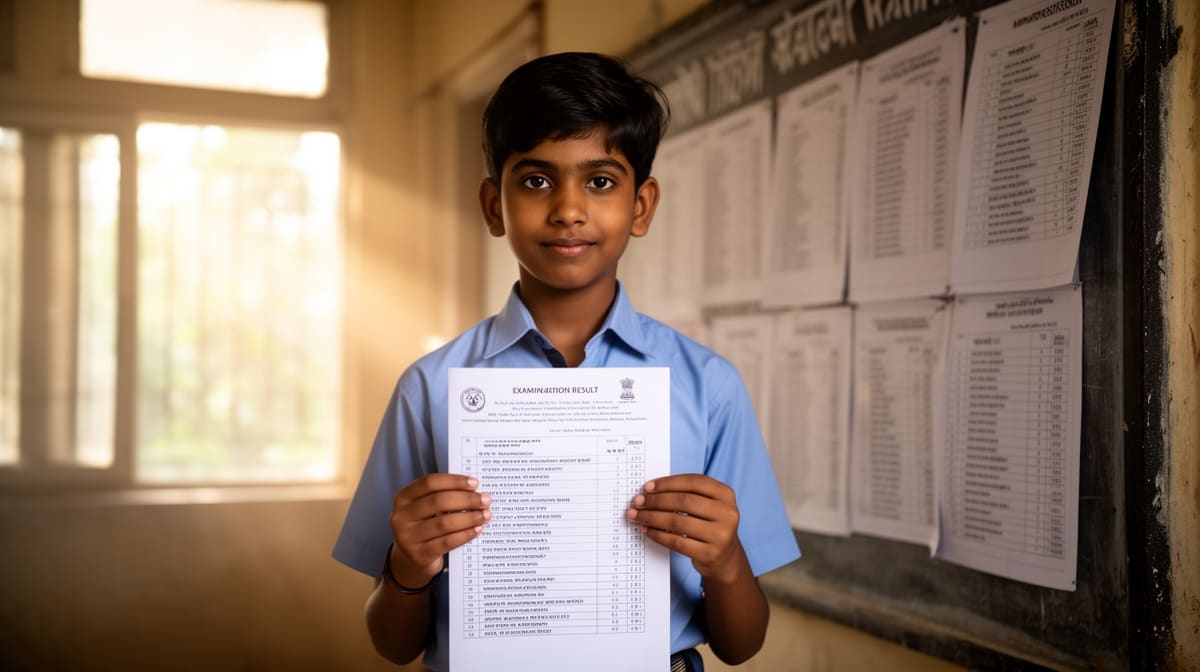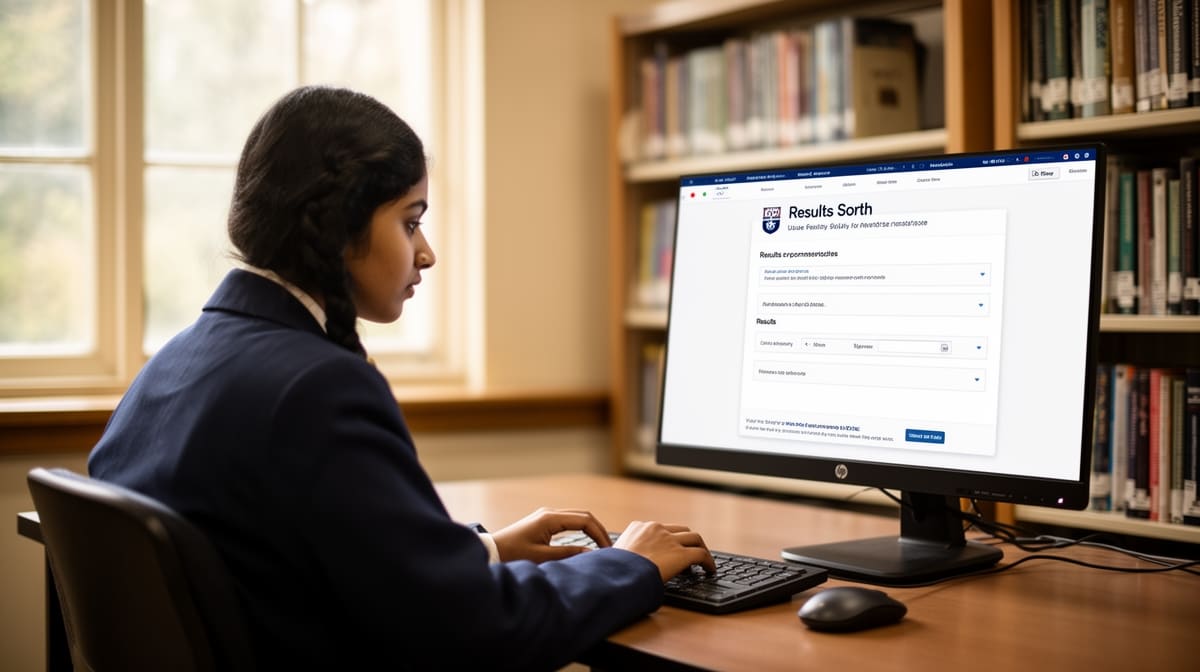
The Bombay High Court has reaffirmed that academic institutions must enforce uniform procedural timelines for revaluation, even when individual students suffer hardship due to non-notification. The judgment underscores that constitutional fairness does not permit exceptions to established rules, lest equal treatment be undermined.
Background & Facts
The Dispute
The petitioner, a final-year LL.M. student at Agnel’s School of Law, Vashi, affiliated with Mumbai University, appeared for Semester I backlog examinations in 2025. He cleared one subject, failed two, and left one unattempted. The university declared results on 18 November 2025 but did not publish a formal notification on its official website. The petitioner, unaware of the declaration, missed the revaluation window.
Procedural History
- 5 May 2025: Mumbai University issued Circular No. 61, mandating online revaluation applications within 12 days of result declaration.
- 18 November 2025: Semester I backlog results were published on www.mumresults.in.
- 1 December 2025 - 13 December 2025: Revaluation link active; 246 students applied, including one from the petitioner’s college.
- 12 December 2025: Petitioner learned of results from his college; revaluation period had closed.
- 5 January 2026: Petitioner submitted written representation seeking reopening of revaluation link.
- 19 January 2026: Writ petition filed under Article 226.
Relief Sought
The petitioner sought: (a) publication of the result notification on the university website; (b) reopening of the revaluation link; and (c) conditional admission to Second Year LL.M. pending revaluation outcomes.
The Legal Issue
The central question was whether Article 14 of the Constitution mandates that universities extend revaluation deadlines for individual students who failed to apply within the stipulated period due to non-notification, despite clear, uniformly published rules.
Arguments Presented
For the Petitioner
The petitioner argued that the university’s failure to publish a formal result notification on its homepage constituted administrative negligence, violating his right to equal opportunity under Articles 14 and 16. He contended that the absence of direct communication deprived him of a fair chance to apply for revaluation, especially since he had cleared Semester II and scored 39 and 43 in the failed subjects - indicating a plausible case for revaluation. He relied on principles of natural justice and audi alteram partem, asserting that the university’s silence amounted to constructive denial of opportunity.
For the Respondent
The university countered that Circular No. 61 of 2025 was duly published and clearly stipulated the revaluation timeline. The results were accessible on the official portal, and 246 students - including one from the petitioner’s own institution - applied within the window. The respondent emphasized that academic regulations must be applied uniformly; granting exceptions would violate principles of equality and disrupt academic integrity. The circular’s terms were binding on all students, and the petitioner’s failure to comply could not be remedied through judicial intervention.
The Court's Analysis
The Court examined whether the university’s conduct amounted to arbitrariness or violation of constitutional rights. It held that the Circular No. 61 of 2025 constituted constructive notice to all students, and its terms were clear, accessible, and uniformly applied. The fact that 246 students, including one from the petitioner’s college, successfully applied within the deadline demonstrated that the system was functional and known.
"The circular, as published, serves as a constructive notice to all concerned. The Petitioner has not challenged the said circular. It is on such basis that 246 students have applied for revaluation..."
The Court distinguished between procedural fairness and personal hardship. While acknowledging the petitioner’s predicament, it held that natural justice does not extend to mere expectations - citing Maharashtra State Board of Secondary and Higher Secondary Education v. Paritosh Sheth and Union of India v. Mohanlal Kapoor. The Court emphasized that universities are entitled to set and enforce objective timelines without being compelled to accommodate individual lapses.
The Court further rejected the petitioner’s argument that the circular’s reference to hard-copy submissions for engineering/architecture courses implied a different rule for LL.M. students. It found this interpretation legally untenable and inconsistent with the circular’s plain language.
Granting relief would have created an exception for the petitioner alone, violating Article 14’s mandate of equal treatment. The Court noted that the Second Year LL.M. program had already commenced, and reopening revaluation would disrupt academic calendars and prejudice other students who complied with the rules.
The Verdict
The petition was dismissed. The Court held that uniform application of academic deadlines is constitutionally valid, and non-notification alone does not invalidate clear, published procedural rules. The petitioner’s failure to apply within the stipulated period could not be remedied by judicial intervention.
What This Means For Similar Cases
Procedural Compliance Is Non-Negotiable
- Practitioners must advise students that failure to comply with published academic deadlines - even due to lack of direct communication - does not automatically entitle them to judicial relief.
- Universities are not obligated to issue additional notifications beyond official portals if rules are clearly published.
Equal Treatment Trumps Individual Hardship
- Courts will not grant exceptions to procedural timelines for individual students, even where academic performance suggests merit.
- Any deviation from uniform rules risks violating Article 14 by creating unequal treatment among similarly situated candidates.
Judicial Restraint in Academic Governance
-
Courts will not interfere in academic administration unless there is clear arbitrariness, discrimination, or procedural illegality.
-
The burden lies on the student to monitor official channels; institutional silence does not equate to denial of opportunity if rules are accessible.
-
Always verify official university portals for result and revaluation timelines.
-
Document attempts to access information (e.g., screenshots, emails) to establish due diligence in future litigation.
-
Challenge only systemic failures - not individual lapses - when seeking judicial intervention in academic matters.