The Bombay High Court has affirmed that under the Real Estate (Regulation and Development) Act, 2016, an allottee’s right to claim interest for delayed possession is absolute and cannot be forfeited by mere silence or conduct indicating acceptance of revised timelines. This judgment reinforces the statutory protection afforded to homebuyers and clarifies the primacy of RERA over general contract law principles.
Background & Facts
The Dispute
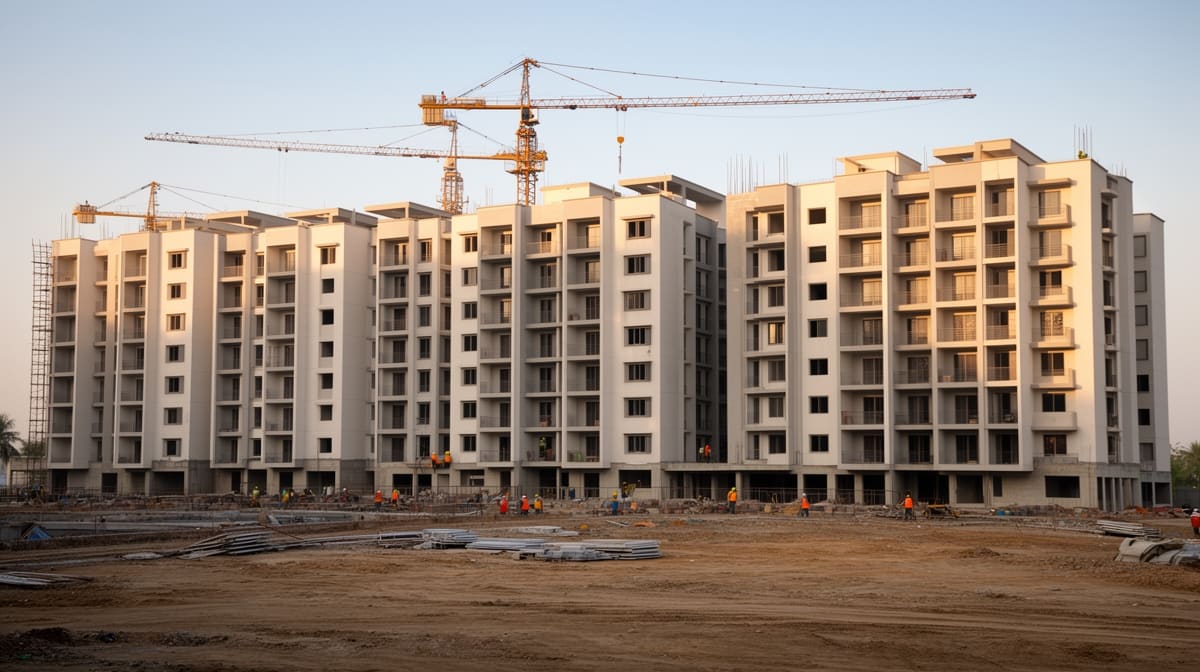
The dispute arose between CCI Projects Private Limited, the promoter of the residential project "Wintergreen" in Borivali East, Mumbai, and a group of seven allottees who had booked apartments in the project. The allottees filed a complaint under Section 31 of the Real Estate (Regulation and Development) Act, 2016 (RERA Act) after the promoter failed to hand over possession by the agreed date. The promoter sought to avoid liability for interest on delayed possession by arguing that the allottees had implicitly accepted revised timelines through their conduct, including continued payments under altered schedules.
Key Facts
- The allotment letter dated 01.10.2011 specified a possession date of 30.06.2015, with a six-month grace period.
- The Agreement for Sale dated 26.03.2013, under Clause 17, fixed the possession date as February 2016.
- The total flat consideration was Rs. 1,82,18,640, of which Rs. 1,73,07,708 was paid by the allottees.
- Additional payments of Rs. 9,44,160 towards stamp duty and registration were made on 26.03.2013.
- Total amount paid by allottees: Rs. 1,91,59,215.
- Project was registered under RERA with an initial completion date of 31.12.2018, later revised to 31.12.2019.
- The promoter issued multiple communications:
- 15.04.2015: Notice of delay with revised possession target of March 2018.
- 14.03.2017: Revised possession date of December 2018.
- 09.06.2017: Revised payment schedule linked to construction milestones.
- 19.08.2017: Reiteration of RERA-compliant completion date of December 2019, with a note that early completion would trigger earlier payments.
- Allottees made a payment of 5% on 30.03.2018 under the revised schedule.
- No formal written consent or acknowledgment of revised possession date was obtained from allottees.
- Occupation Certificate was obtained on 07.04.2021.
- Possession was offered on 13.04.2021 and accepted by allottees on 18.06.2021.
Procedural History
- 23.05.2018: Complaint filed by allottees before Maharashtra Real Estate Regulatory Authority (MahaRERA).
- 17.09.2018: MahaRERA dismissed the complaint, directing promoter to hand over possession by 31.12.2019 and allowing allottees to claim interest under Section 18 at a later stage.
- 10.03.2021: Maharashtra Real Estate Appellate Tribunal quashed MahaRERA’s order and directed payment of interest from 01.03.2016 till actual possession, along with Rs. 25,000 as costs.
- 28.03.2023: Second Appeal filed before Bombay High Court challenging the Appellate Tribunal’s order.
- 09.04.2026: Judgment reserved.
- 18.06.2026: Judgment pronounced.
The Parties' Positions
For the Promoter (Appellant)
- Argued that the allottees accepted revised timelines through conduct: continued payments, silence to notices, and failure to object.
- Relied on Section 55 of the Indian Contract Act, 1872, contending that acceptance of delayed performance without notice forfeits the right to claim compensation.
- Asserted that RERA does not override the Contract Act and that Section 55 governs the interpretation of agreement terms.
- Invoked a RERA circular dated 18.05.2020 to exclude six months (Feb - June 2020) as a force majeure moratorium.
For the Allottees (Respondents)
- Contended that the agreed possession date of February 2016 was binding under the Agreement for Sale.
- Argued that unilateral extensions by the promoter are not binding and do not constitute waiver.
- Emphasized that RERA is a special, protective statute with overriding effect under Section 89.
- Cited Newtech Promoters and Developers Pvt. Ltd. v. State of U.P. to establish that the right to interest under Section 18 is unqualified and unconditional.
- Rejected the applicability of the 2020 circular, noting that the delay predated the pandemic.
Relief Sought
The Appellant sought to set aside the Appellate Tribunal’s order dated 10.03.2021 and avoid liability for interest from 01.03.2016 to 18.06.2021. The Respondents sought confirmation of the Appellate Tribunal’s order, including:
- Interest at State Bank of India’s highest Marginal Cost of Lending Rate plus 2% from 01.03.2016 to 18.06.2021.
- Payment of Rs. 25,000 as costs.
The Legal Issue
The central questions were: (1) Whether acceptance of delayed performance by conduct disentitles an allottee from claiming interest under Section 18 of RERA Act in the absence of explicit notice? (2) Does Section 18 of RERA override Section 55 of the Indian Contract Act, 1872? (3) Can force majeure events occurring after the agreed possession date excuse liability for interest?
Arguments Presented
For the Appellant
The promoter relied on Section 55 of the Indian Contract Act, arguing that when a promisee accepts delayed performance without notice of intent to claim compensation, the right to compensation is forfeited. It cited communications from 2015 to 2017 as evidence of implied consent to revised timelines. The promoter contended that RERA’s Section 18 does not create a standalone right independent of contract law and that Section 88 of RERA preserves the applicability of the Contract Act. It further argued that the RERA circular dated 18.05.2020, which treated the six-month period during the pandemic as a moratorium, should exclude interest from February to June 2020.
For the Respondent
The allottees countered that RERA is a special statute enacted to protect consumer interests and that Section 18 confers an unqualified, statutory right to interest for delayed possession. They emphasized that the promoter’s communications were informational, not contractual amendments, and that silence cannot be construed as waiver. They relied on Newtech Promoters and Developers Pvt. Ltd. v. State of U.P. to establish that the right to interest under Section 18 is absolute and not contingent on notice or conduct. They also argued that the 2020 circular was inapplicable as the delay predated the pandemic and that Section 89 of RERA gives it overriding effect over the Contract Act.
The Court's Analysis
The Court undertook a detailed analysis of the statutory framework of RERA and its interaction with the Indian Contract Act. It began by affirming that Section 18 of RERA creates a statutory right that is both unqualified and unconditional. The Court quoted from Newtech Promoters and Developers Pvt. Ltd. v. State of U.P.:
"The unqualified right of the allottee to seek refund referred under Section 18(1)(a) and Section 19(4) of the Act is not dependent on any contingencies or stipulations thereof."
The Court held that this interpretation binds all subordinate forums and that the right to interest under Section 18(1)(b) is not subject to the conditions imposed by Section 55 of the Contract Act, which requires notice of intent to claim compensation upon accepting delayed performance.
The Court distinguished between contractual interpretation under the Contract Act and statutory entitlement under RERA. While Section 55 operates in the context of private agreements and requires affirmative notice to preserve compensation rights, Section 18 of RERA is a legislative safeguard designed to protect vulnerable consumers in real estate transactions. The Court emphasized that RERA’s legislative intent is to ensure transparency and accountability, and that allowing promoters to evade liability through silence or conduct would defeat this purpose.
The Court further noted that the Agreement for Sale, executed under the Maharashtra Ownership of Flats Act, 1963, clearly made time the essence of the contract. The revised timelines communicated by the promoter were unilateral and did not constitute a novation or variation of the original agreement. The payments made by the allottees were construction-linked and not tied to fixed calendar dates, meaning their continuation did not imply acceptance of a new possession date.
Regarding the force majeure argument, the Court relied on its own earlier decision in M/s. Pragatej Builders and Developers Pvt. Ltd. v. Abhishek Anju Sukhadia, holding that force majeure events occurring after the agreed possession date cannot excuse liability for interest under Section 18. The 2020 RERA circular was held inapplicable as the delay had already commenced years before the pandemic.
The Court concluded that Section 89 of RERA, which provides for overriding effect over inconsistent laws, and the retroactive application of RERA to ongoing projects, render Section 55 of the Contract Act inapplicable to claims under Section 18. The statutory right under RERA prevails over contractual doctrines.
The Verdict
The Second Appeal was dismissed. The Appellate Tribunal’s order dated 10.03.2021 was upheld. The promoter is directed to pay interest at the State Bank of India’s highest Marginal Cost of Lending Rate plus 2% on the amount paid (Rs. 1,91,59,215) from 01.03.2016 until 18.06.2021. The promoter shall also pay Rs. 25,000 as costs to the allottees. Execution of the order is stayed for four weeks from 24.06.2026.
What This Means For Similar Cases
Statutory Rights Under RERA Trump Contractual Conduct
- Practitioners must now argue that any claim of waiver or acquiescence under the Contract Act is irrelevant when an allottee seeks interest under Section 18 of RERA.
- Silence or continued payment under revised schedules cannot be used to extinguish the statutory right to interest.
- Promoters cannot rely on informal communications to alter the agreed possession date for the purpose of avoiding interest liability.
Notice Is Not Required for Interest Claims
- Unlike under Section 55 of the Contract Act, no notice of intent to claim interest is required under RERA.
- The right to interest arises automatically upon failure to deliver possession by the agreed date, regardless of the allottee’s conduct.
- Legal advisors should advise clients to preserve all correspondence and payment records to establish the agreed date and delay period.
Force Majeure Cannot Be Invoked Retroactively
- Force majeure events occurring after the contractual possession date cannot be used to suspend interest liability.
- RERA circulars providing moratoriums apply only if the delay occurred during the specified period.
- Practitioners must carefully assess the timeline of delay versus the onset of force majeure events before raising such defenses.
RERA’s Overriding Effect Is Absolute
- Section 89 of RERA ensures that its provisions prevail over any inconsistent terms in private agreements or general laws like the Contract Act.
- Courts will interpret RERA provisions purposively to protect homebuyers, even in pre-RERA agreements.
- Legal challenges based on contractual interpretation must now yield to the statutory regime under RERA.