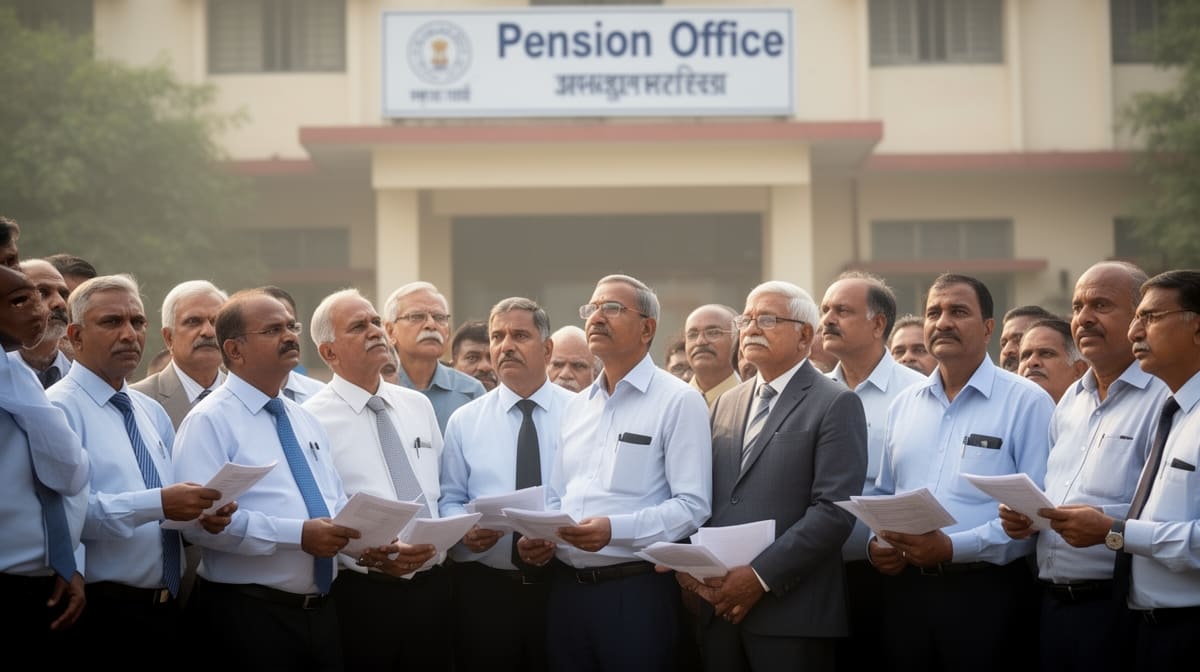
In a significant ruling on pension rights, the Bombay High Court has held that employees absorbed into Zilla Parishad service prior to the cut-off date of 01.11.2005 are entitled to benefits under the Old Pension Scheme. The judgment underscores the primacy of the absorption date over subsequent administrative orders, reinforcing the legal protection afforded to pre-existing employees under government resolutions.
Background & Facts
The Dispute
The petitioners, Madan Pandurang Bendre and Deepak Vithal Kadam, were employees absorbed from Gram Panchayats into the office of the Zilla Parishad prior to 01.11.2005. This date is critical as it marks the cut-off for eligibility under the Old Pension Scheme, as prescribed by the Government Resolution dated 01.11.2005. Despite their absorption predating this cut-off, the petitioners were denied pension benefits under the scheme, prompting them to approach the High Court.
Key Facts
- Both petitioners were absorbed into Zilla Parishad service prior to 01.11.2005, qualifying them as State employees under the Old Pension Scheme.
- The Government Resolution dated 01.11.2005 established the cut-off date for the Old Pension Scheme.
- The petitioners were aggrieved by an impugned order passed pursuant to a letter dated 29.09.2025 from the Deputy Secretary, Rural Development Department, which deprived them of pension benefits.
- The petitioners contended that their absorption date, not their subsequent service, determined their eligibility for the Old Pension Scheme.
Procedural History
- Absorption Date: Both petitioners were absorbed into Zilla Parishad service prior to 01.11.2005.
- Government Resolution: Issued on 01.11.2005, establishing the cut-off date for the Old Pension Scheme.
- Impugned Order: Passed pursuant to a letter dated 29.09.2025 from the Deputy Secretary, Rural Development Department.
- Writ Petitions Filed: Writ Petition No. 751 of 2026 (Madan Pandurang Bendre) and Writ Petition No. 752 of 2026 (Deepak Vithal Kadam) were filed before the Bombay High Court.
- Precedent Cited: The petitioners relied on the decision in Manoj Jagannath Dabhade v. State of Maharashtra and Another, Writ Petition No. 15770 of 2025, decided on 02.02.2026.
Relief Sought
The petitioners sought the following reliefs:
- (a) Quashing of the impugned order passed pursuant to the letter dated 29.09.2025.
- (b) A declaration that they are entitled to benefits under the Old Pension Scheme.
- (c) Directions to the respondents to grant them pension benefits under the Old Pension Scheme.
The Legal Issue
The central question before the Court was whether employees absorbed into Zilla Parishad service prior to 01.11.2005 are entitled to benefits under the Old Pension Scheme, notwithstanding subsequent administrative orders that sought to deny such benefits.
Arguments Presented
For the Petitioners
- The petitioners argued that their absorption date (prior to 01.11.2005) qualified them as State employees under the Old Pension Scheme.
- They relied on the precedent set in Manoj Jagannath Dabhade v. State of Maharashtra and Another, which held that absorption prior to the cut-off date entitles employees to pension benefits.
- The impugned order, passed pursuant to the letter dated 29.09.2025, was contended to be prima facie unsustainable as it disregarded the absorption date.
For the Respondents
- The respondents, represented by the Advocate General and Additional Government Pleader, contended that the impugned order was passed in accordance with administrative guidelines.
- They argued that the petitioners' absorption date alone should not determine eligibility, and that subsequent service conditions could override prior entitlements.
The Court's Analysis
The Court examined the Government Resolution dated 01.11.2005 and the absorption dates of the petitioners. It held that the cut-off date for eligibility under the Old Pension Scheme was 01.11.2005, and since the petitioners were absorbed prior to this date, they were entitled to the benefits of the scheme.
The Court observed:
"The grounds raised in the present Petition, having been considered by us, prima facie establish that the Petitioners have made out a case on account of their absorption prior to 01.11.2005. The Petitions are also covered by the decision of this Court in the case of Manoj Jagannath Dabhade v. State of Maharashtra and Another."
The Court further noted that the impugned order, passed pursuant to the letter dated 29.09.2025, was not sustainable on the face of the record as it disregarded the petitioners' absorption date.
The Verdict
The Court allowed both writ petitions in terms of prayer clauses (a), (b), and (c). Specifically, the Court:
- Quashed the impugned order passed pursuant to the letter dated 29.09.2025.
- Declared that the petitioners are entitled to benefits under the Old Pension Scheme.
- Directed the respondents to grant the petitioners pension benefits under the Old Pension Scheme.
What This Means For Similar Cases
Absorption Date Determines Pension Eligibility
- The judgment reinforces that absorption prior to the cut-off date (01.11.2005) is the decisive factor for eligibility under the Old Pension Scheme.
- Subsequent administrative orders or letters cannot override the absorption date, provided it predates the cut-off.
Precedent Strengthens Legal Protection
- The reliance on Manoj Jagannath Dabhade v. State of Maharashtra and Another establishes a binding precedent for similar cases.
- Employees absorbed prior to 01.11.2005 can cite this judgment to challenge impugned orders denying pension benefits.
Administrative Orders Must Align With Government Resolutions
- Administrative bodies must ensure that orders passed under their authority comply with government resolutions.
- Orders that disregard the cut-off date or absorption date are prima facie unsustainable and liable to be quashed.