The Central Administrative Tribunal, Allahabad, has reaffirmed that reinstatement ordered under the Industrial Disputes Act cannot be circumvented by re-engaging a worker as a daily wage employee. The judgment clarifies that compliance with Section 17-B requires not merely payment of arrears but full restoration of regular service with all attendant benefits.
Background & Facts
The Dispute
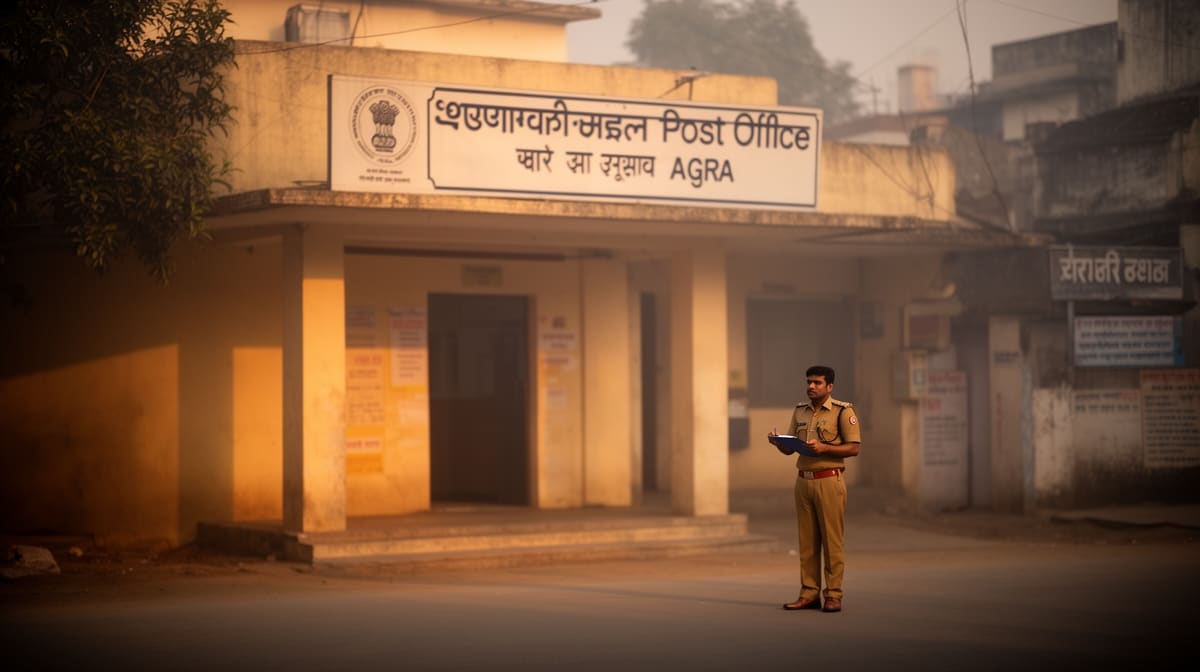
Kishore Kumar was engaged as a sweeper at the Agra General Post Office from 1 October 1990. He worked continuously until 8 September 1993, when his services were terminated without notice or opportunity of hearing. He challenged the termination before the Labour Court, Kanpur, which held on 19 November 1998 that his termination was illegal and ordered reinstatement. The Department challenged this award before the Allahabad High Court, which granted a stay on 30 March 1999. Despite the stay, the Department continued to pay him daily wages intermittently.
Procedural History
The case progressed through multiple forums:
- 1998: Labour Court awarded reinstatement after finding continuous service from 1990 to 1993
- 1999: Allahabad High Court stayed the reinstatement order on grounds that the Department of Posts is not an "industry"
- 2005: Central Government Industrial Tribunal (CGIT) directed payment of back wages under Section 17-B of the Industrial Disputes Act
- 2005: High Court modified its stay to mandate payment of wages during pendency of writ petition
- 2007: Writ Petition No. 11896 of 1999 was dismissed in default
- 2010: Applicant filed Original Application before CAT, alleging that despite payment of arrears, he was only re-engaged as a daily wage worker, not reinstated as a regular employee
Relief Sought
The applicant sought: (i) regularisation of his services with effect from 9 September 1993; (ii) payment of salary as per the prescribed pay scale with arrears and 18% interest; and (iii) any other relief deemed fit.
The Legal Issue
The central question was whether compliance with Section 17-B of the Industrial Disputes Act - which mandates payment of wages during litigation - satisfies the obligation of reinstatement, or whether the employer must restore the employee to a regular, substantive post as ordered by the Labour Court.
Arguments Presented
For the Petitioner
The applicant’s counsel argued that the Labour Court’s 1998 award explicitly ordered reinstatement, not merely payment of wages. The dismissal of the writ petition in default on 16 April 2007 rendered the stay order ineffective, reviving the original award. The Department’s continued engagement of the applicant as a daily wage worker was a deliberate evasion of the award. Reliance was placed on State of Haryana v. Bhagwan Das and Workmen of Mysore Paper Mills v. Mysore Paper Mills, which held that reinstatement means restoration to the original post with all benefits.
For the Respondent
The Department contended that the applicant was never appointed to a regular post and was only engaged on a stop-gap, temporary basis under contingency funds. It argued that the Department of Posts performs sovereign functions and is not subject to the Industrial Disputes Act. It further claimed that payment of back wages under Section 17-B was full compliance, and that the applicant’s re-engagement as a daily wage worker was lawful and not a violation of any order.
The Court's Analysis
The Tribunal rejected the Department’s argument that sovereign immunity exempted it from the Industrial Disputes Act. It noted that the Supreme Court in SDI v. Theyyam Joseph had indeed held that postal services are sovereign functions, but this does not negate the applicability of Section 17-B when a Labour Court has validly adjudicated an industrial dispute involving a workman. The Tribunal emphasized that Section 17-B is a remedial provision designed to protect workers during prolonged litigation, not a substitute for reinstatement.
"The order of reinstatement passed by the Labour Court has not been set aside, modified or overruled by any higher authority. The dismissal of the writ petition in default operates as a final adjudication on the merits of the award."
The Tribunal found that the Department’s own counter-reply admitted that the applicant was engaged "in compliance with the CGIT order dated 18.3.2005," which itself was based on the reinstatement award. The Department’s failure to produce any order setting aside the 1998 award, coupled with its admission of continuous service, compelled the conclusion that the applicant was a regular employee unlawfully terminated.
The Court further held that re-engaging the applicant as a daily wage worker after the stay was lifted was a colourable exercise of power, designed to circumvent the award. The payment of arrears under Section 17-B was a temporary measure, not a final resolution.
The Verdict
The applicant won. The Court held that reinstatement under Section 17-B requires restoration to a regular post, not merely payment of wages or re-engagement as a daily wage worker. The Department was directed to regularise the applicant’s services from the date he became eligible and pay all arrears and benefits due, within three months.
What This Means For Similar Cases
Reinstatement Is Not Optional
- Practitioners must argue that any re-engagement as a casual or daily wage worker after a reinstatement order is a violation of the award
- Payment of back wages under Section 17-B does not extinguish the obligation to restore substantive employment
- The dismissal of a writ petition in default revives the original award as final and binding
Sovereign Immunity Does Not Shield Violations
- Public sector employers cannot invoke "sovereign function" to evade Labour Court orders
- The Supreme Court’s recognition of sovereign functions does not override statutory remedies under the Industrial Disputes Act
- Courts will examine the substance of employment, not just the label assigned by the employer
Documentary Evidence Prevails Over Oral Denials
- Where the employer fails to produce attendance records or appointment files, adverse inference must be drawn against it
- The Labour Court’s finding of continuous service, upheld by the High Court’s dismissal of the writ petition, becomes conclusive
- Applicants must preserve all correspondence, pay slips, and official letters to establish tenure and nature of employment