The Chhattisgarh High Court has reinforced the constitutional obligation to implement reservation quotas in public employment, holding that unfulfilled reserved vacancies cannot remain idle while eligible candidates wait in waiting lists. This judgment clarifies that administrative inaction on pending representations for reserved category candidates violates the principle of substantive equality under Article 14 and Article 16 of the Constitution.
Background & Facts
The Dispute
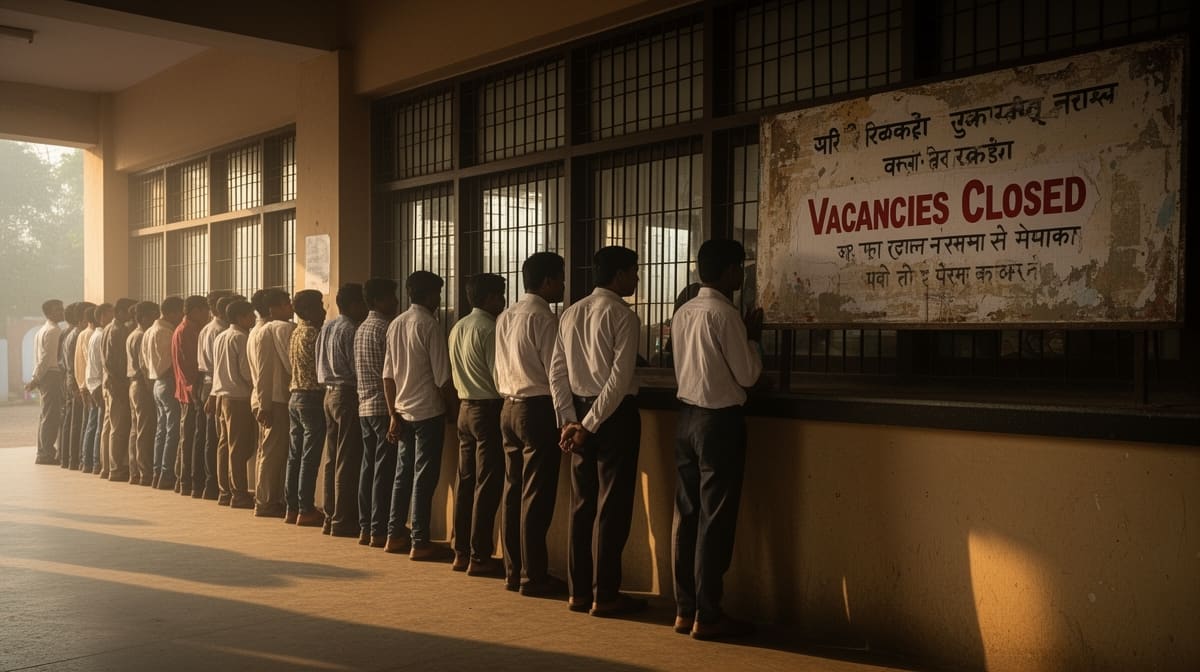
The petitioner, Srishti Dewangan, applied for the post of Assistant Professor in Mathematics under the OBC category as advertised by the Chhattisgarh Public Service Commission. Despite qualifying and being placed on the waiting list, she was not appointed. Subsequently, the number of posts reserved for physically handicapped candidates increased from five to seven, and out of ten OBC-category posts, only nine were filled, leaving one OBC post vacant.
Procedural History
- 2022: Petitioner submitted a representation to the State Government on 19.10.2022, seeking appointment to the vacant OBC post.
- 2025: Writ petition filed before the Chhattisgarh High Court seeking direction for appointment.
- 2026: Hearing conducted; respondents did not oppose the prayer.
Relief Sought
The petitioner sought a direction to the State to consider her representation and appoint her to the vacant Assistant Professor post under the OBC category, along with costs.
The Legal Issue
The central question was whether the State can leave a reserved category vacancy unfulfilled indefinitely while a qualified candidate from the same category remains on the waiting list, and whether such inaction constitutes a violation of constitutional guarantees of equal opportunity.
Arguments Presented
For the Petitioner
The petitioner’s counsel argued that the State’s failure to fill the vacant OBC post despite the existence of a qualified candidate on the waiting list amounted to arbitrariness and discrimination. Reliance was placed on State of Madhya Pradesh v. Nandlal and R.K. Sabharwal v. State of Punjab to assert that reserved vacancies must be filled in accordance with the reservation policy, and that waiting list candidates have a legitimate expectation of appointment when vacancies arise.
For the Respondent
The State did not contest the petitioner’s claim. The respondents conceded that the representation remained pending and acknowledged the existence of the vacant post. No legal objection was raised to the petitioner’s prayer.
The Court's Analysis
The Court examined the constitutional mandate under Article 16(4) and the statutory framework governing public employment. It emphasized that reservation is not a concession but a constitutional imperative designed to correct historical inequities. The Court noted that the State’s failure to fill the vacant OBC post, while simultaneously increasing the number of posts for other reserved categories, raised serious concerns about equitable implementation of reservation policy.
"The State cannot selectively implement reservation by increasing quotas for one category while ignoring a vacant quota in another, especially when a qualified candidate from the latter category is awaiting appointment."
The Court held that the petitioner’s representation dated 19.10.2022 had remained pending for over three years without any reasoned decision, which amounted to a violation of the principle of reasonable time under Article 21. The Court further observed that the existence of a waiting list does not negate the State’s duty to fill reserved vacancies in a timely manner.
The Verdict
The petitioner succeeded. The Court directed the State to consider and decide on the pending representation within two months, in accordance with law. The appointment must be made if the petitioner remains eligible and the vacancy persists, affirming that reserved quotas must be fully utilized without undue delay.
What This Means For Similar Cases
Reservation Vacancies Cannot Be Ignored
- Practitioners must challenge administrative inaction on reserved vacancies even if the candidate is on a waiting list.
- Delay in filling reserved posts constitutes a violation of Article 14 and Article 16, not merely procedural lapse.
Waiting List Candidates Have Legitimate Expectation
- Candidates on waiting lists for reserved categories are entitled to be considered for unfilled vacancies before the list expires.
- Authorities must maintain transparent records of vacancies and decisions on representations to avoid arbitrariness.
Timely Decision Is a Constitutional Imperative
- A three-year delay in deciding a representation is unreasonable and actionable under Article 226.
- Courts will intervene where administrative delay undermines the purpose of reservation policy.