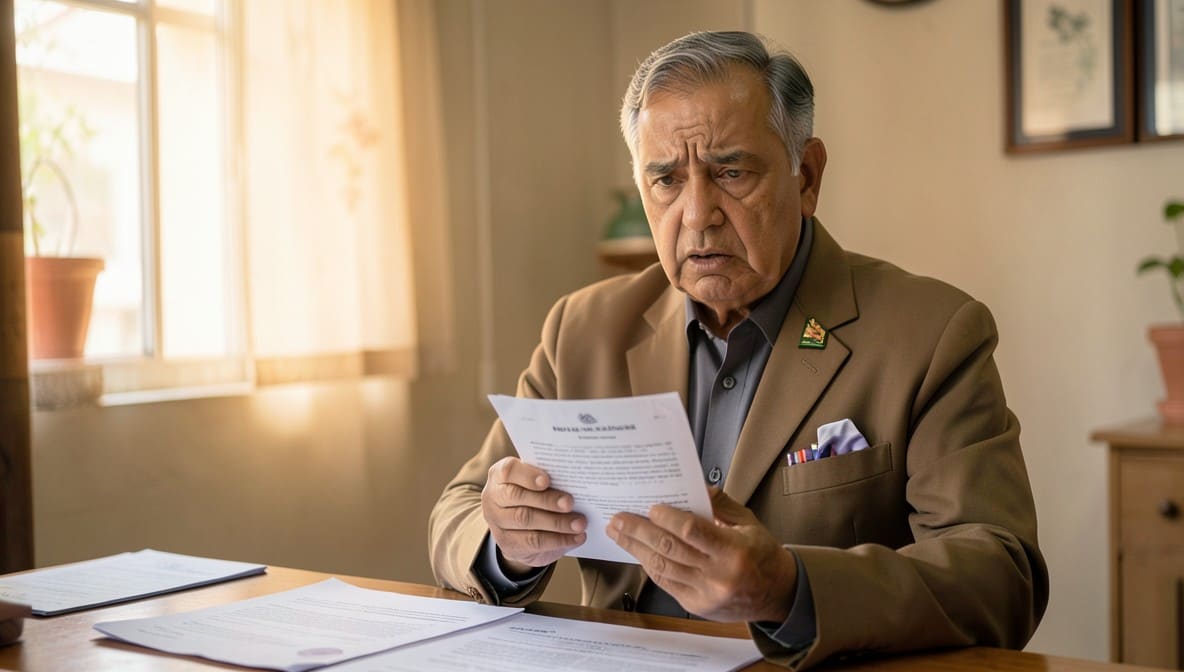
The Madhya Pradesh High Court has held that recovery of excess payments from retired government employees is impermissible after one year of retirement. This judgment reinforces the principles laid down in State of Punjab v. Rafiq Masih and underscores the strict compliance required with state circulars governing pension and gratuity recoveries.
Background & Facts
The Dispute
The petitioner, Naresh Kumar Tiwari, a retired government employee, challenged the recovery of Rs. 80,463 (Rs. 56,379 principal + Rs. 24,084 interest) from his leave encashment. The recovery was effected eight years after his retirement on 31.12.2015.
Key Facts
- The petitioner retired on 31.12.2015 on attaining superannuation.
- Recovery of Rs. 80,463 was made from his leave encashment eight years post-retirement.
- The impugned orders dated 12.05.2023 and 19.12.2023 directed the recovery.
- The petitioner relied on Circular No. F 9-3/2015/Rule/Four, Bhopal dated 29.06.2015 and Circular dated 08.11.2017, which mandate finalization of pension and gratuity cases 24 months before retirement and prohibit recoveries one month before retirement unless pending departmental enquiries exist.
Procedural History
- 16.02.2024: Petitioner filed a representation seeking refund of the recovered amount.
- 12.05.2023: Impugned order (Annexure P/1) passed by Respondent No. 3.
- 19.12.2023: Impugned order (Annexure P/2) passed by Respondent No. 4.
- 2024: Present writ petition filed under Article 226 of the Constitution.
Relief Sought
The petitioner sought:
- Quashing of the impugned orders dated 12.05.2023 and 19.12.2023.
- Refund of Rs. 80,463 with 9% interest per annum until actual payment.
- Declaration that the recovery was illegal and arbitrary.
The Legal Issue
The central question was whether recovery of excess payments from a retired government employee is permissible eight years after retirement, particularly in light of Rule 57 and 58 of the Madhya Pradesh Civil Services (Pension) Rules, 1976, and the circulars issued by the State Government.
Arguments Presented
For the Petitioner
- The recovery was illegal as it violated the principles laid down in State of Punjab v. Rafiq Masih (White Washer), which prohibits recovery from retired employees one year post-retirement.
- The recovery was effected in violation of state circulars dated 29.06.2015 and 08.11.2017, which mandate finalization of pension cases 24 months before retirement and prohibit recoveries one month before retirement unless pending enquiries exist.
- The recovery was arbitrary as it was made eight years post-retirement, far beyond the permissible timeline.
For the Respondent/State
- The State contended that recovery could be made even after retirement, without specifying any statutory basis or addressing the circulars cited by the petitioner.
The Court's Analysis
The Court relied on the judgment of the Supreme Court in State of Punjab v. Rafiq Masih, which categorically prohibits recovery from retired employees one year post-retirement. The Court observed:
"18. It is not possible to postulate all situations of hardship, which would govern employees on the issue of recovery, where payments have mistakenly been made by the employer, in excess of their entitlement. Be that as it may, based on the decisions referred to herein above, we may, as a ready reference, summarise the following few situations, wherein recoveries by the employers, would be impermissible in law: (i) Recovery from employees belonging to Class-III and Class-IV service (or Group 'C' and Group 'D' service). (ii) Recovery from retired employees, or employees who are due to retire within one year, of the order of recovery. (iii) Recovery from employees, when the excess payment has been made for a period in excess of five years, before the order of recovery is issued. (iv) Recovery in cases where an employee has wrongfully been required to discharge duties of a higher post, and has been paid accordingly, even though he should have rightfully been required to work against an inferior post. (v) In any other case, where the Court arrives at the conclusion, that recovery if made from the employee, would be iniquitous or harsh or arbitrary to such an extent, as would far outweigh the equitable balance of the employer's right to recover."
The Court further noted that the State Government's circulars dated 29.06.2015 and 08.11.2017 explicitly mandate:
- Finalization of pension and gratuity cases 24 months before retirement.
- Verification of service under Rule 59 of the Madhya Pradesh Civil Services (Pension) Rules, 1976.
- Payment of provisional pension and gratuity under Rule 74 if cases are not resolved 15 days prior to retirement.
- Conclusion of recovery actions one month before retirement.
- Issuance of a No Objection Certificate (NOC) by the Head of Department regarding pendency of departmental enquiries or judicial proceedings one month post-retirement. If no such certificate is issued, it is to be assumed that no demand or enquiry is pending.
The Court held that the recovery effected eight years post-retirement was bad in law and violated both the Supreme Court's judgment and the state circulars.
The Verdict
The Court allowed the writ petition and:
- Quashed the impugned orders dated 12.05.2023 and 19.12.2023.
- Directed the respondents to refund Rs. 80,463 to the petitioner within 30 days.
- No interest was awarded beyond the refund of the recovered amount, as the petitioner's claim for 9% interest was not specifically addressed in the operative part of the judgment.
What This Means For Similar Cases
Recovery from Retired Employees Is Impermissible After One Year
- Practitioners must argue that recovery from retired employees beyond one year of retirement is illegal, relying on State of Punjab v. Rafiq Masih.
- The burden of proof lies on the employer to demonstrate compliance with timelines for finalizing pension cases and issuing NOCs regarding pending enquiries.
Strict Compliance with Circulars Is Mandatory
- Rule 57 and 58 of the Madhya Pradesh Civil Services (Pension) Rules, 1976 require finalization of pension cases 24 months before retirement.
- Rule 74 mandates payment of provisional pension and gratuity if cases are not resolved 15 days prior to retirement.
- Recovery actions must be concluded one month before retirement, failing which they are arbitrary and illegal.
Heads of Departments Must Issue NOCs Timely
- If the Head of Department fails to issue an NOC one month post-retirement, it is deemed that no demand or enquiry is pending against the employee.
- Employees can challenge recoveries made without such NOCs as violative of natural justice and state circulars.
Practical Takeaways for Practitioners
- Check timelines: Ensure recovery actions comply with one-month pre-retirement deadline.
- Demand NOCs: Request NOCs from Heads of Departments to preempt illegal recoveries.
- Challenge arbitrary recoveries: Argue that recoveries made beyond one year post-retirement are harsh and iniquitous, outweighing the employer's equitable right to recover.