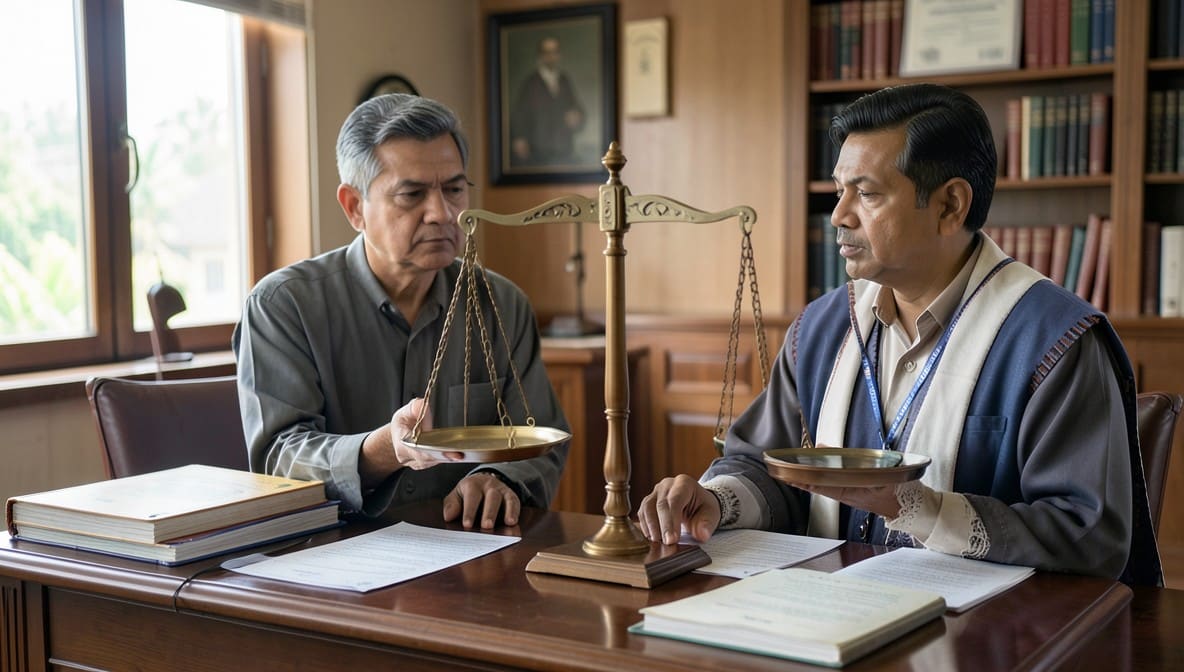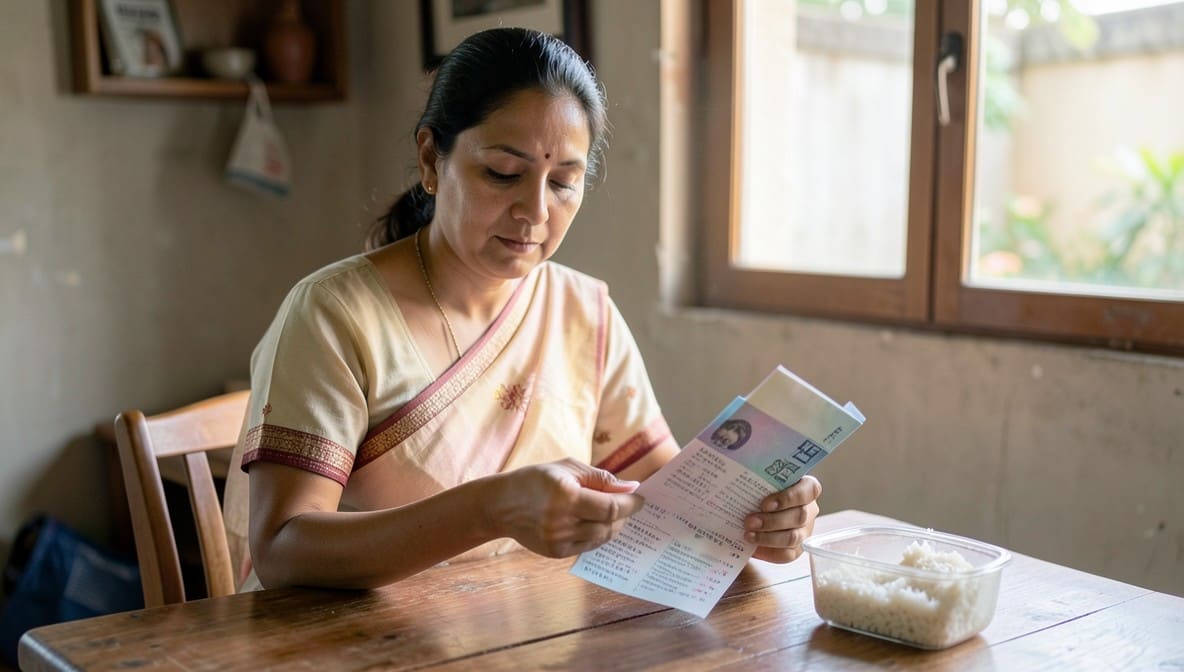
The Bombay High Court has clarified that sustained denial of financial support to a spouse and minor children, even after prolonged separation, constitutes economic abuse under the Protection of Women from Domestic Violence Act, 2005. This ruling reinforces that the Act’s scope extends beyond physical violence to include systemic financial deprivation, offering a critical remedy for economically vulnerable women and dependents.
Background & Facts
The Dispute
The Applicants, led by Swarupsingh (Ishwarlal) Aasaram Umbare, are the husband and family members against whom Respondent No.1, Kalpana Swarupsingh Umbare, filed an application under the Protection of Women from Domestic Violence Act, 2005 (PWDVA). The Respondents allege that since 2013, the Applicants have ceased all financial support, leaving the wife and two minor children without means of subsistence or education.
Key Facts
- The Respondents have been living separately from the Applicants since 2013.
- Applicant No.1 has not provided any monetary support, shelter, or maintenance since 2013.
- Respondent No.1, the wife, is unemployed and unable to support herself or her two children (Respondent Nos.2 and 3).
- On 15.04.2024, Respondent No.1 filed an application before the Magistrate seeking interim maintenance of ₹10,000 per month for herself and ₹5,000 per month for each child for educational expenses.
- Applicant No.1 did not respond to the request or make any payments.
- The Magistrate dismissed the application on the ground that no domestic violence had been established.
- The Respondents appealed to the Additional Sessions Judge, Aurangabad, who allowed the appeal on 20.11.2025.
- The Sessions Judge directed Applicant No.1 to pay ₹5,000 per month to Respondent No.1 and ₹2,500 per month to each of Respondent Nos.2 and 3, effective from the date of the original application (15.04.2024), until the children attain majority.
Procedural History
- 2013: Respondents began living separately; no maintenance paid by Applicant No.1.
- 15.04.2024: Application filed under PWDVA before the Magistrate.
- 05.08.2024: Magistrate dismissed the application.
- 10.09.2024: Appeal filed before Additional Sessions Judge (PWDVA Appeal No.83 of 2024).
- 20.11.2025: Additional Sessions Judge allowed the appeal and granted interim maintenance.
- 10.01.2026: Criminal Revision Application No.39 of 2026 filed before Bombay High Court, Aurangabad Bench.
- 15.06.2026: Judgment delivered by the High Court.
Relief Sought
The Applicants sought quashing of the Additional Sessions Judge’s order dated 20.11.2025 and restoration of the Magistrate’s dismissal order. The Respondents sought confirmation of the interim maintenance order and continuation of payments until the children attain majority.
The Legal Issue
The central question was whether prolonged non-payment of maintenance to a spouse and minor children, despite a legal and moral obligation, constitutes "economic abuse" under Section 3 of the Protection of Women from Domestic Violence Act, 2005, thereby entitling the aggrieved persons to interim maintenance under Section 20.
Arguments Presented
For the Appellant
Learned counsel for the Applicants argued that no cause of action arose under the PWDVA because the Respondents had been living separately since 2013, thereby terminating the "domestic relationship" required for invoking the Act. He further contended that the absence of physical or verbal abuse negated any claim under the Act, and that maintenance disputes are purely civil in nature, to be resolved under Section 125 CrPC or personal law. He urged that the Sessions Judge erred in ignoring the separation and in granting relief without proof of violence.
For the Respondent
Learned counsel for the Respondents countered that the definition of "economic abuse" under Section 3, Explanation I(iv), explicitly includes deprivation of financial resources to which the aggrieved person is entitled by law or custom. He emphasized that the Applicants’ refusal to provide maintenance for over a decade, despite the Respondents’ dependence and lack of means, amounted to economic coercion and exploitation. He cited the plain language of the statute and the legislative intent to protect women from financial subjugation, regardless of cohabitation status.
The Court's Analysis
The Court began by acknowledging that the Applicants did not dispute the fact that the Respondents have been living separately since 2013 and that no maintenance has been paid since then. The Court then turned to the statutory definition of "economic abuse" under Section 3, Explanation I(iv), which includes "deprivation of all or any economic or financial resources to which the aggrieved person is entitled under any law or custom... including... maintenance."
"The grievance made by Respondent Nos. 1 to 3 falls within the ambit of 'economic abuse' as defined under Section 3, Explanation-I(iv), of the Domestic Violence Act."
The Court held that the obligation to maintain a wife and children is not extinguished by separation. It is a legal and moral duty recognized under personal laws, Section 125 CrPC, and now explicitly codified under the PWDVA. The Court emphasized that the Act’s purpose is to provide immediate relief to women facing financial coercion, even in the absence of physical violence.
The Court further noted that the Respondents had made a prima facie case: the wife is unemployed, the children are minors, and the Applicants have the means to pay but have deliberately withheld support. The Sessions Judge’s order was therefore not only legally sound but also aligned with the protective intent of the statute.
The Court rejected the argument that separation nullifies the domestic relationship under the Act. It clarified that the term "domestic relationship" under Section 2(f) includes relationships where the parties have lived together in a shared household and have since separated, provided the aggrieved person continues to be economically dependent.
The Verdict
The Revision Application was dismissed. The Court upheld the order dated 20.11.2025 of the Additional Sessions Judge, directing Applicant No.1 to pay interim maintenance of ₹5,000 per month to Respondent No.1 and ₹2,500 per month to each of Respondent Nos.2 and 3, effective from 15.04.2024, until the children attain majority. No costs were awarded.
What This Means For Similar Cases
Economic Abuse Is Not Dependent on Cohabitation
- Practitioners must now argue that separation does not terminate the obligation to provide maintenance under the PWDVA.
- A claim for economic abuse can be sustained even if the aggrieved person has been living apart for years, provided financial deprivation continues.
- The burden shifts to the respondent to prove that maintenance was provided or that the claim is frivolous.
Section 20 Relief Is Available Even Without Physical Violence
- Courts must interpret "economic abuse" broadly to include non-payment of maintenance, denial of access to bank accounts, or refusal to pay educational expenses.
- Interim maintenance under Section 20 is not contingent on proving physical or emotional abuse.
- Applications under PWDVA should not be dismissed on the ground that the matter is "civil" or should be pursued under Section 125 CrPC - the remedies are cumulative.
Documentation of Financial Need Is Critical
- Petitioners must clearly plead: (a) lack of income, (b) dependency, (c) specific expenses (education, medical, household), and (d) respondent’s ability to pay.
- Evidence such as school fee receipts, medical bills, and bank statements should be annexed to strengthen the prima facie case.
- Courts will grant interim relief based on these factual assertions, even before full trial.