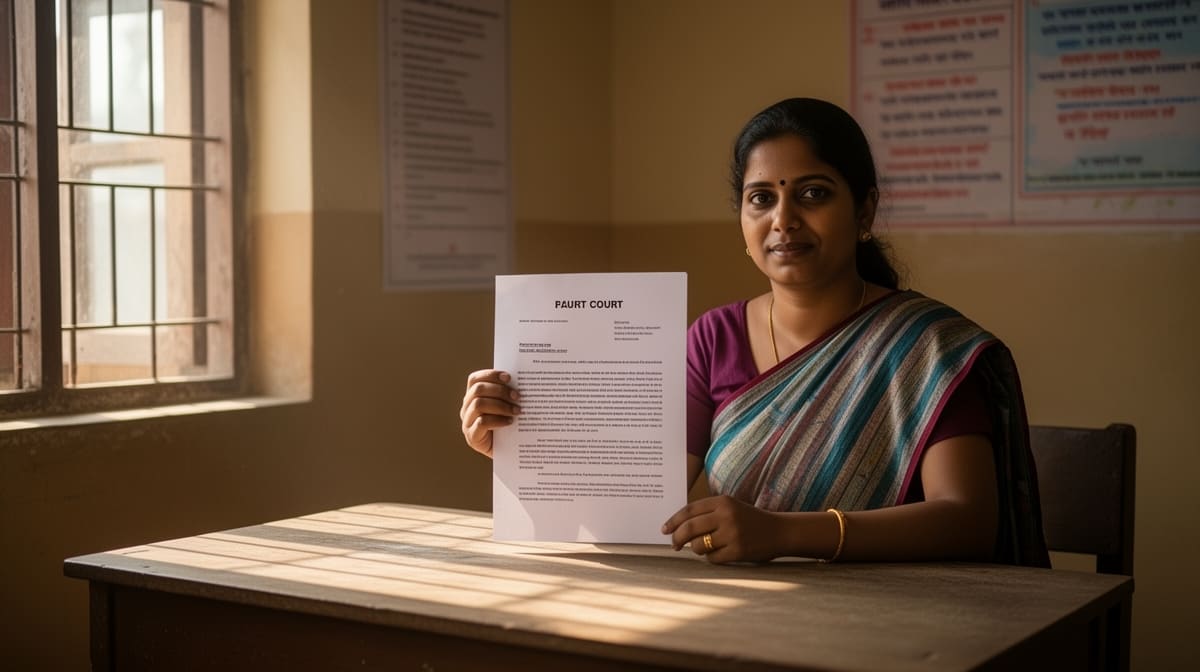
The Bombay High Court has established a critical precedent affirming that unilateral disposal of marital property by one spouse, particularly when done to deprive the other of financial security, constitutes a form of domestic violence under the Protection of Women from Domestic Violence Act, 2005. This ruling reinforces the judiciary’s evolving recognition of economic coercion as a violation of fundamental rights within marriage.
Background & Facts
The Dispute
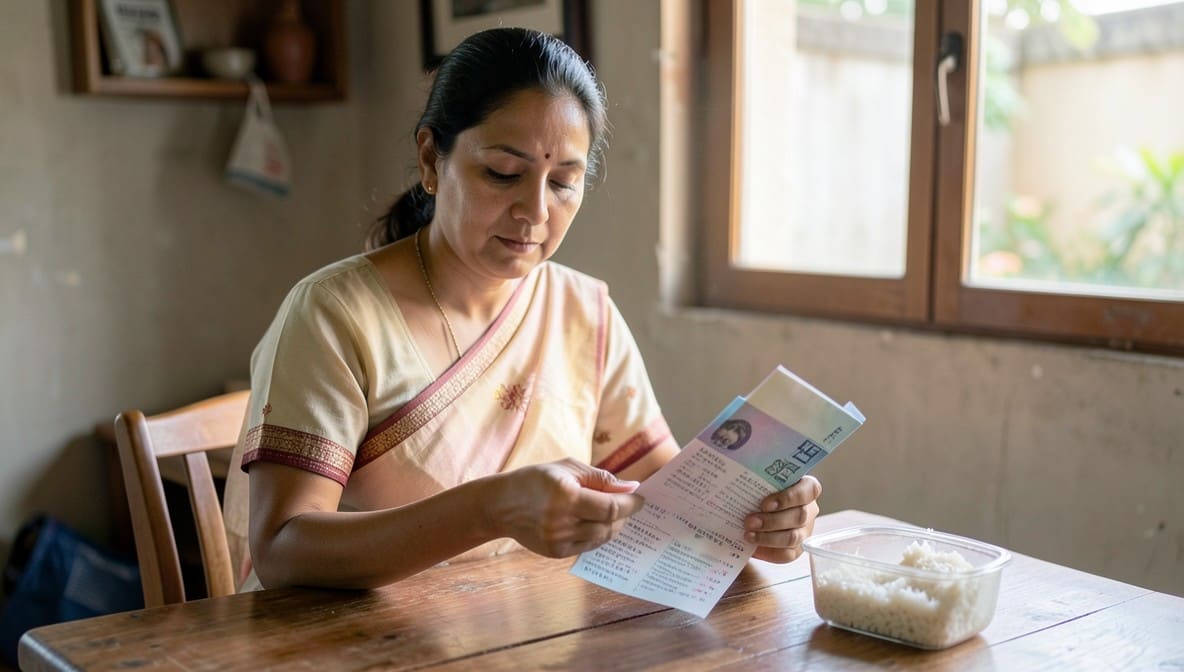
The dispute arises from the sale of a row house jointly occupied by the wife, Monika Anurag Verma, and their daughter, without her knowledge or consent. The husband, Anurag Nathulal Verma, sold the property for Rs. 80 lakhs and allegedly retained the proceeds, leaving the wife and child without residential security. The wife filed multiple writ petitions seeking protection and financial relief, while the husband challenged orders directing him to account for the sale proceeds.
Procedural History
- 2018: Writ Petition No. 3025 of 2018 filed by husband seeking relief against wife’s maintenance claims
- 2023: Single Judge (Bharati Dangre, J.) observed husband’s lack of income does not absolve him of marital obligations
- 2023: Another Single Judge (S.M. Modak, J.) recorded that the row house had been sold for Rs. 80 lakhs
- 2024: Interim Application No. 4609 of 2024 filed by wife seeking attachment of sale proceeds
- 2026: Bombay High Court consolidated petitions and issued final direction
Relief Sought
The wife sought: (1) declaration that the sale was voidable due to concealment and financial abuse; (2) direction to deposit sale proceeds for her and daughter’s maintenance; (3) protection from further alienation of marital assets. The husband sought dismissal of all proceedings against him.
The Legal Issue
The central question was whether the unilateral sale of a marital home, without the consent of the other spouse and while denying them shelter, amounts to economic abuse under Section 3 of the Protection of Women from Domestic Violence Act, 2005, and whether the court may compel deposit of sale proceeds as interim relief.
Arguments Presented
For the Petitioner (Wife)
Counsel for the wife relied on V. Bhagat v. D. Bhagat and S. R. Batra v. S. M. Batra to argue that the marital home is a shared asset, and its sale without consent constitutes economic abuse under Section 3(d) of the DV Act. She contended that the husband’s conduct - selling the property while the wife and child resided there - was deliberate, coercive, and designed to undermine her right to residence and maintenance. She further cited Rajesh Sharma v. State of U.P. to emphasize that courts must intervene to prevent financial exploitation in domestic settings.
For the Respondent (Husband)
Counsel for the husband argued that the property was his separate asset, acquired prior to marriage, and that he had a right to dispose of it. He claimed the wife had no legal interest in the proceeds and that the court’s direction to deposit Rs. 80 lakhs was arbitrary and violated his right to property under Article 300A. He also asserted that his unemployment rendered him incapable of depositing the amount.
The Court's Analysis
The Court rejected the husband’s claim that the property was exclusively his. It held that the nature of the asset - occupied by the wife and child as their primary residence - transformed it into a shared domestic space, regardless of title. The Court emphasized that economic abuse under Section 3(d) includes acts that deprive a woman of economic resources, including disposal of property essential to her livelihood or shelter.
"The sale of a residence occupied by the wife and child, without notice or consent, and with the apparent intent to deprive her of shelter, cannot be viewed as a mere commercial transaction. It is an act of coercion that strikes at the heart of her dignity and security."
The Court distinguished S. R. Batra by noting that while that case dealt with ownership rights under the Hindu Succession Act, this case concerned the protective mandate of the DV Act, which prioritizes immediate relief over title disputes. The Court further held that the husband’s unemployment did not absolve him of his duty to provide for his family, and that the sale proceeds were the most viable means of ensuring interim maintenance and housing security.
The Verdict
The wife prevailed. The Court held that the unilateral sale of a marital home, resulting in the wife’s displacement, constitutes economic abuse under the DV Act. It directed the husband to deposit Rs. 80 lakhs by 13th February 2026, to be held in court for the wife’s and daughter’s maintenance and housing needs.
What This Means For Similar Cases
Sale of Marital Property Requires Consent
- Practitioners must now argue that any sale, transfer, or encumbrance of property used as a shared residence without the spouse’s consent triggers Section 3(d) of the DV Act
- Even if the property is in one spouse’s name, its use as a shared home creates a protected interest
- Courts may now order deposit of proceeds as interim relief, irrespective of final ownership determination
Financial Abuse Is Actionable Without Physical Violence
- Economic coercion - such as hiding assets, cutting off funds, or selling property to force compliance - is now clearly actionable under the DV Act
- Lawyers should routinely include claims of economic abuse in domestic violence petitions, even in absence of physical threats
- Courts are empowered to freeze or redirect sale proceeds as a protective measure
Maintenance Relief Can Precede Final Title Determination
- The Court affirmed that interim financial relief under the DV Act does not require adjudication of property ownership
- This allows faster relief for vulnerable spouses, especially in cases of asset dissipation
- Practitioners should seek deposit orders early in proceedings, supported by evidence of sale and displacement