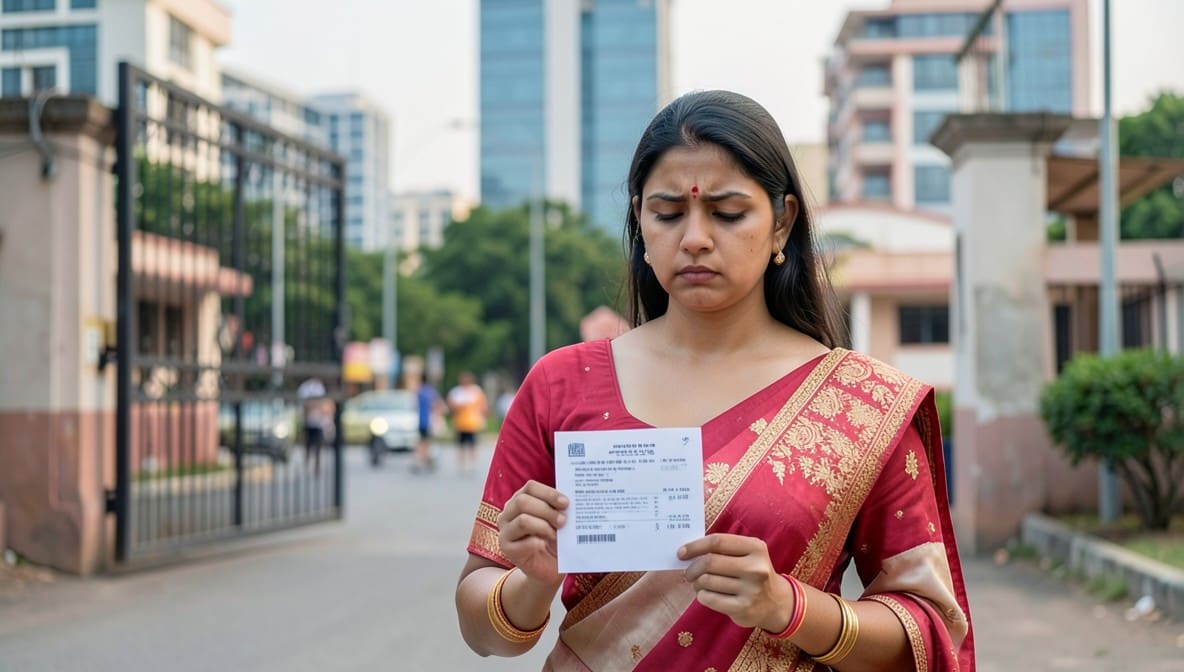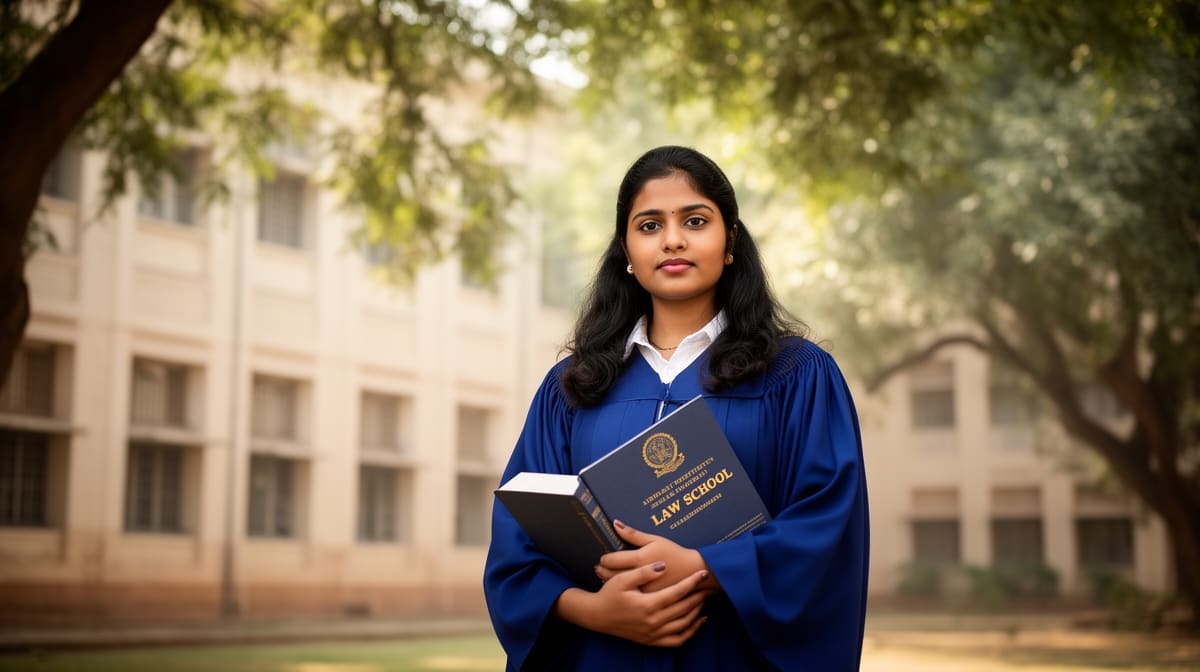
The Madhya Pradesh High Court has clarified that education expenses for minor children constitute a legally enforceable component of maintenance under the Protection of Women from Domestic Violence Act, 2005. This judgment reinforces the statutory duty of a husband to ensure reasonable educational advancement for his children, even when the mother is a practicing advocate and the father claims financial hardship.
Background & Facts
The Dispute
The petitioner, Smt. Manisha, filed an application under Section 12 of the Protection of Women from Domestic Violence Act, 2005 (PWDVA) in the Court of Judicial Magistrate First Class (JMFC), Indore, seeking maintenance for herself and her minor daughter, along with interim relief for educational expenses. The respondent, Shri Jitendra, her husband, opposed the claim on grounds that he belongs to the Scheduled Caste community and that the daughter’s education expenses were being borne by the Adimjati Kalyan Vibhag of the Madhya Pradesh Government. He further claimed financial incapacity due to a loan taken for his father’s medical treatment.
Key Facts
- The marriage took place on 17.04.2000 at Bhagirathpura, Indore, under Arya Samaj rituals.
- The daughter, petitioner No.2, was born on 30.03.2002.
- On 13.05.2012, an application under Section 12 of the PWDVA was filed (MJC(R) No.15/2013), seeking reliefs under Sections 18, 19, 20, 21, and 22.
- An interim maintenance application under Section 23 was filed seeking Rs.40,000 per month.
- The daughter was admitted to the B.B.A.L.L.B. program at United World School of Law, Karnavati University, Gandhinagar, during her minority.
- Total tuition and related expenses incurred amounted to Rs.12,74,200/-.
- The respondent admitted in his reply that the daughter was studying law but claimed he was not consulted about the admission and could not afford private university fees.
- The mother, Smt. Manisha, is a practicing advocate but there is no evidence on record that she is earning sufficiently to cover the daughter’s education costs.
- The respondent is employed as an Upper Division Clerk (UDC) in the office of the Chief Medical and Health Officer, Indore, with additional sources of income noted in Annexure A-1.
Procedural History
- 13.05.2012: Application filed under Section 12 of PWDVA (MJC(R) No.15/2013).
- 12.12.2013: JMFC awarded Rs.2,000/month to petitioner No.1 and Rs.2,000/month to petitioner No.2, plus Rs.1,000/month for alternate accommodation.
- 18.02.2014: Additional Sessions Judge enhanced daughter’s maintenance to Rs.3,000/month and set aside accommodation allowance.
- 14.11.2017: High Court enhanced joint maintenance to Rs.8,000/month considering respondent’s monthly salary of Rs.24,869.
- 07.04.2022: Application filed seeking Rs.12,74,200/- for daughter’s B.B.A.L.L.B. tuition fees.
- 14.10.2023: JMFC rejected the application, holding that existing Rs.8,000/month maintenance was sufficient and no change of circumstances warranted additional relief.
- 10.01.2024: XIXth Additional Sessions Judge dismissed the appeal, holding that Section 23 does not permit successive applications for enhanced interim relief.
- 12.03.2026: Criminal Revision No.1813/2024 heard and decided by Madhya Pradesh High Court.
- 05.03.2026: High Court directed a detailed status report from JMFC, which revealed a 12-year delay with no substantive progress.
Relief Sought
The petitioners sought: (1) setting aside of the orders dated 14.10.2023 and 10.01.2024; (2) direction to the respondent to pay Rs.12,74,200/- for daughter’s B.B.A.L.L.B. education expenses; and (3) a directive to conclude the pending main application within a reasonable time.
The Legal Issue
The central question was whether Section 20(1)(d) of the Protection of Women from Domestic Violence Act, 2005, permits an aggrieved person to seek reimbursement of actual education expenses incurred for a minor child, even after interim maintenance has been awarded under Section 23, and whether such a claim can be rejected merely on the ground that no change of circumstances has been established.
Arguments Presented
For the Petitioner
The petitioners argued that Section 20(1)(d) explicitly includes maintenance for children, and that education expenses are an inseparable component of such maintenance. They cited the fact that the daughter was a minor at the time of enrollment and that the mother, despite being an advocate, was not earning sufficiently to bear the cost. They emphasized that the respondent’s employment as a government servant with multiple income sources negated his claim of financial incapacity. They further contended that the prolonged pendency of the main application (over 12 years) rendered the existing maintenance inadequate and that the courts were obligated to grant specific relief for essential expenses.
For the Respondent
The respondent argued that once interim maintenance under Section 23 was granted, no further application for additional relief could be entertained. He claimed that the daughter’s admission to a private law school was unilateral and without his consent, and that he was financially burdened by his father’s medical expenses. He also asserted that the mother’s profession as an advocate rendered her capable of bearing the cost, and that the government’s Adimjati Kalyan Vibhag was already supporting the daughter’s education.
The Court's Analysis
The Court conducted a rigorous analysis of Section 20(1)(d) of the PWDVA, which states: "The Magistrate may, in an application under sub-section (1), order the respondent to pay maintenance to the aggrieved person and her children, if any, including expenses for education." The Court held that the language of the provision is unambiguous and inclusive - it does not limit maintenance to subsistence alone but explicitly encompasses education.
"The fees of B.B.A.L.L.B course are not such that can be termed as exaggerated."
The Court rejected the respondent’s argument that the mother’s legal practice rendered her financially capable, noting the distinction between "may earn," "would earn in future," and "is earning." The Court emphasized that enrollment in the State Bar Council does not equate to actual income generation.
The Court also condemned the 12-year delay in adjudicating the main application, observing that the JMFC’s status report was "casual" and failed to explain the reasons for delay. The Court held that when courts fail to dispose of applications within a reasonable time, they cannot deny interim relief for essential needs such as education. The respondent’s claim of financial hardship was undermined by his stable government employment and documented additional income sources.
The Court further clarified that Section 23 provides for interim relief, but does not bar subsequent applications for specific relief under Section 20. The two provisions operate independently: Section 23 ensures immediate subsistence, while Section 20 ensures comprehensive welfare, including education.
The Verdict
The revision petition was allowed. The orders dated 14.10.2023 and 10.01.2024 were set aside. The respondent is directed to pay Rs.12,74,200/- to petitioner No.2 for tuition fees and other expenses incurred for her B.B.A.L.L.B. course. The Court directed the JMFC to conclude the pending main application under Section 12 of the PWDVA within six months from the date of this order.
What This Means For Similar Cases
Education Expenses Are Not Discretionary
- Practitioners must now argue that Section 20(1)(d) mandates inclusion of education costs in maintenance, not merely as a discretionary benefit but as a statutory right.
- Courts cannot reject such claims on the basis of "no change in circumstances" when the expense arises from a child’s legitimate educational advancement during minority.
- The burden shifts to the respondent to prove inability to pay, not to the applicant to prove necessity.
Prolonged Delays Cannot Justify Denial of Relief
- When main applications under PWDVA remain pending for years, interim relief must be interpreted expansively to meet essential needs.
- Courts must proactively monitor delays and impose consequences for non-compliance with statutory timelines under Section 12(5).
- Casual status reports will not be accepted; courts must provide reasoned explanations for delays.
Government Employment Negates Financial Hardship Claims
- A respondent’s employment as a government servant with documented additional income sources precludes claims of financial incapacity.
- Claims of loans or family medical expenses cannot override statutory obligations toward children’s education.
- Courts must scrutinize financial disclosures rigorously and not accept unsubstantiated assertions.