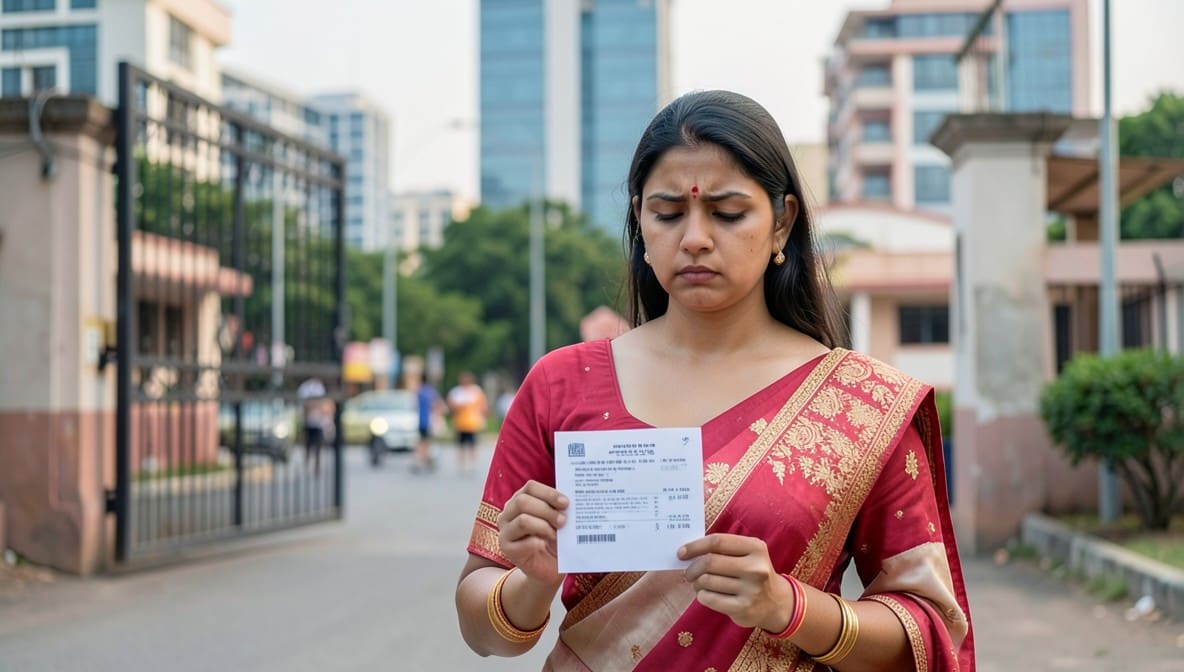
The Madhya Pradesh High Court has clarified that financial claims by a respondent, including loans and medical obligations, cannot override the statutory duty to provide reasonable maintenance to a wife and minor child under the Family Court Act, 1984. The judgment underscores the principle that the welfare of dependents takes precedence over the respondent’s personal financial burdens.
Background & Facts
The Dispute
The petitioners, Smt. Bhawna Bajpai and her two minor children, sought maintenance under the Family Court Act, 1984 against the respondent, Ramparakash Bajpai, their husband and father. The marriage was solemnized on 25.11.2003 in Indore, Madhya Pradesh, as per Hindu rituals. The first petitioner, the wife, has no independent source of income. The second petitioner, a daughter, was born on 15.01.2006 and was pursuing a B.Tech degree at Acropolis Institute of Technology and Research, Indore, during the academic year 2023-2024. The third petitioner, another daughter, was born on 11.05.2012 and was studying in Class VI at Delhi International School, Indore, during the same period.
Key Facts
- The wife filed an application for maintenance on 15.09.2023, claiming Rs. 50,000 per month for her upkeep, Rs. 2,10,000 per annum for educational expenses of the two children, and Rs. 10,000 as litigation costs.
- She alleged that she and the children were ousted from the matrimonial home on 17.07.2022 due to cruelty, leading to the registration of FIR No. 584/2022 at P.S. Aerodrome, Indore.
- The respondent, an Assistant Sub-Inspector in Madhya Pradesh Police, claimed a monthly salary of Rs. 54,000. He asserted he had no other income, paid Rs. 15,000 per month in rent, Rs. 10,000 monthly for his mother’s medical expenses, and an annual premium of Rs. 10,000 for medical insurance. He also claimed to have taken a loan.
- The wife was alleged by the respondent to earn Rs. 22,000 per month, but no documentary proof was submitted to substantiate this claim.
- The respondent owned residential properties in Aradhna Nagar and Ashok Nagar, Indore, properties with Indore Development Authority, agricultural land in Unnao, Uttar Pradesh, and multiple vehicles.
Procedural History
- 15.09.2023: Application for maintenance filed before the 3rd Additional Principal Judge, Family Court, Indore (MJCR No. 1171/2023).
- 15.07.2024: Family Court passed an order awarding Rs. 4,000 per month to the wife and Rs. 3,000 per month each to the two minor children, effective from the date of application (15.09.2023).
- 22.01.2026: Criminal Revision No. 4257 of 2024 heard before the Madhya Pradesh High Court.
- 23.03.2026: Judgment delivered by Justice Gajendra Singh.
The Parties' Positions
For the Petitioners (Wife and Minor Daughters):
- The wife is financially dependent and has been abandoned without support.
- The children’s education and daily needs continue unabated despite residing with the respondent.
- The Family Court’s award of Rs. 4,000 and Rs. 3,000 is grossly inadequate for living in Indore.
- The respondent’s income and assets indicate capacity to pay higher maintenance.
For the Respondent (Husband):
- The wife is employed and earns Rs. 22,000 per month.
- The elder daughter (petitioner no.2) attained majority on 15.01.2024 and is residing with the respondent, who bears her expenses.
- The younger daughter (petitioner no.3) is also residing with him.
- The respondent has financial obligations including medical costs for his mother, rent, insurance, and a loan.
- The FIR for cruelty was filed after 20 years of marriage and is alleged to be retaliatory.
Relief Sought
The petitioners sought enhancement of interim maintenance to Rs. 50,000 per month for the wife, Rs. 2,10,000 per annum for educational expenses of the children, and Rs. 10,000 as litigation costs. They also sought a direction for direct payment of school fees by the respondent.
The Legal Issue
The central question was whether the Family Court’s award of Rs. 4,000 per month to the wife and Rs. 3,000 per month to each child constitutes reasonable maintenance under Section 24 of the Hindu Marriage Act, 1955, read with Section 12 of the Family Court Act, 1984, and whether the respondent’s personal financial obligations can legitimately reduce the maintenance obligation below the standard of living required for the dependents.
Arguments Presented
For the Petitioner
Counsel for the petitioners argued that the Family Court erred in ignoring the respondent’s substantial assets and rental income. The wife’s alleged income of Rs. 22,000 was unsubstantiated. The children’s educational expenses are non-negotiable and must be met independently of residence. The court must ensure that maintenance is not merely nominal but sufficient to meet basic needs in a metropolitan city like Indore. Reliance was placed on Smt. Sunita Devi v. Smt. Rameshwar Singh and Rajesh Sharma v. State of U.P. to emphasize that maintenance must reflect the standard of living enjoyed during the marriage.
For the Respondent
The respondent’s counsel contended that the elder daughter had attained majority and was living with the respondent, rendering her maintenance claim infructuous. The younger daughter, though residing with the respondent, was being supported by him, and the Family Court’s award was adequate. The respondent’s financial obligations - including medical expenses for his mother, rent, insurance, and loan repayments - limited his capacity to pay more. He argued that the wife’s allegations of cruelty were belated and lacked corroboration.
The Court's Analysis
The Court rejected the respondent’s claim that the wife’s alleged income of Rs. 22,000 per month negated her need for maintenance, noting the absence of any salary slips, bank statements, or employment records. The Court observed that even if the wife had some income, it did not absolve the husband of his statutory duty to provide maintenance commensurate with his means.
"The fact that the minor child is residing with the father does not absolve him of the obligation to meet educational expenses. The child’s right to education cannot be contingent on the father’s convenience or financial convenience."
The Court further held that the Family Court’s award of Rs. 4,000 per month to the wife was manifestly inadequate for sustaining a dignified life in Indore, especially given the respondent’s income and assets. The Court emphasized that maintenance under the Family Court Act is not a charity but a legal obligation rooted in equity and social justice.
Regarding the elder daughter, the Court accepted her affidavit dated 12.01.2026, confirming she was residing with the respondent and being supported by him. Consequently, the petition regarding her maintenance was dismissed.
For the younger daughter, the Court held that while she resides with the respondent, her educational expenses remain a distinct and non-negotiable liability. The Court directed the respondent to deposit tuition and other educational fees directly with the school, and warned that any default would invite penal action. The Court stressed that no other financial obligation of the respondent can take precedence over the maintenance of his wife and minor children.
The Verdict
The petition succeeded in part. The Court enhanced the monthly maintenance for the wife from Rs. 4,000 to Rs. 10,000 per month, payable from 15.09.2023. The maintenance for the minor daughter (petitioner no.3) was not increased as a fixed monthly sum, but the respondent was directed to deposit all tuition and educational expenses directly with the school. The Court dismissed the petition regarding the elder daughter, who had attained majority and was residing with the respondent. The respondent was warned that failure to comply with the educational expense directive would attract strict penal action under law. The Family Court’s record was directed to be sent back immediately.
What This Means For Similar Cases
Maintenance Must Reflect Actual Living Costs
- Practitioners must present evidence of cost of living in the city where the petitioner resides when seeking maintenance enhancement.
- Courts will not accept nominal maintenance amounts (e.g., Rs. 3,000 - 4,000) in urban centers without compelling justification.
- Income claims by respondents must be substantiated with documents; unsubstantiated assertions will be disregarded.
Educational Expenses Are Non-Negotiable
- The obligation to pay for a child’s education is independent of where the child resides.
- Direct payment of school fees to educational institutions is now a recognized enforcement mechanism.
- Courts may impose penalties for non-compliance with educational expense directives, treating them as equivalent to maintenance arrears.
Residency Does Not Erase Financial Responsibility
- A child residing with the respondent does not extinguish the obligation to fund education, uniforms, books, or extracurricular activities.
- Maintenance orders must distinguish between basic sustenance and educational needs.
- Judges must assess the respondent’s total financial capacity, including assets and rental income, not just salary.