The National Consumer Disputes Redressal Commission clarified that a contractor who purchases materials for a small construction contract to earn his livelihood qualifies as a consumer under the Consumer Protection Act, 1986, thereby restoring the district forum's award and setting a precedent for similar self-employment disputes.
Background & Facts
The Dispute
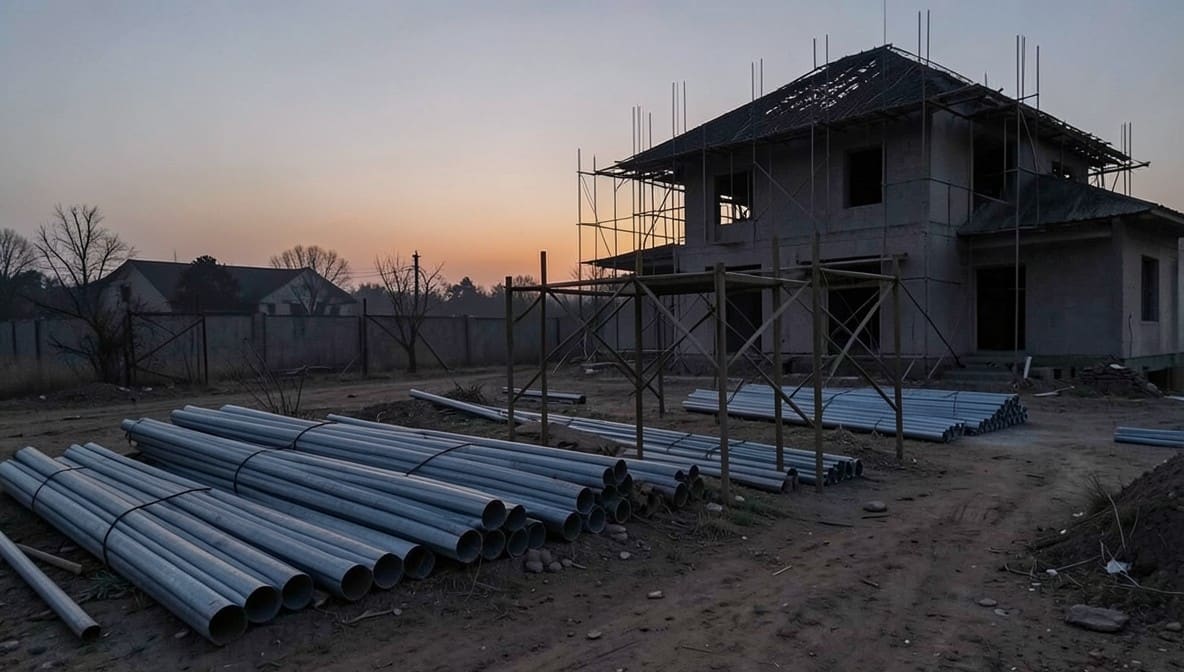
The petitioner, Rakesh Kumar Gupta, a small-scale contractor, entered into a construction contract for a house belonging to Vanshraj Yadav. To fulfil the contract he purchased stainless-steel (SS) pipes weighing 9 kg 900 g each from the respondent, Suraya Steel Hardware, for a total consideration of Rs.43,277. He also bought 26 “stap” for Rs.7,100 and 180 pieces of “Dandli” which were later found unsuitable.
Key Facts
- The construction contract was valued at approximately Rs.2 lakhs.
- The petitioner alleged that each pipe was over-charged by Rs.60, amounting to an excess of Rs.1,560.
- The SS pipes supplied were deficient in weight by about 2.8 kg per pipe.
- The petitioner sought replacement of 32 defective pipes; the respondent neither replaced nor refunded the amount.
- The petitioner claimed financial loss due to the deficient and defective material.
Procedural History
- 20 December 2014: Date from which interest was to be calculated in the district forum award.
- 31 March 2016: District Consumer Disputes Redressal Forum, Jaunpur, passed an order (CC No.40 of 2015) allowing the petitioner's claim and directing the respondent to pay Rs.43,277 with simple interest at 7% per annum from 20 December 2014 and costs of Rs.1,000.
- 18 April 2018: State Consumer Disputes Redressal Commission, Lucknow, allowed the respondent’s appeal, holding that the petitioner was not a consumer under Section 2(1)(d) of the Consumer Protection Act, 1986, and set aside the district forum order.
- 2018 (exact filing date not specified): Revision Petition No.2484 of 2018 filed before the National Consumer Disputes Redressal Commission, New Delhi, seeking restoration of the district forum order.
- 07 August 2026: The National Commission delivered its order, allowing the revision petition.
Relief Sought
The petitioner sought:
- Restoration of the district forum order awarding Rs.43,277 plus interest and costs.
- Confirmation of his status as a consumer under the Act.
- Costs of the proceedings.
The Legal Issue
Whether a contractor who purchases steel pipes and other materials for execution of a small construction contract, solely to earn his livelihood through self-employment, falls within the definition of “consumer” under Section 2(1)(d) of the Consumer Protection Act, 1986, or whether the purchase is excluded as a “commercial purpose”.
Arguments Presented
For the Petitioner
- Contended that the goods were bought for personal use in a self-employment activity, invoking the explanation to Section 2(1)(d) which excludes “commercial purpose” only when the purchase is for resale or profit-generating business.
- Relied on Laxmi Engineering Works v. P.S.G. Industrial Institute, Paramount Digital Colour Lab v. AGFA India (P) Ltd., Brajbhushan Painkra v. Director, First House, and Jyoti CNC Automation Ltd. v. Lal Singh Panesar & Sons to argue that purchase for livelihood qualifies as consumer.
- Emphasised that the dominant purpose was execution of a specific contract, not a profit-maximising commercial venture.
For the Respondent
- Argued that the purchase was made for a commercial purpose because the petitioner was engaged in a construction business and employed labourers, thus falling within the exclusion of Section 2(1)(d).
- Cited Virender Singh v. M/s Darshana Trading Co. to support the view that a contractor’s purchase of materials for a profit-driven enterprise is not covered by the consumer definition.
- Maintained that the statutory language plainly excludes persons obtaining goods for any commercial purpose.
The Court's Analysis
The Commission began by reproducing the definition of “consumer” under Section 2(1)(d) and its explanatory clause, which states that “commercial purpose” does not include use of goods bought and used by a person exclusively for earning his livelihood by means of self-employment.
"(d) ‘consumer’ means any person who buys any goods for a consideration … but does not include a person who obtains such goods for resale or for any commercial purpose; … Explanation - ‘commercial purpose’ does not include use by a person of goods bought and used by him exclusively for the purposes of earning his livelihood by means of self-employment."
The Commission then examined the jurisprudence on what constitutes a “commercial purpose”. It referenced the principles articulated in Karnataka Power Transmission Corporation v. Ashok Iron Works Private Ltd. and Lilavati Kirtilal Mehta Medical Trust v. Unique Shanti Developers, summarising that:
- The determination is fact-specific; a straight-jacket formula cannot be applied.
- “Commercial purpose” ordinarily includes business-to-business transactions and activities aimed at profit generation.
- The dominant intention or purpose of the transaction must be assessed.
- If the purchase is primarily for personal use or to earn a livelihood through self-employment, it falls outside the exclusion.
Applying these principles, the Commission observed that the petitioner’s purchase was incidental to a small construction contract. The goods were not intended for resale; they were to be incorporated into the building work for which the petitioner was personally providing labour and skill. The petitioner’s enterprise was limited to the specific contract and did not constitute a larger profit-maximising business. Consequently, the dominant purpose was not commercial in the statutory sense.
The Commission distinguished Virender Singh v. Darshana Trading Co. where the Supreme Court held that the purchase of machinery for expanding an existing manufacturing business was a commercial purpose. Here, the petitioner was a sole contractor, not an incorporated entity, and the scale of activity was modest.
Having concluded that the petitioner satisfied the exception carved out in the explanation to Section 2(1)(d), the Commission held that the district forum was correct in classifying him as a consumer. It therefore restored the district forum’s award and set aside the State Commission’s order.
The Verdict
The revision petition is allowed. The order dated 31 March 2016 passed by the District Consumer Disputes Redressal Forum is restored. The respondent, Suraya Steel Hardware, is directed to pay:
- Rs.43,277 to the petitioner,
- Simple interest 7 % per annum from 20 December 2014 until realization,
- Costs of Rs.1,000 awarded by the district forum,
- Litigation costs of Rs.10,000 payable by the respondent. The respondent must make the payment within four weeks of the date of this order. If payment is not made within that period, interest at 10 % per annum will accrue from the date of default until realization.
What This Means For Similar Cases
Self-Employment Exclusion Prevails
- Purchases made by individuals for the purpose of executing a specific contract or for personal use, even if the activity generates income, are not deemed commercial under the Act.
- Lawyers should emphasise the dominant purpose of the transaction and the scale of the activity when arguing consumer status.
Small Contractors Can Claim Consumer Rights
- Contractors engaged in modest, project-specific work can invoke consumer protection provisions for defective goods or deficient services.
- Evidence should include the contract scope, the quantity of goods purchased, and the absence of any resale intention.
Interest and Cost Calculations Remain Unchanged
- When a district forum order is restored, the original interest rate (here 7 %) and cost awards are revived.
- A default interest rate of 10 % per annum applies from the date of non-compliance, reinforcing the need for timely payment.
Practical Takeaways
- Document the exact purpose of each purchase in contracts and correspondence.
- Prepare factual matrices showing that the purchase is incidental to the contract, not a profit-driven acquisition.
- Cite the explanatory clause to Section 2(1)(d) and the Karnataka Power Transmission principles in pleadings.
- Anticipate the court’s focus on dominant intention rather than mere transaction value.